Citadines
Electric city car 2026: Spring, ë-C3 or Inster?
Dacia Spring, Citroën ë-C3 or Hyundai Inster: full comparison of real Belgian prices, real-world range, and the ideal use profile for each model.
Three electric city cars dominate the Belgian market in 2026 under €30,000: the Dacia Spring, the Citroën ë-C3, and the Hyundai Inster. The Spring is the cheapest, but it is not the best for every driver. This comparison cuts through with real Belgian catalogue prices, real-world range figures, and concrete use profiles.
Direct answer: the Citroën ë-C3 is the best overall compromise for mixed city-suburban use. The Spring fits only a 100% urban use case with a tight budget. The Inster is the best-equipped of the three if you can stretch €1,500–2,000 more.
What is the real price of each model in Belgium?
The Spring is the only one under €17,000, but the price gap with the ë-C3 does not tell the whole story.
In June 2026, Belgian catalogue prices are as follows: Dacia Spring Essentiel from €16,900, Citroën ë-C3 You at €23,300, Hyundai Inster 42 kWh from €25,000. The number that really matters: no Belgian regional purchase grant reduces these figures for private buyers in 2026. The Flemish grant disappeared at end 2024, and Wallonia and Brussels never offered a purchase subsidy (LIZY, December 2025). The regional benefit is purely fiscal: reduced registration tax and an annual road tax capped at €102.96 depending on your region.
In practice, that's a raw gap of €6,400 between the Spring and the ë-C3 — a difference that the cost of use may or may not absorb over 5 years, depending on your mileage and the battery capacity you genuinely need. A buyer doing 25 km a day in town does not need 44 kWh; someone doing 80 km with a motorway stretch does not do with a Spring either.
What real-world range can you expect in Belgian conditions?
WLTP figures are ceilings. On Belgian roads, in winter or at motorway speed, the gap between the three models widens considerably.
The Dacia Spring 2026 carries a 26.8 kWh battery and claims 225 km WLTP in mixed cycle, 315 km in urban use. In real Belgian conditions — suburban commute, 90 km/h, 5 °C in January — expect 130 to 160 km. The Citroën ë-C3, with its 44 kWh battery and 320 km WLTP, drops to 220–250 km in the same conditions. The Hyundai Inster 42 kWh (327 km WLTP) holds 240–270 km. The 49 kWh version of the Inster reaches 370 km WLTP and stays around 290–310 km in real winter use, which changes things for occasional out-of-city trips (borne-electrique.com, 2026).
The key differentiator: DC charging speed. The Spring is capped at 30 kW — a fast-charger stop takes 55 minutes to go from 20% to 80%. The ë-C3 accepts up to 100 kW and reaches 80% in 26 minutes. The Inster 42 kWh: 85 kW, 80% in 29 minutes. On a Brussels–Luxembourg journey, the Spring requires two long stops where the other two need only one.
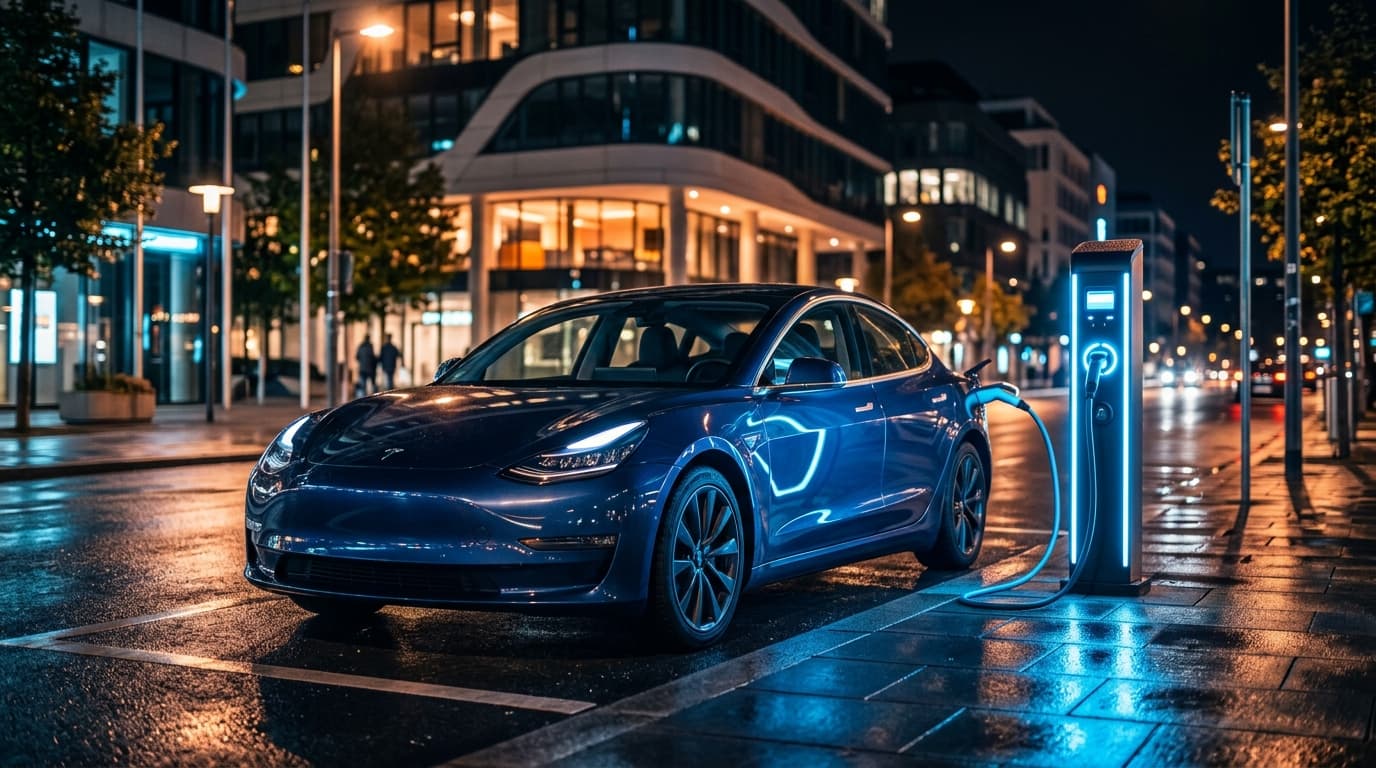
Dacia Spring 2026: who is it really designed for?
The Spring is not a good car for every use — but for the right profile, it remains unbeatable.
It suits drivers who cover fewer than 60 km a day, have a socket or wallbox at home, and do not need to take the E40 at the weekend. Students living in town, retirees running errands, the second car in a family: these profiles get the full benefit of its low urban consumption (around 4.1 kWh/100 km in that regime) without ever hitting range limits. What we would avoid: buying it as the sole vehicle for a family that does mixed trips or weekends in the Ardennes. The lack of rapid DC charging and limited range creates anxiety rather than savings. The Spring also has a below-average safety record: 3 Euro NCAP stars in 2023, lower than its direct rivals.
Citroën ë-C3: the most versatile of the three?
Yes, at €23,300, it is the best balance on the market for mixed city and suburban use.
The 44 kWh battery provides enough headroom for common Belgian suburban routes (Liège–Namur, Charleroi–Brussels) without dropping below 20% remaining range. The 100 kW DC charging removes the main objection to going electric for many buyers: a 25-minute stop at an Ionity or Fastned charger is enough to leave with 80% charge. Its standout feature is ride comfort — Citroën paid attention to the suspension tuning on the ë-C3, which is noticeable on the secondary road network in Wallonia where the surface is not always smooth.
Real-world consumption data from Automobile Propre (November 2024): 15.4 kWh/100 km in mixed use, bringing the recharging cost to roughly €4.60 per 100 km at the average Belgian residential rate (€0.30/kWh). The boot (310 L) is average for the segment. What we would avoid: confusing the ë-C3 with a crossover — its footprint is that of a genuine city car, and the boot in the rain in Liège is still smaller than a Renault Clio's.
Hyundai Inster: is it worth the extra cost over the other two?
At €1,700 more than the ë-C3 entry level, the Inster makes sense if you need the equipment or the 49 kWh version.
The Inster 42 kWh (€25,000) has a modular interior — the rear seats fold flat, raising boot volume to over 350 L versus 310 L for the ë-C3. Standard equipment is more generous: lane-keeping assist, reversing camera, wireless charger, all available from the entry trim. The 49 kWh version (around €27,500) adds 43 km of WLTP range and is the only one of the three to approach 300 km in real winter conditions. Automobile Propre (2025) highlights its rear passenger space, better than the ë-C3's for the same external footprint — a concrete argument if you regularly carry adult passengers.
One notable limitation: DC charging peaks at 85 kW, slightly below the ë-C3 (100 kW), but the difference in a real charging stop is marginal — 3 to 4 extra minutes to reach 80%.
Comparison table: Spring, ë-C3, Inster in 2026
| Model | Belgian price (from) | Battery | WLTP range | Max DC charging | Boot | Euro NCAP |
|---|---|---|---|---|---|---|
| Dacia Spring 2026 | €16,900 | 26.8 kWh | 225 km (mixed) | 30 kW | 270 L | ⭐⭐⭐ (2023) |
| Citroën ë-C3 | €23,300 | 44 kWh | 320 km | 100 kW | 310 L | N/A (2025) |
| Hyundai Inster 42 kWh | €25,000 | 42 kWh | 327 km | 85 kW | 280 L (+350 L folded) | N/A (2025) |
| Hyundai Inster 49 kWh | €27,500 | 49 kWh | 370 km | 85 kW | 280 L (+350 L folded) | N/A (2025) |
Belgian catalogue prices observed in June 2026. No regional purchase grant applicable to private buyers in 2026 (LIZY, December 2025). Deduct 30–40% from WLTP figures for real winter mixed-use range in Belgium.
Our verdict: which electric city car matches your profile?
100% urban use, budget ≤ €18,000: Dacia Spring. No competition at this price for short daily trips. Accept its limits: slow charging, below-average safety, zero versatility outside town.
Mixed city and suburban use, budget €23,000–26,000: Citroën ë-C3. Best price/range/charging balance of the three. The 100 kW DC charging removes the main objection to going electric for most buyers.
Alternative: Hyundai Inster 49 kWh if you regularly carry adult passengers in the back seat or if your one-way commute exceeds 100 km. The modular interior and extra range justify the €2,200 premium over the ë-C3.
For more detail, see our best city cars 2026 in Belgium comparison (including petrol and hybrid models) and our guide to electric vehicle incentives in Belgium for the tax breakdown by region. The comparison tool filters by range, price, and charging type to narrow down your choice.
Sources: Automobile Propre (November 2024, 2025), LIZY (December 2025), borne-electrique.com (2026), Touring Motor Show 2026 (March 2026). Belgian catalogue prices collected in June 2026.
Comparateur Citadines
Compare tous les citadines côte à côte.
Comparer maintenant →
Frequently asked questions
Julien essaie des voitures depuis 2012, d’abord pour la presse spécialisée belge, aujourd’hui en indépendant depuis Liège. Il croise les données TÜV, ADAC et les prix catalogue belges plutôt que les fiches constructeur. Sa règle : pas d’essai en concession de 20 minutes, pas de verdict sans chiffre vérifiable.