Électriques
Real-world electric car range 2026: the true figure
Real-world electric car range in 2026: the ADAC data, the gap with WLTP, and what it means in winter on the motorway in Belgium.
The real-world range of an electric car is almost always below the catalogue figure. In average use, take 15 to 25 percent off the WLTP range; in winter, on the motorway, the gap rises to 25-35 percent (ADAC tests, May 2026). An EV rated at 400 km therefore often does 260 to 300 km in practice. Here's how to read the true figure before you buy.
What is the real-world range of an electric car in 2026?
It's the WLTP figure minus 15 to 25 percent in everyday use, and up to 35 percent less in winter on the motorway. An EV rated at 400 km WLTP covers about 300 km day-to-day, and drops toward 260 km in deep cold at higher speeds.
WLTP is a homologation standard useful for comparing two models against each other, not for planning a trip. It's measured in a lab at 23 °C, on a cycle that peaks at 131 km/h but spends most of its time well below that. Belgian reality, by contrast, mixes motorway at 120 km/h, traffic jams, heating and cold rain.
On the Belgian market, that changes how you choose. For a household driving 40 km a day, even a city car rated at 225 km WLTP is plenty all year. For a commuter clocking 150 km of motorway in freezing weather, a 500 km WLTP model becomes the real comfort floor. The figure that really matters: real-world range at your usage speed, not the catalogue peak.
Why is real-world range lower than WLTP?
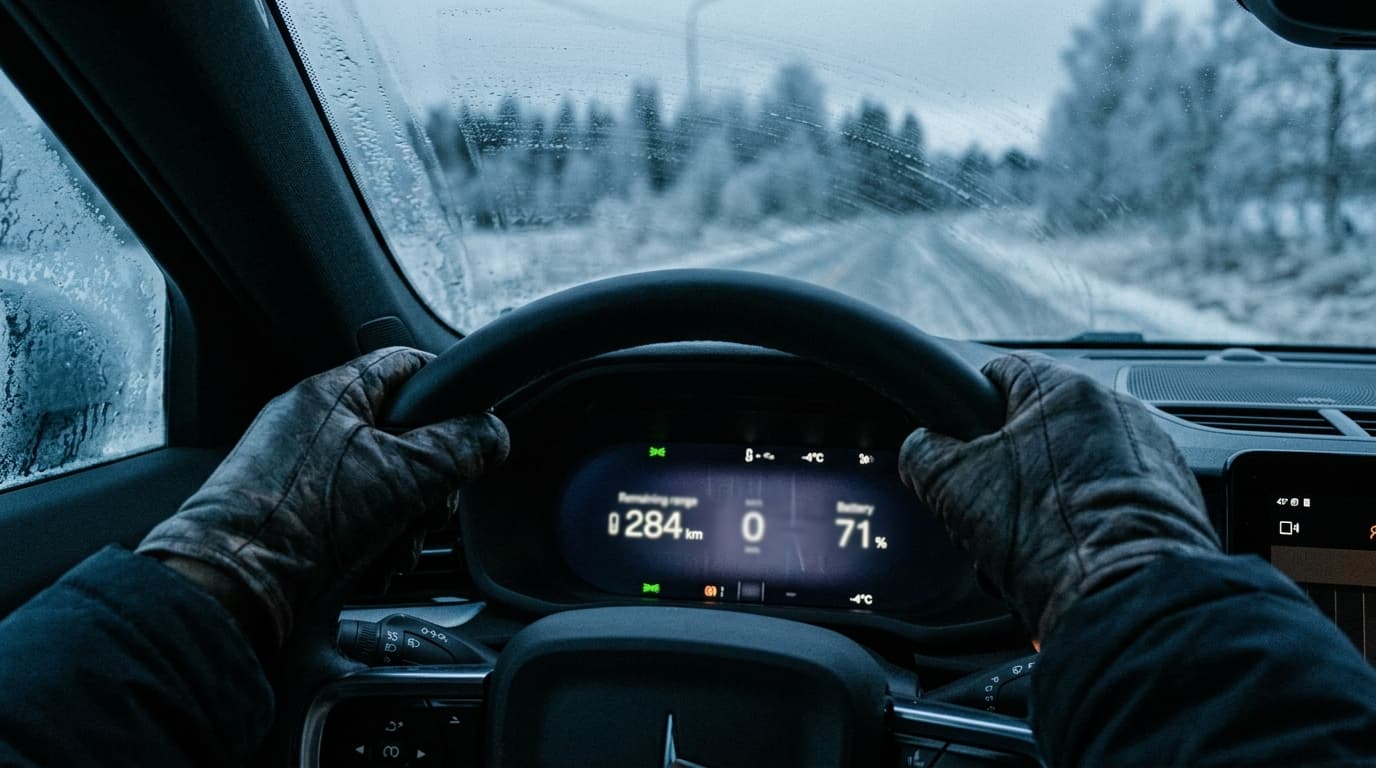
Because WLTP is a laboratory test, not a road measurement. Three factors widen the gap in real conditions: speed, temperature and heating. Together they explain nearly all of the 15 to 35 percent loss observed.
Speed plays the leading role. Air resistance rises with the square of speed: driving at 130 km/h rather than 100 km/h can cost 20 to 30 percent of range. WLTP, meanwhile, only briefly reaches its top speed. Then comes the cold: a lithium-ion battery returns less energy when cold, and part of the current goes to keeping it warm.
ADAC data (May 2026) shows that cabin heating is the biggest winter drain, at 4 to 5 kWh/h to hold a comfortable temperature. In practice, that means an EV on a Brussels-Luxembourg run at 4 °C uses a third more than on the same summer trip. What we'd avoid: reading WLTP alone to judge whether a car "makes it" on your long trips.
How much range do you lose in winter in Belgium?
Between 20 and 35 percent depending on temperature and speed, sometimes more over the first cold-battery kilometres. It's the winter-plus-motorway combination that hurts most: range can then fall to 60 percent of the WLTP figure.
The Belgian climate is a textbook case for EVs: rarely extreme cold, but long spells between 0 and 8 °C, damp, with the heater running constantly. At these temperatures, the loss sits at the top of the ADAC range. Add rain, which raises rolling resistance, and a morning defrost that draws on the battery before you even set off.
In practice, that gives a telling example with the Mercedes CLA: its 792 km WLTP translates to around 520 to 580 km real in deep-winter motorway use, based on the loss coefficient measured by ADAC. Still excellent, but far from the 792 km on the sticker. For a city car like the Dacia Spring (225 km WLTP), the same winter brings usable range down to around 140 to 160 km, fine for urban use but ruling out long trips.
What do the ADAC data show about real-world range?
That the WLTP/real gap is systematic and measurable, not anecdotal. ADAC tests each model on its own cycle (Ecotest), more demanding than WLTP, and publishes consumption that includes charging losses. The result: real-world ranges 15 to 30 percent below the manufacturer figure depending on the model.
The value of ADAC tests for a Belgian buyer is twofold. First, they're run in Germany, in a climate and on motorways very close to ours: same winters, same speeds at or near 130 km/h. Second, they measure "plug-to-wheel" consumption, charging included, which WLTP ignores. A model can post a fine WLTP range and fall short on charging efficiency.
ADAC data also shows that not all models fall off the same way. Aerodynamic, well-insulated EVs (sleek saloons, standard heat pumps) resist cold better than small, tall, boxy SUVs. As of this article (July 2026), it's this efficiency criterion, more than battery kWh alone, that separates a good real-world range from a catalogue one.
Which EVs hold up best on the motorway in 2026?
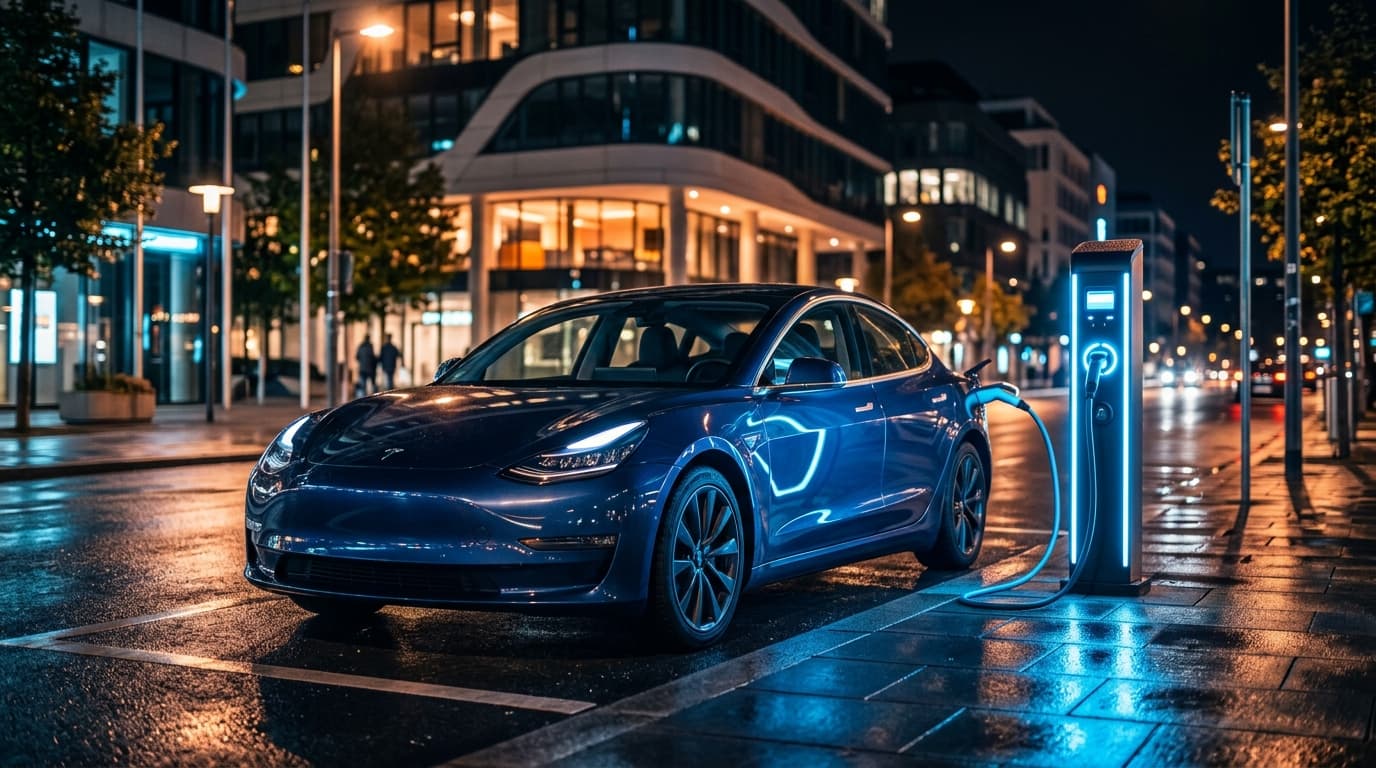
Sleek saloons with a big battery and a heat pump: the Mercedes CLA, DS N°8 and Audi A6 e-tron lead on the motorway. The Tesla Model Y remains the best of the "family" pack thanks to its aerodynamics and charging network.
The motorway is the acid test of real-world range. At 120-130 km/h, aerodynamics matter more than battery size: a low 77 kWh saloon can beat a boxy 90 kWh SUV. That's why the CLA and DS N°8, shaped to cut through the air, keep excellent efficiency where many electric SUVs run out of breath.
In practice, that gives a clear hierarchy for high-mileage drivers. Above 500 km real on a winter motorway, you find the CLA and DS N°8; between 350 and 430 km, the Audi A6 e-tron, Tesla Model Y Long Range and Kia EV6; below that, city cars, best kept for town. For a long-distance profile, our comparison tool filters by real-world range and budget, and our blog covers charging on the road.
How do you calculate real-world range before buying?
Apply a coefficient to the WLTP figure based on your dominant use. It's the most reliable method short of a test drive: × 0.80 for mixed summer use, × 0.75 for a Belgian annual average, × 0.62 for a long motorway trip in deep winter.
The right coefficient depends on your trips, not on a single average. An urban driver who charges at home can rely on × 0.80, never truly running the battery flat. A motorway commuter must reason on × 0.62, because it's that January day at 4 °C that decides whether they'll need to charge en route.
In practice, that's a two-second calculation at the dealer. A car rated at 500 km WLTP? Count 400 km in summer, 375 km on average, 310 km in deep cold on the motorway. What we'd avoid: buying right at the edge of your need. If your fixed trip is 300 km, don't take a 400 km WLTP car thinking you're safe: in winter, the margin vanishes.
Comparison: WLTP vs real-world range of 10 models 2026
| Model | Segment | WLTP range | Real summer (mixed) | Real winter motorway |
|---|---|---|---|---|
| Mercedes CLA 250+ | Saloon | 792 km | ~630 km | ~520-580 km |
| DS N°8 Long Range | Saloon | 750 km | ~600 km | ~470-520 km |
| Audi A6 e-tron | Saloon | 622 km | ~500 km | ~390-430 km |
| Tesla Model Y Long Range | Family SUV | ~600 km | ~480 km | ~370-420 km |
| Kia EV6 (77 kWh) | Crossover | 528 km | ~420 km | ~330-370 km |
| Renault Scénic E-Tech | Family | ~430 km | ~345 km | ~270-300 km |
| Hyundai Inster | City car | 327 km | ~260 km | ~205-230 km |
| BYD Dolphin Surf | City car | 322 km | ~260 km | ~200-225 km |
| Citroën ë-C3 | City car | 320 km | ~255 km | ~200-220 km |
| Dacia Spring | City car | 225 km | ~180 km | ~140-160 km |
Manufacturer WLTP ranges; real summer estimated at WLTP × 0.80 and real winter motorway at WLTP × 0.62-0.68, based on the loss coefficients measured by ADAC (May 2026) and Test-Achats (2026). Indicative figures, to be adjusted for speed, terrain and driving style.
Our verdict
For most Belgian drivers, the right method fits in one line: take the WLTP figure, multiply by 0.75 for the year, by 0.62 for a long winter trip, and buy with that margin. It's this calculation, not the catalogue peak, that avoids the January breakdown.
On models, if you drive a lot on the motorway, aim for a sleek big-battery saloon (Mercedes CLA, DS N°8) or the Tesla Model Y for its charging network and efficiency. For urban and suburban use, a 320 km WLTP city car like the Hyundai Inster or Citroën ë-C3 covers the week stress-free, even in winter. To decide by budget and real mileage, our blog compares Belgian prices and range, and the quiz points you to the right model in three questions.
Comparateur Électriques
Compare tous les électriques côte à côte.
Comparer maintenant →
Frequently asked questions
Julien essaie des voitures depuis 2012, d’abord pour la presse spécialisée belge, aujourd’hui en indépendant depuis Liège. Il croise les données TÜV, ADAC et les prix catalogue belges plutôt que les fiches constructeur. Sa règle : pas d’essai en concession de 20 minutes, pas de verdict sans chiffre vérifiable.