Électriques
Home EV charger in Belgium: the complete guide
Installing a home EV charger in Belgium: real cost, 6% VAT, grid operator declaration, RGIE inspection and how to pick the right wallbox.
A home EV charger costs €1,200 to €2,500 including VAT installed in Belgium, with VAT at 6% if the home is over ten years old. Before switching on, two mandatory steps: declaring the unit to your grid operator and passing the RGIE inspection. Here is the full procedure and what it really costs.
How much does installing a home EV charger cost?
Budget €1,200 to €2,500 including VAT for a 7.4 kW wallbox fitted by a certified electrician. The full Belgian market range runs from €750 for a trivial job to €4,500 when a 25-metre cable run or a board upgrade is involved.
Three items drive the price. The unit first: €550 to €1,300 depending on brand and features (MID meter, dynamic load balancing, tethered cable or socket). Then the distance to the consumer unit, which dictates cable cross-section and labour time — this is the line that blows up quotes when the garage sits at the bottom of the garden. Finally the board itself: many Belgian houses built before 2000 no longer have room for a dedicated type A or B residual-current device.
The one remaining tax lever is worth chasing. If your home is over ten years old, is used mainly as private housing, and the professional both supplies and installs the unit, VAT drops from 21% to 6% on the whole invoice. On a €2,000 net quote, that is €300. Insist that the quote states the rate explicitly: a few installers still bill 21% by default and leave the customer to sort it out afterwards.
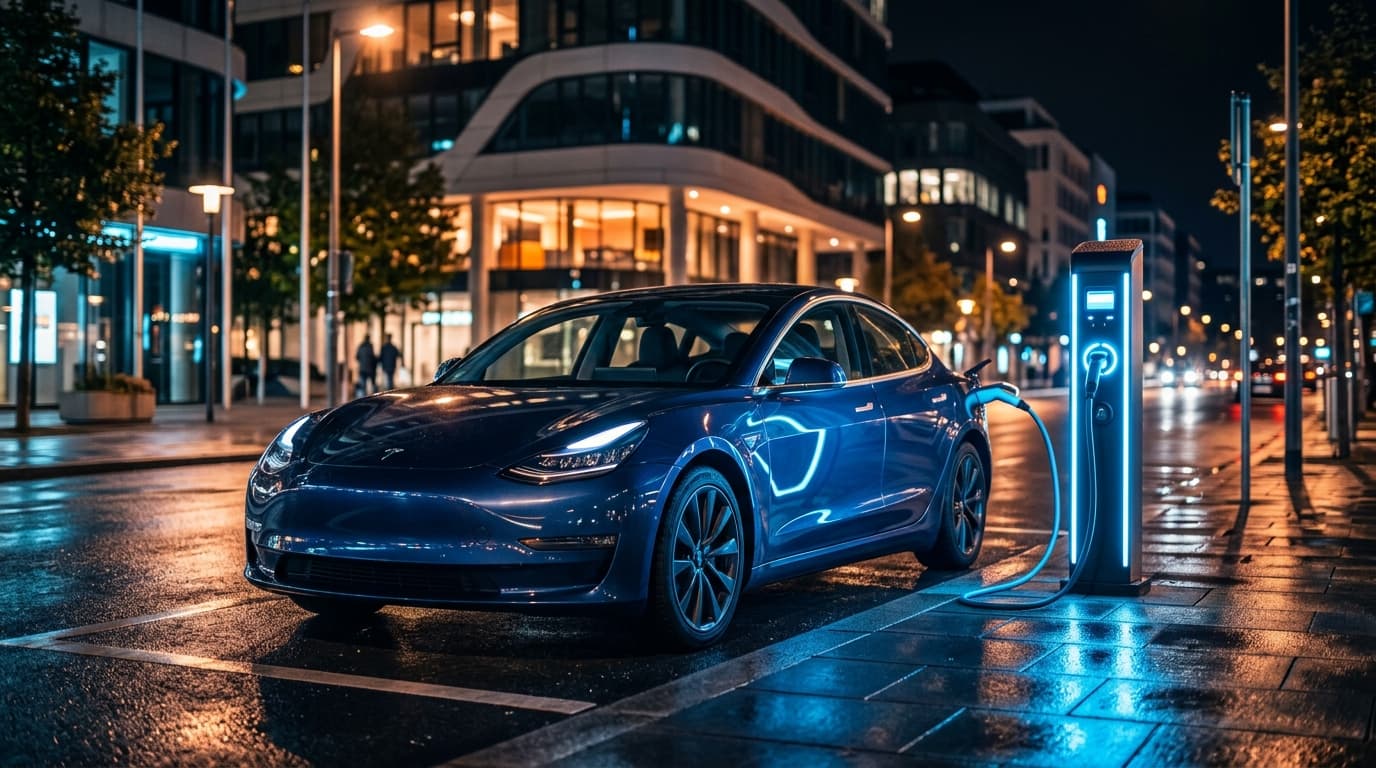
Do I need a wallbox, or will a domestic socket do?
A wallbox, in almost every case. A Schuko socket tops out at 2.3 kW, meaning 12 to 15 hours for 50 kWh, and it is not designed to deliver 10 A all night, every night, for eight years.
The issue is not speed, it is heat. A standard domestic socket handles sustained continuous loads poorly: contacts oxidise, resistance rises, and so does temperature. The RGIE in fact requires a dedicated circuit from the board with its own residual-current protection for vehicle charging. In other words, even the "simple socket" needs an electrician if you want to be compliant — and therefore covered by your insurer.
One case still works with the emergency cable: small battery, low mileage. A household driving 25 km a day in a Dacia Spring or Citroën ë-C3 puts back 5 kWh a night, which a reinforced socket handles without breaking a sweat. Beyond 60-70 km a day, or as soon as the battery exceeds 60 kWh, a wallbox stops being a luxury. Our complete guide to electric cars in Belgium breaks down usage profiles.
How do you install a home charger, step by step?
In six steps, two of them administrative. The job itself takes half a day; it is the declaration and the inspection that stretch the calendar, typically two to four weeks between signing the quote and the first charge.
1. Audit the electrical installation. Contracted power, single or three-phase, space on the board, supply cable cross-section. A 40 A single-phase meter will not carry 7.4 kW alongside an oven and a heat pump without load shedding.
2. Choose the power rating. 3.7 kW (16 A single-phase), 7.4 kW (32 A single-phase), 11 kW (16 A three-phase 400 V) or 22 kW (32 A three-phase). 7.4 kW covers the vast majority of situations.
3. Get two or three detailed quotes. The quote should list the brand and model of the unit, cable length, type of RCD, the VAT rate applied, and whether the RGIE inspection is included.
4. Declare the charger to your grid operator. Free, online, before or just after installation (see next section).
5. Have it fitted by a certified electrician. Allow 3 to 5 hours for a standard installation, a full day with trenching.
6. Have it inspected by an approved body. Vinçotte, ACEG, BTV or OCB issue the RGIE compliance report, for €150 to €250. That document is what your fire insurer will ask for after an electrical incident.
A concrete Belgian timeline: quote requested in early March, signed mid-March, Fluvius declaration cleared in five working days, installation in early April, inspection a week later. Three and a half weeks, with nothing going wrong.
What grid operator formalities are mandatory?
Just one, and it is not optional: any charger of 5 kVA or more must be declared to the distribution grid operator. That covers every wallbox from 7.4 kW upwards, which is nearly the whole installed base in private homes.
The right contact depends on your municipality, and this is where many articles get it wrong: Fluvius covers Flanders, ORES most of Wallonia (RESA around Liège, AIEG and AIESH in a handful of municipalities), and Sibelga all 19 Brussels municipalities. Contrary to what you often read, Fluvius does not run the Brussels electricity grid. The declaration goes through an online form, it is free, and it lets the operator check that the street transformer can absorb the extra load.
Skipping it exposes you to a €250 fine. The real risk lies elsewhere: if the local grid becomes saturated without warning, you are the one suffering outages, and the operator has no obligation to reinforce a network it did not know was under strain. In Flanders the declaration has a second effect: it lets Fluvius factor your charger into the capacity tariff, which bills your monthly peak demand — hence the value of charging slowly and for longer rather than hard and briefly.
Is there still a grant or tax break in 2026?
No, none left for private households. The federal tax reduction on home charger installation expired on 31 August 2024, and neither Wallonia, nor the Brussels Region, nor Flanders replaced it with a direct grant in 2026.
This one is worth double-checking, because the Belgian web is full of pages still advertising "€250 to €600 in Wallonia" or "up to €300 in Flanders". Those figures correspond to closed schemes or to commercial offers from installers and energy suppliers, not to public subsidies. Before counting on any aid, ask for the decree number or a link to the official form: if neither exists, neither does the grant.
For companies and the self-employed, the enhanced deduction that once reached 150% no longer applies to investments made after 31 August 2024, with the removal taking effect from assessment year 2026. What remains is ordinary deduction of professional expenses, and the unchanged benefit-in-kind rules on the car itself. For the incentives that still exist on the vehicle (rather than the charger), see our electric car incentives page.
Which wallbox should you pick for a Belgian home?
Four brands share most of the Belgian residential market: Wallbox, Easee, Zaptec and Alfen. All of them do the basic job; they differ on load balancing, MID certification and outdoor durability.
| Model | Power | Strengths | Watch out for | Indicative price (unit) |
|---|---|---|---|---|
| Wallbox Pulsar Plus / Max | 7.4 to 22 kW | Most compact, very good app, works with home automation (HomeKit, Google Home) | Dynamic load balancing needs a paid accessory | €650 – 1,100 |
| Easee Charge / Lite | 7.4 to 22 kW | Automatic phase balancing, native multi-charger management | Certified installer coverage varies by province | €600 – 1,000 |
| Zaptec Go 2 / Pro | 7.4 to 22 kW | Dynamic power sharing, excellent outdoor durability | Best choice in apartment blocks or shared car parks | €700 – 1,200 |
| Alfen Eve Single Pro-line | 7.4 to 22 kW | MID certified (billing), built-in load balancing, no accessory | Priciest, but the toughest in heavy use | €900 – 1,400 |
Unit price only, excluding installation and VAT, as listed by Belgian distributors in August 2026. Add €500 to €1,200 for fitting.
Two criteria matter more than the badge. Dynamic load balancing first: it throttles charging power when the oven and heat pump are running, which stops the main breaker tripping and avoids upgrading your connection. MID certification second, only essential if an employer has to reimburse the kWh you charge at home — without a certified meter, reimbursement falls back on the CREG flat rate, which sits between 31 and 38 cents per kWh depending on Region and quarter in 2026.
What we would avoid: buying 22 kW "just to be safe". Very few cars accept 22 kW AC — the older Renault Zoe, some Smarts and early Teslas. On a Volkswagen ID.3 or a Tesla Model Y, the onboard charger caps at 11 kW, so a 22 kW wallbox buys you nothing at all.
What does home charging actually cost?
Around €5 per 100 km, against €12 to €18 on a public rapid charger. At €0.30/kWh and 17 kWh/100 km, filling a 50 kWh battery costs roughly €15.
Belgian residential electricity ranges from €0.25 to €0.40 per kWh in 2026 depending on supplier, contract type and Region. A household covering 15,000 km a year therefore spends about €765 on electricity, or €64 a month. The same distance on petrol, at 6.5 l/100 km and €1.75/l, costs around €1,700 a year. Once the charger is paid off, the gap sits near €900 annually.
Dual-rate tariffs still help, though less than they used to. Charging between 10 pm and 7 am brings the cost down to €3.50-4 per 100 km, provided your contract still separates the two bands sharply. In Flanders the capacity tariff adds a layer: the grid bills your average quarter-hourly peak for the month, so charging at 3.7 kW for eight hours costs less overall than 7.4 kW for four hours, for the same energy. Counter-intuitive, but it is worth a few dozen euros a year. To compare models on real consumption, our piece on real-world EV range gives the coefficients to apply.
Which mistakes cost the most on installation?
Three, and all of them are paid for after the fact. Undersizing the cable, skipping the grid operator declaration, and going without the RGIE inspection.
An undersized cable is the most common flaw in cut-price quotes. An installer running 4 mm² over 20 metres for a 32 A circuit saves €80 of copper and condemns you to start over if you ever move up to 11 kW. Ask for the cross-section and the exact length, in writing.
A skipped inspection, on the other hand, stays invisible — until something burns. An electrical fire in a garage, with a charger that has no RGIE certificate, gives the fire insurer a perfectly legal reason to refuse. On a house, saving €200 on the inspection sits against six-figure exposure. One last useful reflex: ask your installer for their approval number, and check that the inspection report explicitly covers the charger circuit, not just the general installation.
Our verdict
For a Belgian house with a garage or driveway, the best cost-to-use setup is a 7.4 kW single-phase wallbox with dynamic load balancing, fitted by a certified electrician at 6% VAT, declared to the grid operator and inspected straight after. Realistic budget: €1,500 to €2,000 all in, paid back in two to three years against a weekly tank of petrol.
On the unit itself, the Zaptec Go 2 and the Wallbox Pulsar Plus are the two safe residential bets; the Alfen Eve Single Pro-line earns its premium if your employer reimburses your kWh, thanks to its MID meter. A credible alternative on a tight budget with short trips: a reinforced socket on a dedicated circuit, at €400-600, which is enough for an electric city car and 25 km a day. To pick the car before the charger, our comparison tool filters by real-world range and Belgian pricing.
Comparateur Électriques
Compare tous les électriques côte à côte.
Comparer maintenant →
Frequently asked questions
Julien essaie des voitures depuis 2012, d’abord pour la presse spécialisée belge, aujourd’hui en indépendant depuis Liège. Il croise les données TÜV, ADAC et les prix catalogue belges plutôt que les fiches constructeur. Sa règle : pas d’essai en concession de 20 minutes, pas de verdict sans chiffre vérifiable.