Hybrides
Best self-charging hybrid 2026 in Belgium
2026 comparison of the best self-charging (HEV) hybrids in Belgium: real consumption, BE catalogue prices and the tax change that flips the maths.
The best self-charging hybrid in 2026 depends on your use. For the city, the Toyota Yaris stays the most frugal. For the road and the family, the Toyota Corolla is the most versatile. And for budget, the Renault Clio E-Tech opens the range at €23,550 on the Belgian catalogue. But before you choose, one Belgian tax change in 2026 deserves three minutes of your attention.
What is the best self-charging hybrid in 2026?
There is no single best self-charging hybrid: the Toyota Yaris is the most economical in town, the Toyota Corolla the most at ease on the road, and the Renault Clio E-Tech the best entry ticket. The right choice comes down to your kind of journeys and your budget, not a single ranking.
A self-charging hybrid, or full hybrid (HEV), pairs a petrol engine with an electric motor that recharges itself under braking and deceleration. No cable, no charge point, a normal tank of petrol. The technology shines in town and struggles on the motorway. That point is what separates the models by real-world use.
In practice, this gives three profiles. The driver who mostly stays in the city goes for the Yaris, the most frugal of the lot. The one who covers road miles takes the Corolla, larger and more stable. The one watching the budget looks at the Clio E-Tech, which starts at €23,550 on the Belgian price list (Autofans, 2026) where the Toyotas climb higher. The rest of the comparison fine-tunes the choice by segment and tax.
Which self-charging hybrid uses the least fuel?
The Toyota Yaris and the Honda Jazz are the most frugal self-charging hybrids in 2026, around 3.8 to 4.1 L/100 km in mixed WLTP and under 4 L/100 km in real city driving. The Renault Clio E-Tech follows closely, between 4.2 and 4.5 L/100 km in real use.
Weight makes the difference. The lighter the car, the more the electric motor alone can move it at low speed, and the lower the consumption falls. The Yaris is light and makes full use of Toyota's fourth-generation hybrid system: its consumption even drops to around 3.6 L/100 km on the urban cycle (CapCar, January 2026). The Honda Jazz, with surprising roominess for its size, holds a comparable level.
The number that really matters: an urban full hybrid sits around 4 L/100 km in real use, against often more than 6 L/100 km for a comparable petrol car in town. Over a year at 12,000 mostly urban km, the fuel gap quickly adds up to several hundred euros. What we would avoid: judging a hybrid on its WLTP figure alone, since the gap between approval and reality depends heavily on your route.
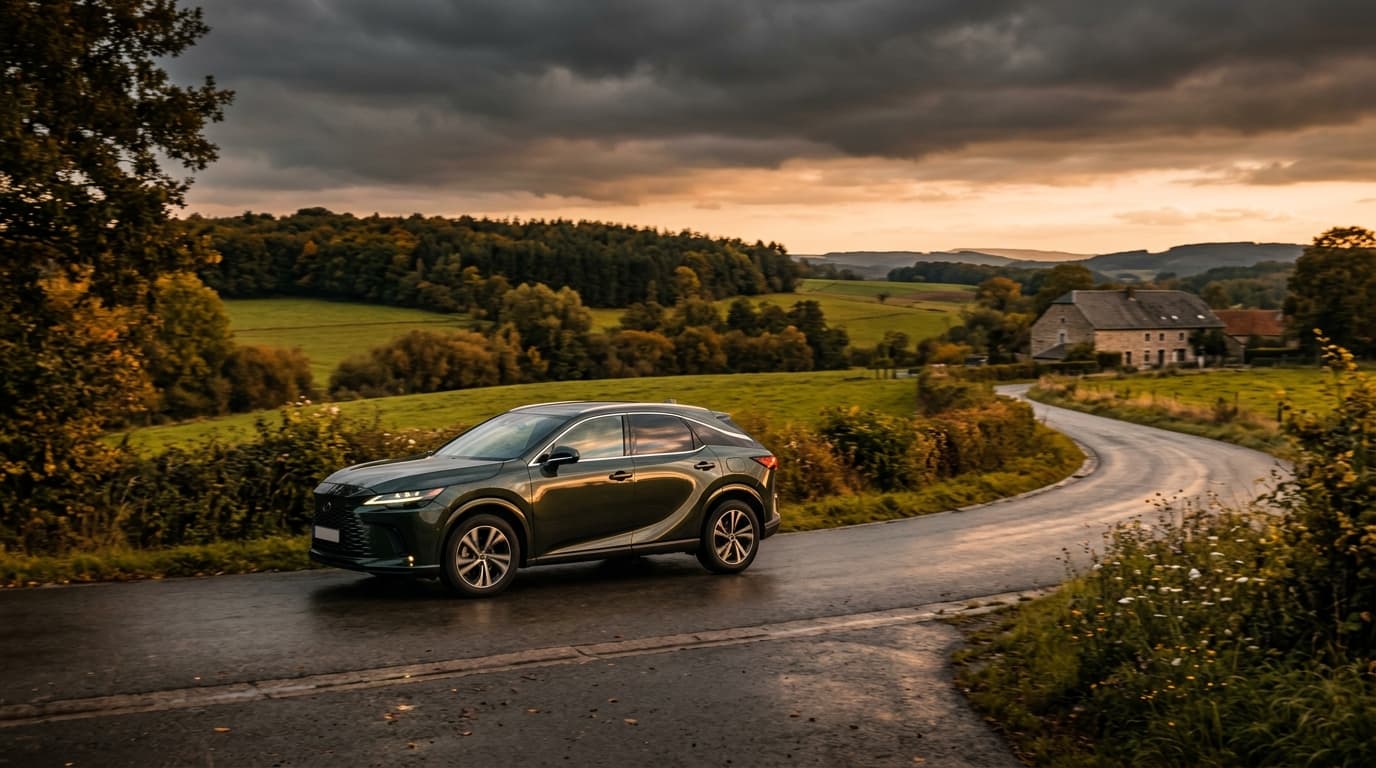
Self-charging hybrid or petrol?
Self-charging hybrid for whoever mostly drives in town, petrol for whoever covers few kilometres or a lot of motorway. The full hybrid drops below 4.5 L/100 km in real urban use, but loses most of its advantage at steady speed.
The hybrid wins exactly where petrol uses the most: stops, restarts, low speeds, where the electric motor takes over. On the motorway, by contrast, the engine runs constantly and the gap shrinks sharply. The price premium of an HEV over an equivalent petrol car therefore takes time to pay back if you drive little.
The Belgian sum depends on mileage. Above 12,000 to 15,000 km a year, with a good share of city driving, the hybrid pays back its premium through fuel savings. Below 10,000 km a year, or for very motorway-heavy use, a good petrol car often stays cheaper. What we would avoid: paying for a hybrid to drive mostly long motorway trips, where it does not deliver.
Which self-charging hybrid for a family?
For a family, the Toyota Yaris Cross is enough for compact urban use, and the Nissan Qashqai e-Power or the Hyundai Tucson Hybrid take over as soon as space is needed. Count on 4.5 L/100 km for the Yaris Cross and 5 to 5.6 L/100 km in real use for the heavier SUVs.
Size weighs on consumption: a hybrid family SUV stays more frugal than a petrol SUV, but does not rival a hybrid hatchback. The Yaris Cross combines a 397-litre boot with mixed WLTP consumption of 4.5 L/100 km, making it a good compromise for a small urban family. Above it, the Nissan Qashqai e-Power (158 hp, 5.3 L/100 km WLTP) offers 504 litres of boot, and the Hyundai Tucson Hybrid plays the space-and-comfort card at 5.6 L/100 km WLTP.
As of this article (June 2026), one marker to decide: if the family mostly drives in town and parks tight, the Yaris Cross is the smarter pick. If it regularly heads off loaded for the weekend, the Qashqai or Tucson justify their extra litre per 100 km. To compare these formats in more detail, see our ranking of the best SUVs in Belgium.

Self-charging hybrid: what tax appeal in Belgium in 2026?
For a company car, no tax appeal left: since 1 January 2026, a new self-charging hybrid ordered is no longer deductible. For a private purchase or a self-employed person taxed personally, it stays relevant, but it qualifies for no regional grant.
This is the point many buyers miss. The Belgian car-tax reform now reserves deductibility for zero-emission vehicles. New orders of full hybrids (HEV) are no longer deductible as company cars from 1 January 2026, and plug-in hybrids also lose most of their advantage (Securex, LIZY.be, 2026). The electric company car, meanwhile, stays 100% deductible.
In practice, this changes the reasoning by status. Employee or private buyer purchasing their own car: the HEV keeps all its sense, simple to live with and frugal in town, with no charge point to fit. Self-employed taxed personally: the deduction in principle remains possible in 2026, unlike for companies. Director going through their company: the full hybrid has lost its tax lever, and electric becomes the rational choice. What we would avoid: ordering an HEV in a company's name still expecting to deduct it. If electric tempts you, first browse our car guides.
Toyota Yaris or Renault Clio: which to choose?
The Toyota Yaris wins on economy and reliability; the Renault Clio E-Tech on entry price and driving feel. Both are excellent hybrid hatchbacks, and the choice comes down to what you put first: running cost or purchase cost.
The Yaris relies on a hybrid mechanism matured over more than twenty years: few major faults, regenerative braking that spares the pads, solid resale value, and the lowest consumption in the segment. The Clio E-Tech answers with a softer entry price, €23,550 on the Belgian catalogue (Autofans, 2026), a 145 hp full-hybrid drivetrain and a supple ride. On paper as on the road, the real consumption gap stays small: both drop below 4.5 L/100 km in town.
In practice, the trade-off is clear. You keep your car a long time and drive a lot: the Yaris pays back its price through economy and resale. You want the best hybrid entry ticket without giving up driving feel: the Clio E-Tech. To settle two specific trims, compare the Belgian price like for like, not the headline rate. To go further, our car guides cover the full range.
Comparison: 9 self-charging hybrids for the Belgian market 2026
| Model | Segment | Mixed WLTP | CO2 | Indicative BE catalogue price | Key strength |
|---|---|---|---|---|---|
| Renault Clio E-Tech | Hatchback | 4.3 L/100 km | ~98 g/km | from €23,550 | Best entry price |
| Toyota Yaris | Hatchback | 3.8–4.1 L/100 km | 87 g/km | ~€26,000 | Economy, reliability |
| Honda Jazz e:HEV | Hatchback | ~4.8 L/100 km | 108 g/km | ~€29,000 | Roominess, city use |
| Toyota Corolla | Compact | 4.3–4.5 L/100 km | ~97 g/km | ~€33,000 | Road versatility |
| Toyota Yaris Cross | Urban SUV | 4.5 L/100 km | 101 g/km | ~€30,000 | Boot, compactness |
| Hyundai Kona HEV | Compact SUV | 5.0 L/100 km | 114 g/km | ~€31,000 | Equipment, warranty |
| Nissan Qashqai e-Power | Family SUV | 5.3 L/100 km | 120 g/km | ~€38,000 | Space, 504 L boot |
| Hyundai Tucson Hybrid | Family SUV | 5.6 L/100 km | 127 g/km | ~€38,000 | Comfort, roominess |
| Kia Sportage Hybrid | Family SUV | 5.6 L/100 km | 132 g/km | ~€38,000 | 587 L boot, versatility |
Mixed WLTP consumption and indicative base prices on the Belgian catalogue, as of this article (June 2026). The Clio E-Tech price comes from a Belgian review (Autofans, 2026); the other BE prices are ballpark figures to confirm at the dealer, as prices move with promotions. Consumption from WLTP sheets and 2026 reviews (Autohero, CapCar); the real urban figure often drops below these values for the hatchbacks.
Our verdict
For most Belgian drivers who want a self-charging hybrid without a misstep, the Toyota Yaris is the safest choice in 2026: the lowest consumption, proven reliability and the best resale. It is the hybrid that asks for the fewest compromises for urban and suburban use.
As an alternative, the Renault Clio E-Tech for whoever wants to step into the full hybrid at the best price, at €23,550 on the Belgian catalogue, with good driving feel and near-matching economy. And if you drive a lot on the road or with a family, the Toyota Corolla stays the most versatile of the lot. One last reflex before signing: check your tax situation, because as a company car the new full hybrid has lost its deductibility since January 2026 and electric takes back the edge. To fine-tune by budget and mileage, the comparator filters the models and the quiz points you in three questions.
Comparateur Hybrides
Compare tous les hybrides côte à côte.
Comparer maintenant →
Frequently asked questions
Julien essaie des voitures depuis 2012, d’abord pour la presse spécialisée belge, aujourd’hui en indépendant depuis Liège. Il croise les données TÜV, ADAC et les prix catalogue belges plutôt que les fiches constructeur. Sa règle : pas d’essai en concession de 20 minutes, pas de verdict sans chiffre vérifiable.