Hybrides
Plug-in hybrid (PHEV): 2026 tax rules in Belgium
2026 tax rules for plug-in hybrids (PHEV) in Belgium: company vs self-employed deductibility, the 75 g fake-hybrid threshold and the list of 100% PHEVs.
In 2026, the rule fits in one sentence: a new plug-in hybrid ordered by a company is no longer deductible, while a self-employed person taxed personally keeps a separate schedule, up to 100% deduction by CO2. The buyer's status now matters more than the model. Here is how to decide on the Belgian market.
Do the PHEV tax rules really change in 2026?
Yes, and the change is sharp. Since 1 January 2026, a new plug-in hybrid (PHEV) ordered by a company gives no right to any tax deduction and follows the petrol/diesel regime. For a self-employed person taxed personally, a separate schedule keeps a deduction, up to 100% depending on emissions.
This shift extends the law of 25 November 2021 on the green tax reform of mobility, which programmed the gradual end of benefits for CO2-emitting vehicles, plug-in hybrids included. A bill from late 2025 completed the reform, and it is what widens the gap between company and self-employed (Securex, December 2025). As of this article (July 2026), these measures apply in practice to orders, even though part of the text is still finishing its legislative course.
In practice, this gives two tax worlds for one and the same vehicle. A director who registers a new PHEV in the company's name in 2026 pays for it with no deduction. The same model, bought by a self-employed person taxed personally, can stay 75% or 100% deductible. The number that really matters: it is no longer the brand, it is your status and the CO2 on the certificate of conformity.
Is a plug-in hybrid still deductible as a company car in 2026?
For a new order, no. A PHEV ordered by a company from 1 January 2026 gets no deduction: it is treated as a petrol/diesel car. Only PHEVs ordered before 2026 keep the declining transitional schedule, and the electric company car stays 100% deductible in 2026.
The distinction hinges on the order date, not the delivery date. A PHEV ordered between 1 July 2023 and 31 December 2025 keeps the transitional regime: the car is 75% deductible in 2025, then 50% in 2026, 25% in 2027 and 0% in 2028, with fossil fuel capped at 50% (Securex, 2026). A PHEV ordered from 1 January 2026 drops straight to zero on the company side.
In practice, this changes the director's trade-off. Ordering a new PHEV in the company's name in 2026 no longer has tax logic: better to switch to electric, still 100% deductible, or keep a PHEV already ordered before the deadline. What we would avoid: signing a PHEV order form in 2026 for a company still expecting to write it off. If electric tempts you, first compare running costs in our electric vs plug-in hybrid total cost guide.
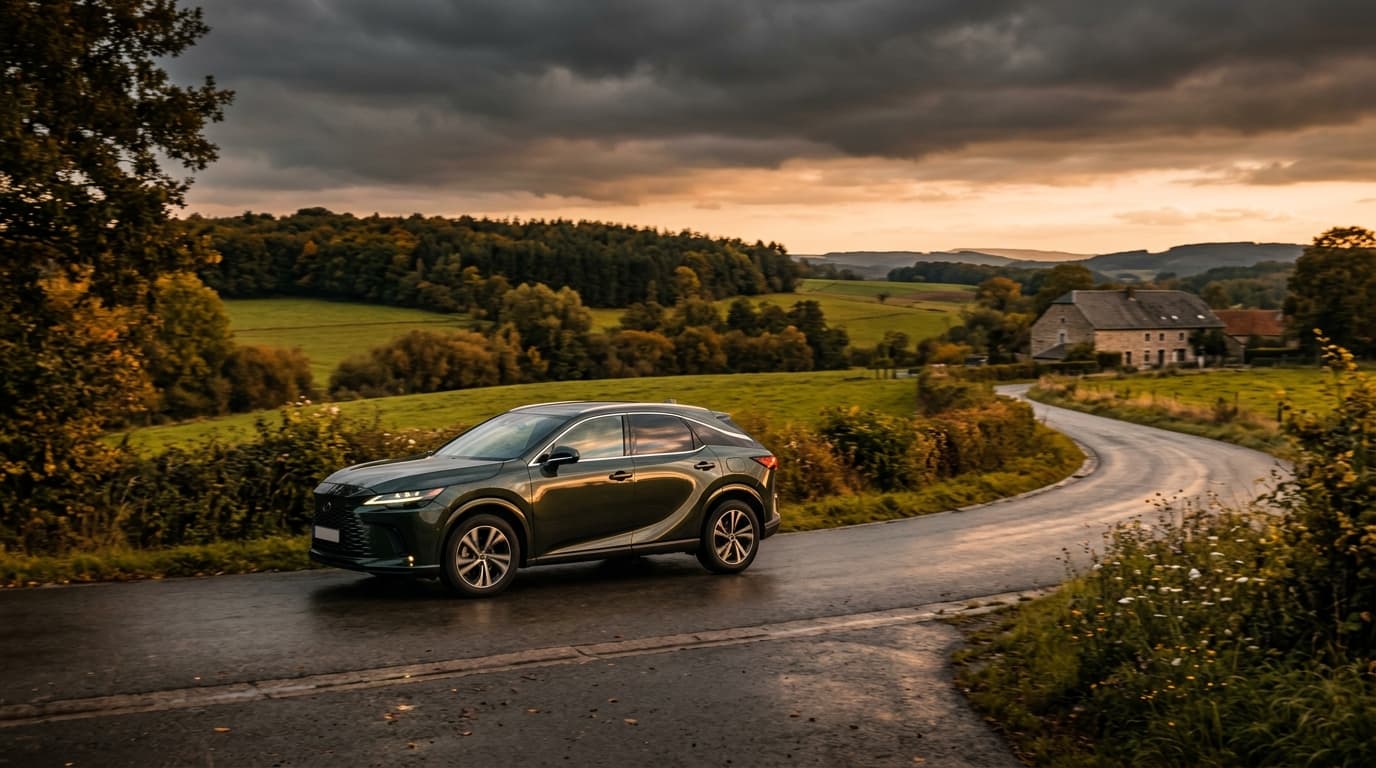
Why do the self-employed keep an edge on PHEVs?
Because the new schedule favourable to plug-in hybrids was judged incompatible with the Belgian commitments made to the European Commission for companies. It therefore applies only to the self-employed taxed on personal income tax and holding a VAT number.
The government had first wanted to bring PHEVs back into the tax race through a softer schedule. Rejected for companies, that schedule survives for the self-employed taxed personally alone (OECCBB, 2026). Concretely, a Euro 6e-bis PHEV ordered in 2026 by a self-employed person stays 95–100% deductible if it emits 50 g CO2/km or less, 75% between 51 and 75 g, and the charging electricity 100% (FLEET, June 2026). Fossil fuel, on the other hand, is no longer deductible.
In practice, this gives a concrete case. A physiotherapist or a self-employed architect buying a Toyota RAV4 PHEV (30–40 g on the COC) personally keeps 100% deduction on the vehicle; the same car, in a company, drops to zero. What we would avoid: defaulting to "company car" thinking when you work as an individual, since that is exactly where the PHEV keeps its appeal in 2026.
What is a "fake hybrid" at 75 g of CO2?
A fake hybrid is a PHEV whose battery is too small (less than 0.5 kWh per 100 kg of weight) or whose emissions exceed a legal threshold. That threshold rises from 50 to 75 g CO2/km under the Euro 6e-bis standard. Above it, the vehicle loses the hybrid regime and falls into the petrol/diesel one.
The tax mechanism is punitive. For a fake hybrid, the administration does not use the vehicle's real emissions but those of an equivalent petrol model using the same fuel; failing an equivalent, it multiplies the CO2 by 2.5 (Securex, 2026). The Euro 6e-bis standard, mandatory for all new PHEVs from 2026, measures emissions in real driving conditions (RDE tests) and mechanically pushes the approved figures up. The result: models once "clean" on paper now cross 75 g.
In practice, it reads off the certificate of conformity (COC). A Volvo XC90 (80 g), an Audi Q7 TFSI e (85–95 g) or a Porsche Cayenne E-Hybrid (90–101 g) are now fake hybrids for tax: zero deductibility, inflated benefit-in-kind. Conversely, a Škoda Superb iV (27–30 g) or a VW Passat eHybrid (29–37 g) stay well under the threshold. The number that really matters is not the power or the claimed electric range, but the exact CO2 on the COC.
Which PHEV stays 100% deductible in 2026?
For a self-employed person taxed personally, a PHEV stays 100% deductible if it emits 50 g CO2/km or less according to its certificate of conformity. Between 51 and 75 g, the deduction caps at 75%. Above 75 g, it drops to zero.
The rule applies model by model, and even trim by trim, since emissions vary by version. The Volkswagen Golf eHybrid (25–32 g), the VW Tiguan eHybrid (33–42 g), the Renault Rafale (39–42 g), the Toyota Prius PHEV (47 g) and the Toyota RAV4 PHEV (30–40 g) clear the 100% bar. The Mercedes GLC (47–57 g) or the Peugeot 308 (50–53 g) swing between 75% and 100% by trim. The BMW 330e (54–60 g), the Peugeot 3008 (55–58 g), the Kia Sportage (60–75 g) and the Volvo XC60 (68 g) cap at 75% (FLEET, June 2026).
In practice, this gives the self-employed a simple buying reflex. Ask for the exact COC CO2 of the target trim, not the commercial range, because a few grams tip you from one tier to the next and change the real bill. For family models, this reasoning meets our dedicated comparison: see our ranking of the best plug-in hybrid SUVs.
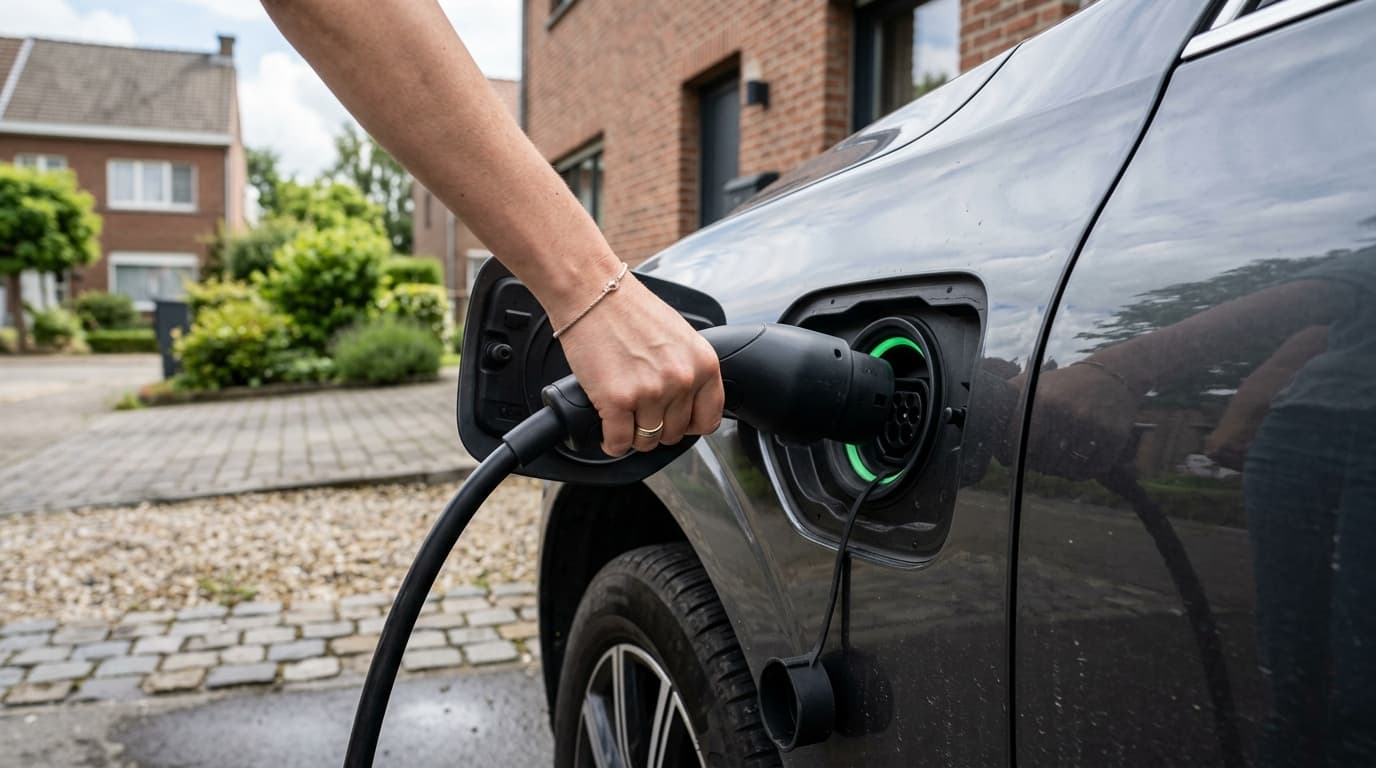
PHEV, electric or self-charging hybrid: which to choose in 2026?
It depends on your tax status. For a company, only the new electric car keeps 100% deduction; the new PHEV no longer has an edge. For a self-employed person taxed personally, a frugal PHEV still makes sense; for a private buyer, the plug-free self-charging hybrid stays the simplest.
The reasoning runs by profile. Director in a company: electric is the rational choice in 2026, the new PHEV having lost its deductibility and the full hybrid too. Self-employed taxed personally: a PHEV under 50 g stays 100% deductible, provided you actually charge it, otherwise real consumption jumps and wipes out the benefit. Private employee: neither the deduction nor the regional grants apply, so a full hybrid or an electric by mileage makes more sense than a PHEV that is expensive to buy.
In practice, it settles fast. The PHEV is today a choice for a self-employed person disciplined about charging, more than a company choice. If you drive little on electric day to day, a self-charging (non plug-in) hybrid avoids the plug premium for a near-matching result in town. And for a company, electric wins on tax.
Comparison: 2026 deductibility of 12 PHEVs for the Belgian self-employed
| Model | COC CO2 (g/km) | Self-employed deductibility (PIT) | Company deductibility (2026 order) |
|---|---|---|---|
| Volkswagen Golf eHybrid | 25–32 | 100% | 0% |
| Škoda Superb iV | 27–30 | 100% | 0% |
| Toyota RAV4 PHEV | 30–40 | 100% | 0% |
| Renault Rafale | 39–42 | 100% | 0% |
| Toyota Prius PHEV | 47 | 100% | 0% |
| Mercedes GLC e-hybrid | 47–57 | 75% or 100% | 0% |
| Peugeot 308 PHEV | 50–53 | 75% or 100% | 0% |
| BMW 330e | 54–60 | 75% | 0% |
| Peugeot 3008 PHEV | 55–58 | 75% | 0% |
| Volvo XC60 | 68 | 75% | 0% |
| Volvo XC90 | 80 | 0% (fake hybrid) | 0% |
| Audi Q7 TFSI e | 85–95 | 0% (fake hybrid) | 0% |
Vehicle deductibility for a Euro 6e-bis PHEV ordered in 2026, as of this article (July 2026). The "self-employed" column = individual under personal income tax, holding a VAT number. The exact CO2 on the certificate of conformity (COC) counts, not the manufacturer's range: a few grams change the tier. Fossil fuel costs are no longer deductible; charging electricity stays at 100% in 2026. Emissions and deductibility per FLEET.be (June 2026) and Securex (December 2025).
Our verdict
For a self-employed person taxed personally, a frugal PHEV stays a defensible choice in 2026: under 50 g of CO2 on the COC, it keeps 100% deduction on the vehicle and 100% on the charging electricity. The Volkswagen Golf eHybrid, the Škoda Superb iV and the Toyota RAV4 PHEV are the safe bets to stay in the top tier, provided you plug the car in daily.
As an alternative, for a company, the new PHEV no longer has a place: the deduction has dropped to zero for any 2026 order, and only electric keeps its 100%. One last reflex before signing: ask for the trim's exact CO2 on the certificate of conformity, because that, and not the sales pitch, decides your deductibility. To fine-tune by budget and mileage, the comparator filters the models and the quiz points you in three questions.
Comparateur Hybrides
Compare tous les hybrides côte à côte.
Comparer maintenant →
Frequently asked questions
Julien essaie des voitures depuis 2012, d’abord pour la presse spécialisée belge, aujourd’hui en indépendant depuis Liège. Il croise les données TÜV, ADAC et les prix catalogue belges plutôt que les fiches constructeur. Sa règle : pas d’essai en concession de 20 minutes, pas de verdict sans chiffre vérifiable.