SUV
Best Plug-in Hybrid SUV 2026: 7 PHEVs Compared
Comparison of the best plug-in hybrid SUVs (PHEV) in Belgium 2026: real electric range, Belgian list prices and tax deductibility. A clear verdict.
The best plug-in hybrid SUV in Belgium in 2026 is the Kia Sportage PHEV: from around €43,000 Belgian list price, nearly 70 km of WLTP electric range and a 7-year warranty that reassures over time. To drive electric for longer day to day, the VW Tiguan eHybrid moves ahead; on reliability, the Toyota RAV4 PHEV remains the safest bet.
Straight verdict: Kia Sportage PHEV for value, VW Tiguan eHybrid for electric range, Toyota RAV4 PHEV for mechanical peace of mind. And one Belgian point not to miss: since 2026, a PHEV is no longer deductible as a company car.
How did we build this ranking?
On three measurable criteria: real electric range, Belgian list price and 2026 tax. Not raw WLTP, not the brochure.
The electric range claimed follows the WLTP cycle, measured in a lab at gentle speeds. On Belgian roads, especially in winter and on the motorway, expect 70 to 80% of that figure. An SUV at 100 km WLTP holds 65 to 75 km in practice in good conditions, and drops to around 55 to 65 km at 0–5 °C with the heating on. The road tests from L'Argus and ADAC (2025) act as a reality check when a manufacturer inflates its sheet.
In practice, that gives a simple rule: a plug-in hybrid SUV only makes sense if you plug it in. Without charging, you carry a heavy battery for nothing. The figure that really matters: your daily mileage. Below the model's real electric range, you drive almost entirely on electricity; above it, the combustion engine takes over.
| Criterion | Source |
|---|---|
| Electric range | Manufacturer WLTP, cross-checked with L'Argus + ADAC 2025 tests |
| Price | BE list price on 22/06/2026, excluding options and discounts |
| Tax | Company + self-employed individual, Belgian 2026 regime |
No affiliate links. No brand pays us for this ranking.
What is the best plug-in hybrid SUV in 2026?
The Kia Sportage PHEV. From around €43,000 Belgian list price, it combines nearly 70 km of WLTP electric range, all-wheel drive and a 7-year warranty. It is the most rational choice for most Belgian families who can charge at home.
The Sportage PHEV's strength is not a flashy spec sheet, it is balance. Its 13.8 kWh battery covers commutes and errands without starting the combustion engine, and the 7-year (or 150,000 km) manufacturer warranty remains the most concrete argument in the segment over the ownership period.
In practice, that gives a family SUV that runs on electricity Monday to Friday if you plug it in every evening, and heads off on holiday without range anxiety at the weekend. What we would avoid: overpaying for a top-spec trim whose contribution stays cosmetic. To place the model in the wider line-up, see our ranking of SUVs in Belgium.
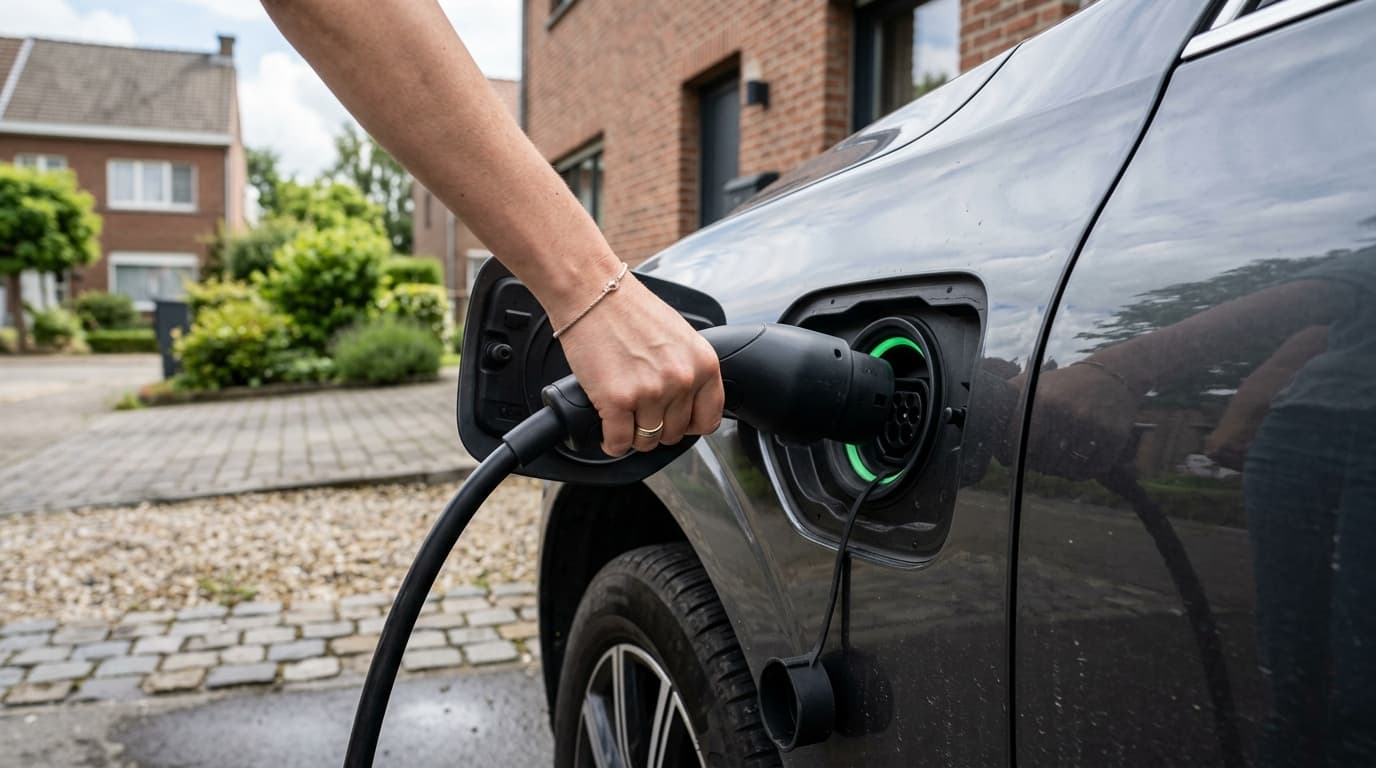
Which PHEV SUV has the longest electric range?
The Mercedes GLC 300e, with up to around 130 km WLTP thanks to a 31.2 kWh battery, exceptional for a plug-in hybrid. Under €50,000, the VW Tiguan eHybrid and the Cupra Formentor eHybrid, which share a 19.7 kWh battery, claim up to ~120 km WLTP.
A PHEV's electric range depends first on battery size. The 2024-2026 generations have almost doubled their capacity compared with PHEVs from four years ago, which capped at 40-50 km. This jump changes the use case: you now cover a week of urban trips without a drop of petrol, provided you plug in.
The 2026 manufacturer data confirms it: the GLC 300e claims ~130 km WLTP, the Tiguan eHybrid and Formentor eHybrid ~120 km, the Renault Rafale E-Tech 4x4 ~105 km with its 22 kWh battery. In real use, subtract 20 to 30%. As of this article (June 2026), no PHEV SUV holds its claimed 100 km on a pure motorway run at 120 km/h. What we would avoid: paying for the large battery if your daily trips are 20 km — a smaller battery is enough and costs less.
Which plug-in hybrid SUV should I choose on a tight budget?
The Kia Sportage PHEV (from ~€43,000) and the Cupra Formentor eHybrid (around €44,000) are the only true PHEV SUVs under €45,000 in Belgian list prices in 2026. Below that, you move to newer brands such as MG, whose EHS PHEV targets the entry level.
A tight budget forces compromises: plainer finish, AC charging only (no DC fast charging on most PHEVs), and contained power. But for family use with home charging, these models cover the essentials without blowing the budget.
In practice: the Sportage PHEV starts around €43,000 (BE list price, June 2026) with its 7-year warranty, the Formentor eHybrid plays the sporty card with up to ~120 km WLTP. The MG EHS PHEV sits lower on price, at the cost of a less established network and resale value. What we would avoid: an entry-level PHEV if you cannot plug it in — the purchase saving is eaten by the extra fuel consumption. If charging is a concern, compare instead with our ranking of the best full hybrids.
Should you still buy a PHEV SUV as a company car in 2026?
No, for a company subject to corporate tax: a plug-in hybrid SUV ordered from 1 January 2026 no longer gives any tax deductibility. Only fully electric cars stay deductible. For a self-employed person taxed as an individual, the picture is different.
The Belgian car tax reform pushes towards pure electric. For company cars, the deductibility of combustion and hybrid drivetrains is fading, and PHEVs ordered from 2026 fall to 0% on the company side. It is a major change for fleets and company directors.
Concretely: a self-employed person taxed as an individual who buys a PHEV SUV emitting 50 g CO2/km or less keeps deductibility of around 75% in 2026, calculated by the formula 120% − (0.5% × g CO2/km), while fuel consumption stays deductible at 75% and electricity at 95% (sources Moniteur Automobile and Securex, January 2026). The figure that really matters: the order date locks in the applicable regime. The same Volvo XC60 PHEV will not get the same treatment whether ordered in late 2025 or in 2026. Check it before signing, and for the electric alternative, read our electric SUV comparison.
Is a plug-in hybrid SUV worth it without a home charger?
Rarely. A PHEV SUV that is never plugged in behaves like a combustion car carrying 200 to 300 kg of extra battery, and often consumes 7 to 9 L/100 km on the motorway. The economy promised by the WLTP label (often under 1 L/100 km) assumes near-daily charging.
The maths is simple: a PHEV's advantage comes from the kilometres driven in electric mode. Without an accessible socket, those kilometres do not exist, and only the drawbacks remain — weight, higher purchase price, a boot sometimes reduced by the battery.
In practice: if you have a charger or even a reinforced socket in the garage, and your daily trips stay below the model's electric range, a PHEV SUV can genuinely cut your fuel budget. Otherwise the maths does not add up. What we would avoid: choosing a PHEV for the image or the theoretical tax advantage without being able to charge it — a full hybrid costs less and consumes less in that exact case.
PHEV or full hybrid: which should you choose for an SUV?
The PHEV if you can charge and your daily trips are short; the full hybrid if charging is awkward or you mostly drive long distances. Both reduce consumption, but not in the same conditions.
A plug-in hybrid SUV plugs in and drives several dozen kilometres on electricity; a full hybrid (like the Toyota RAV4 Hybrid) never plugs in and recovers braking energy to ease the engine in town. The PHEV costs more to buy and is only worth it when charged; the full hybrid is simpler to live with.
In practice: for a 30 km commute with evening charging, the PHEV SUV runs almost entirely on electricity and the engine only serves for weekend getaways. For a sales rep covering 200 km a day without reliable charging, the full hybrid consumes less and costs less. To dig into this choice, see our ranking of the best hybrids 2026.
Comparison table
| Model | BE price (from) | Battery | Electric range WLTP | Key point |
|---|---|---|---|---|
| Kia Sportage PHEV | ~€43,000 | 13.8 kWh | ~70 km | 7-year warranty, best value |
| Cupra Formentor eHybrid | ~€44,000 | 19.7 kWh | ~120 km | Sporty, long range |
| VW Tiguan eHybrid | ~€46,000 | 19.7 kWh | ~120 km | Versatile, high range |
| Toyota RAV4 PHEV | ~€52,000 | 18.1 kWh | ~75 km | Reliability, AWD |
| Renault Rafale E-Tech 4x4 | ~€52,000 | 22 kWh | ~105 km | 300 hp, long range |
| Volvo XC60 PHEV | ~€62,000 | 18.8 kWh | ~80 km | Comfort, premium finish |
| Mercedes GLC 300e | ~€71,000 | 31.2 kWh | ~130 km | Longest electric range |
Indicative BE list prices on 22/06/2026, excluding options and discounts. Manufacturer WLTP electric ranges; expect 20 to 35% less in real use, more in winter. Figures subject to change.
Verdict
Main pick: Kia Sportage PHEV — the best balance of price, electric range and warranty for a Belgian family that charges at home, from ~€43,000.
Range alternative: VW Tiguan eHybrid — up to ~120 km WLTP on electricity, ideal if your daily trips are long but chargeable, around €46,000.
And before signing, ask yourself the one question that really decides it: can you plug it in every day? If yes, the PHEV delivers. If not, look at a full hybrid. To refine the choice for your use, compare the models with our comparison tool or take the quiz.
Sources: L'Argus 2025 road tests, ADAC Autotest 2025, 2026 manufacturer sheets, BE dealer list prices on 22/06/2026 (moniteurautomobile.be, lizy.be), company-car and self-employed (individual) tax regime — Moniteur Automobile and Securex (January 2026). WLTP ranges, real use lower. Prices subject to change.
Comparateur SUV
Compare tous les suv côte à côte.
Comparer maintenant →
Frequently asked questions
Julien essaie des voitures depuis 2012, d’abord pour la presse spécialisée belge, aujourd’hui en indépendant depuis Liège. Il croise les données TÜV, ADAC et les prix catalogue belges plutôt que les fiches constructeur. Sa règle : pas d’essai en concession de 20 minutes, pas de verdict sans chiffre vérifiable.