SUV
Best Electric SUV 2026 in Belgium: 8 Models Compared
Comparison of 8 electric SUVs in Belgium 2026: real-world range (not WLTP), Belgian list prices and company-car deductibility. A clear verdict.
The best electric SUV in Belgium in 2026 is the Tesla Model Y: around 450 to 480 km of real-world range, a €44,990 entry price and the densest fast-charging network in the country. For a family that drives a lot, the Renault Scenic E-Tech and the Kia EV3 are worth a close look, and often cheaper.
Straight verdict: Tesla Model Y for versatility and charging, Renault Scenic E-Tech for boot space and family comfort, Kia EV3 for the best range-per-euro under €40,000.
How did we build this ranking?
On three measurable criteria: real-world range, Belgian list price and ease of charging. Not raw WLTP, not the marketing sheet.
The range claimed by manufacturers follows the WLTP cycle, measured in a lab. On a Belgian motorway at 120 km/h, expect 25 to 35% less. The road tests from L'Argus and ADAC (2025) act as a reality check here: when a manufacturer claims 600 km, we keep the real order of magnitude, not the brochure figure.
In practice, that gives a huge gap: an electric SUV claimed at 500 km WLTP often holds 330 to 360 km in winter, heating on. That is the figure that matters when you drive home from the coast on a January evening.
| Criterion | Source |
|---|---|
| Real-world range | L'Argus + ADAC Autotest 2025 road tests (not manufacturer WLTP) |
| Price | BE list price on 21/06/2026, excluding options |
| Tax | Private + company car, Belgian 2026 regime |
No affiliate links. No brand pays us for this ranking.
What is the best electric SUV in 2026 in Belgium?
The Tesla Model Y. At €44,990 in rear-wheel drive, it combines a real-world range of around 450–480 km, stress-free fast charging and a controlled running cost. It is the most rational choice for most Belgian drivers.
The Model Y's strength is not its spec sheet, it is the ecosystem. The Supercharger network remains the densest and most reliable in Belgium in 2026, with stations along the E40 and E411 that charge from 10 to 80% in 25–30 minutes. The built-in route planning avoids nasty surprises on a long trip.
In practice, that gives an SUV you live with without doing maths. On a Brussels–Paris run, you charge once, twenty minutes, the time for a coffee. The 854 L of boot space (with the frunk) swallows the luggage of a family of four. What we would avoid: the Performance version at €59,990, whose 460 hp adds nothing to family use and eats into range.
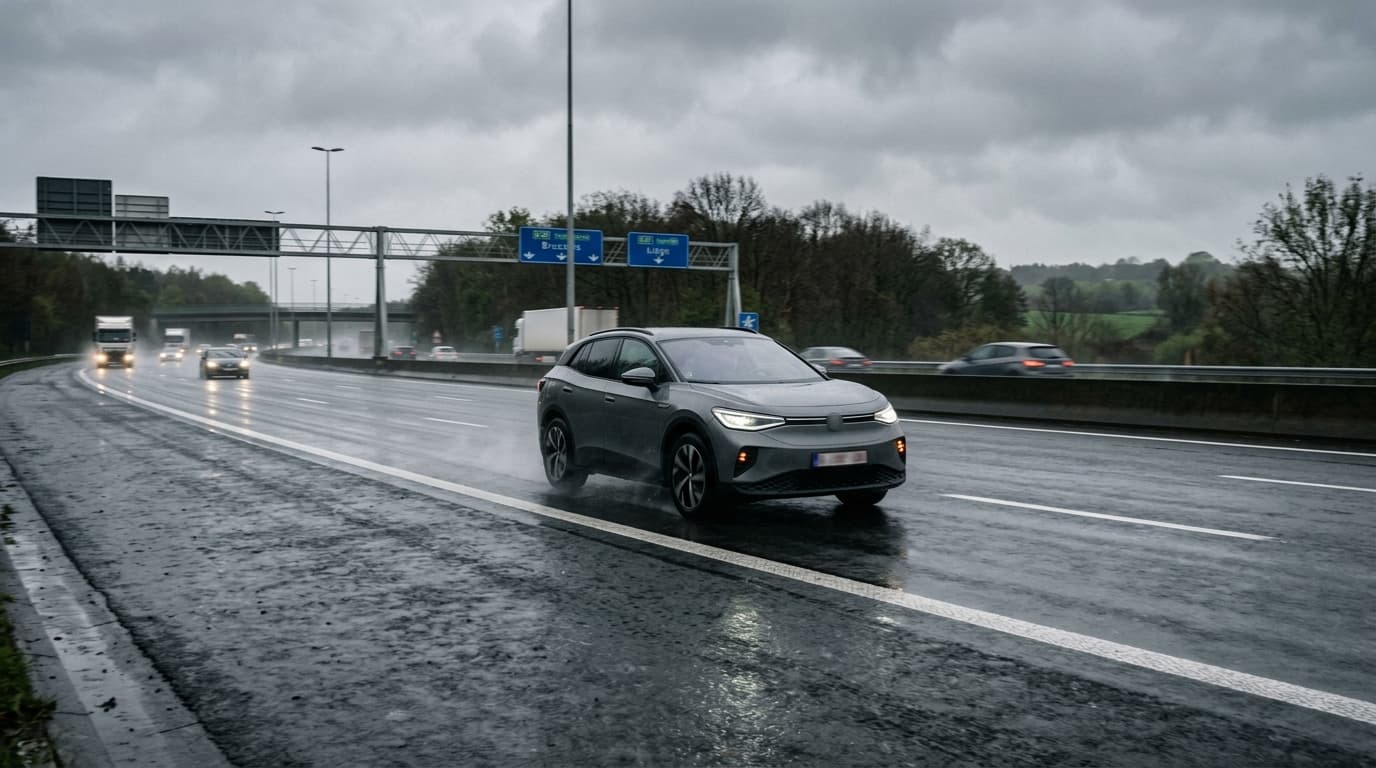
Which electric SUV has the best real-world range?
The Peugeot e-3008 in 98 kWh form and the long-battery Renault Scenic E-Tech, around 500 to 560 km of estimated real range. The Peugeot claims 700 km WLTP, a record on paper; in real Belgian life, the gap narrows.
Real range depends first on battery size, then on aerodynamics and weight. A tall, heavy SUV consumes more than a saloon with the same battery. That is why the WLTP figures for SUVs are misleading: they are measured in gentle conditions that flatter large vehicles.
The 2025 road-test data shows it: the Peugeot e-3008 98 kWh, claimed at 700 km WLTP, holds around 520–560 km of estimated real range in mixed use, and clearly less on the motorway alone. The Scenic E-Tech 87 kWh follows closely, at about 500 km. As of this article (June 2026), no electric SUV under €60,000 genuinely exceeds 560 km in normal conditions. What we would avoid: paying the large-battery premium if you mostly drive in the city, where a 60 kWh battery is plenty.
Which family electric SUV should I choose under €50,000?
The Renault Scenic E-Tech for boot space (545 L) and comfort, or the Skoda Enyaq (585 L) for sheer volume. Both come in under €50,000 at entry level and offer genuine family practicality.
A family of four needs three things: a boot that swallows a pushchair and suitcases, legroom in the back, and a range that covers a weekend round trip without an intermediate charge. The Scenic and the Enyaq tick these boxes better than the Model Y on cargo volume, even if Tesla keeps the edge on charging.
In practice: the Scenic E-Tech starts around €41,000 Belgian list price (June 2026), with 545 L of boot and about 500 km of estimated real range. The Skoda Enyaq, from €43,000, offers 585 L and a plain but solid finish. The Kia EV3, more compact, drops to €37,000 and stays covered for 7 years, the most concrete reliability argument in the segment. What we would avoid: a coupé-roof SUV (such as the Enyaq Coupé) if you regularly carry tall items.
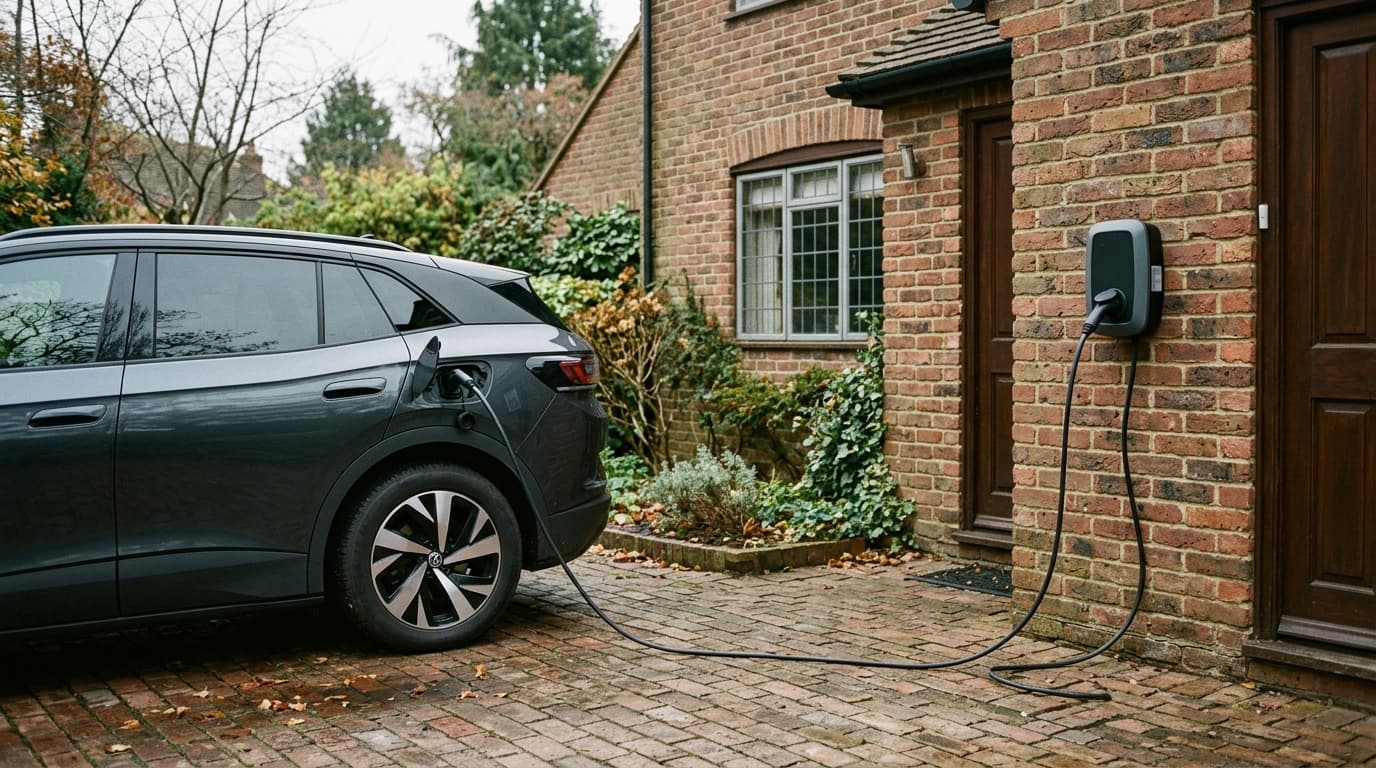
Is the Tesla Model Y still the best choice in 2026?
Yes for versatility, no on every criterion. The Model Y remains unbeatable on charging and running cost, but it is overtaken on boot space, finish and ride comfort by the European competition.
Tesla's dominance has eroded. In 2026, the Scenic, the Enyaq and the Kia EV3 offer better-finished interiors and a more settled drive. The Model Y keeps two hard-to-beat advantages: the Supercharger network and a still-solid resale value, even if it is falling.
Concretely: if you do a lot of motorway and long trips, the Model Y remains the most serene choice, thanks to charging. If you mostly drive around home and finish and comfort matter, the Scenic or the Enyaq will make you happier day to day. The 2025 resale data shows the Model Y holds its value better than the segment average, which partly offsets its austere interior.
Which electric SUV for a small budget in 2026?
The Citroën ë-C3 Aircross (from €23,400) and the MG ZS EV (around €30,000). These are the only true electric SUVs under the €30,000 mark in Belgium, at the cost of more modest range.
A tight budget forces compromises: smaller battery, slower charging, more basic finish. But for urban and suburban use, these models cover real needs without taking on debt. The mistake would be paying for a big electric SUV to drive 30 km a day.
In practice: the ë-C3 Aircross, from €23,400 (BE list price, June 2026), offers about 300 km WLTP, meaning 200–230 km real. Enough for the week, to charge at the weekend. The MG ZS EV adds boot space and a long warranty. What we would avoid: these models if you do a long motorway trip every week, because their slower charging quickly stretches the stops.
Do you need an electric SUV for a company car in 2026?
Yes, if you want to keep the tax deductibility. Since the Belgian reform, only fully electric cars (0 g CO2) stay 100% deductible as company cars in 2026. Combustion and hybrid drivetrains lose their advantage.
The Belgian company-car tax regime pushes clearly towards electric. For a self-employed person or a company, a fully electric SUV stays 100% deductible, where a petrol or diesel equivalent sees its deductibility shrink. The net cost gap over five years can exceed several thousand euros.
Concretely: a Tesla Model Y or a Peugeot e-3008 on a company lease enjoy maximum deductibility in 2026, while an equivalent diesel SUV is increasingly penalised. Be careful, though: the deductibility of electric cars themselves is scheduled to decrease gradually after 2027, depending on the order date. The figure that really matters: the order date determines the applicable regime, so check it before signing. For the detail of the calculation, see our ranking of SUVs in Belgium and our electric car coverage.
Comparison table
| Model | BE price (from) | Battery | Estimated real range | Boot |
|---|---|---|---|---|
| Tesla Model Y | €44,990 | 60 kWh | 450–480 km | 854 L* |
| Renault Scenic E-Tech | €41,000 | 87 kWh | ~500 km | 545 L |
| Kia EV3 | €37,000 | 81.4 kWh | ~500 km | 460 L |
| Skoda Enyaq | €43,000 | 82 kWh | ~480 km | 585 L |
| Peugeot e-3008 98 kWh | €49,000 | 98 kWh | 520–560 km | 520 L |
| Hyundai Ioniq 5 | €45,000 | 84 kWh | ~480 km | 520 L |
| VW ID.4 | €44,000 | 77 kWh | ~440 km | 543 L |
| Citroën ë-C3 Aircross | €23,400 | 44 kWh | 200–230 km | 460 L |
*Total Tesla Model Y boot including the front trunk (frunk). BE list prices on 21/06/2026, excluding options and any grants. Estimated real ranges based on L'Argus and ADAC 2025 tests.
Verdict
Main pick: Tesla Model Y — the best combination of real-world range, charging and running cost for most Belgian drivers, at €44,990.
Family alternative: Renault Scenic E-Tech — more boot space, better finish and comfort, around €41,000, if long-distance charging is not your priority.
To refine the choice for your use, compare the models with our comparison tool or take the quiz. And if you are still hesitating between energy types, read our electric car coverage.
Sources: L'Argus 2025 road tests, ADAC Autotest 2025, BE dealer list prices on 21/06/2026 (moniteurautomobile.be, lizy.be), company-car tax regime SPF Finances 2026. Estimated real ranges, excluding options. Prices subject to change.
Comparateur SUV
Compare tous les suv côte à côte.
Comparer maintenant →
Frequently asked questions
Julien essaie des voitures depuis 2012, d’abord pour la presse spécialisée belge, aujourd’hui en indépendant depuis Liège. Il croise les données TÜV, ADAC et les prix catalogue belges plutôt que les fiches constructeur. Sa règle : pas d’essai en concession de 20 minutes, pas de verdict sans chiffre vérifiable.