Citadines
Renault Clio 2026 review: our full verdict from Belgium
Renault Clio 2026 review: Belgian prices from €18,950, real-world E-Tech 160 fuel use, weak points, and how it compares with the Toyota Yaris and Volkswagen Polo.
The sixth Renault Clio arrives with a design that splits opinion and a simple promise: to stay the all-round city car you buy without overthinking it. After the road tests published in Belgium since March 2026, the conclusion fits in one sentence: the substance is better than the styling suggests. Here is what its three powertrains are worth, its real fuel figures and its flaws.
Bottom line up front: the E-Tech 160 at €23,550 if you drive a lot in town and enjoy driving. The TCe 115 at €18,950 if your annual mileage stays under 12,000 km.
Is the Renault Clio 2026 worth its price in Belgium?
Yes at entry level, less obviously once you move up the trim range.
On the Belgian market the Clio 2026 starts at €18,950 with the TCe 115 petrol and climbs to €23,550 for the E-Tech 160 full hybrid (Touring, March 2026). At that entry price, no mainstream rival offers as much technology: a twin-screen setup with built-in Google, a full suite of driver aids, and build quality Touring called near-flawless in its 20 March 2026 road test.
What does that mean in practice? The classic trap sits above the Evolution trim. Move up to Techno then Esprit Alpine and a properly equipped hybrid Clio quickly passes €26,000 — the territory of a well-specced Volkswagen Polo or a Toyota Yaris Hybrid listed at €24,750 (Belgian list price, July 2026). The figure that really matters: the €4,600 gap between the TCe 115 and the E-Tech 160. At €0.08 of fuel saved per kilometre, it takes around 57,000 km to pay back — four to five years for an average Belgian driver.
Which Clio engine should you choose: TCe 115, Eco-G or E-Tech 160?
The E-Tech 160 for high-mileage urban drivers, the TCe 115 for low mileage, the Eco-G 120 if you already have an LPG station on your route.
Three engines in the Belgian range. The TCe 115 is a light, adequate 1.2 L turbo three-cylinder. The Eco-G 120 runs on LPG, a fuel that stays clearly cheaper at the pump in Belgium but whose distribution network varies by province. The E-Tech 160 pairs a 1,789 cc naturally aspirated four-cylinder with two electric machines and Renault's multi-mode gearbox, for 160 hp and 270 Nm.
Touring's road test figures (March 2026) give the hybrid 8.3 s from 0 to 100 km/h and 89 g CO2/km, for a 1,480 kg kerb weight. What we would avoid: taking the Eco-G "on green principle" without checking the LPG station map on your daily route. On the Belgian market, a Namur-Brussels commuter will be fine; a rural driver in the province of Luxembourg risks a weekly detour.
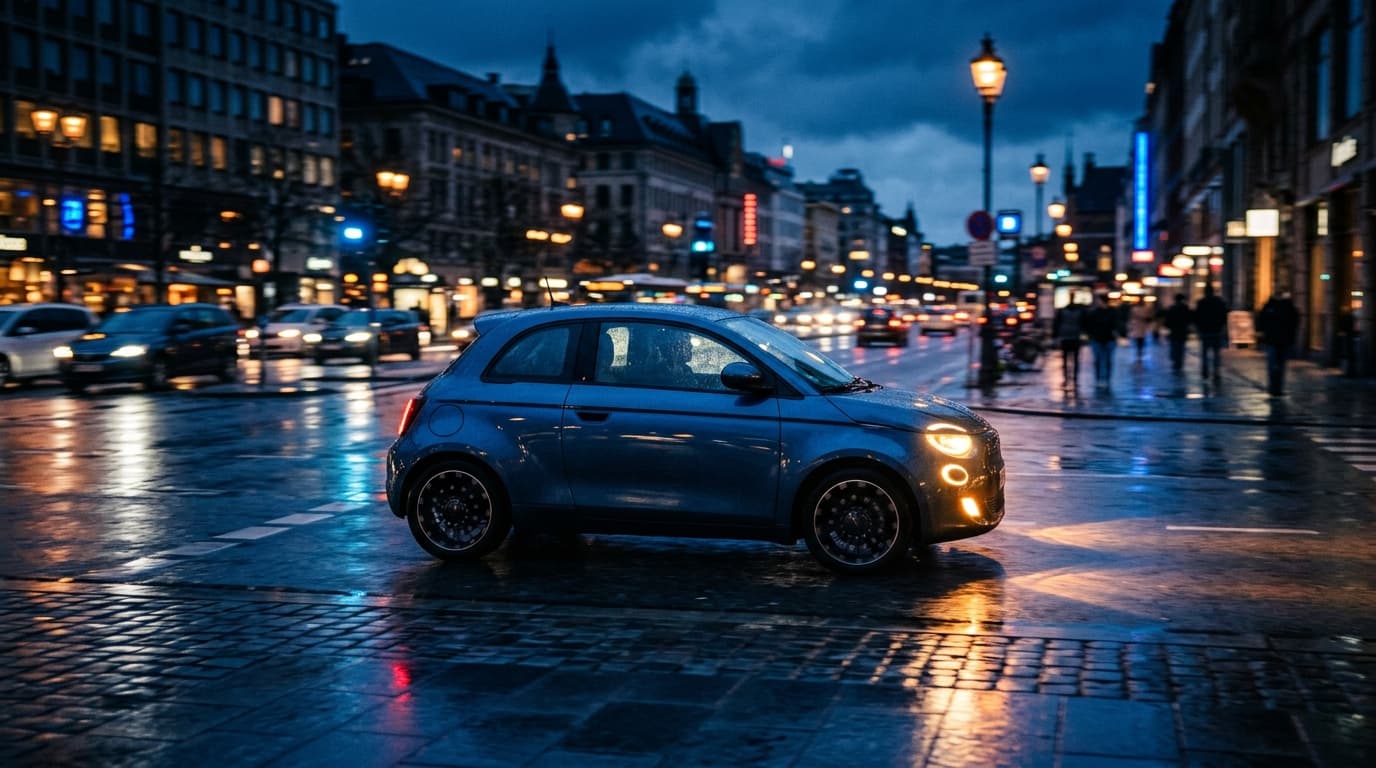
What is the real-world fuel consumption of the Clio E-Tech 160?
Between 3.8 and 5 L/100 km in mixed use, against 3.9 L/100 km claimed on the WLTP cycle.
The independent measurements converge, which is rare. Touring recorded around 5 L/100 km with no particular eco-driving effort in its March 2026 test. Motor1 got down to 3.75 L/100 km on its standardised test route (2026), below the homologation figure. L'Argus, in its E-Tech 160 road test (2026), confirms very low urban consumption, under the 4 L mark for a driver who makes use of the electric mode.
In practice, that gives a clear split by use case. In town and on secondary roads, the Renault hybrid is among the most frugal in its segment: the combustion engine shuts off often and regenerative braking recharges continuously. On the motorway at 120-130 km/h the advantage evaporates and consumption climbs back above 6 L/100 km, level with a good diesel. One caveat: some owners report urban consumption on the Renault E-Tech forums well above the press figures. As of this article (August 2026), no technical recall has been published on the subject in Belgium.
Do the new design and cabin hold up?
The exterior divides opinion, the cabin convinces on materials but lacks light.
Renault committed to a sharp stylistic break: a hard-edged front end, a compact silhouette, heavily worked light units. Touring's test sums up the typical reaction — doubts in photos, which fade in front of the real car. Inside, the materials are appealing and the build quality near-flawless. The twin-screen interface with built-in Google remains one of the most intuitive on the market: native Maps navigation, voice commands that work in French, over-the-air updates.
Two concrete reservations. Belgian testers judge the interior atmosphere dull, for lack of contrast and lighter materials. And rear space is only just adequate for a 1.80 m adult on a short trip: the Clio 6 gained wheelbase, but the benefit went to handling rather than passengers' knees. The boot makes up for it: 264 L in hybrid form, up to 760 L with the bench folded.
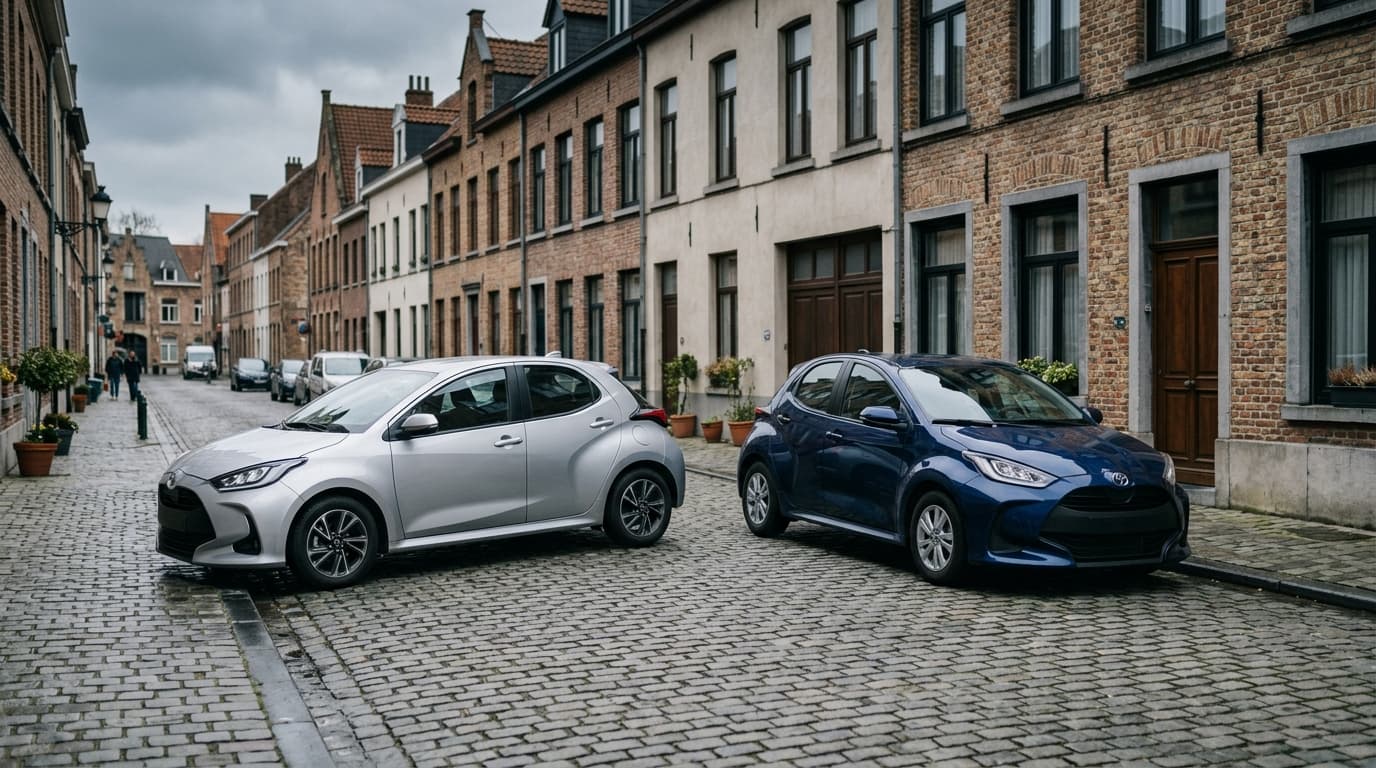
Clio 2026 against the Toyota Yaris and Volkswagen Polo: which to pick?
The Clio for driving pleasure and boot space, the Yaris for measured reliability, the Polo for the network and perceived quality.
The Toyota Yaris Hybrid posts a 2% failure rate in the TÜV Report 2026 (January 2026), the best score in the segment on 2 to 3 year-old cars. That is the knockout argument against a Clio 6 too recent to have any track record. The Volkswagen Polo plays the densest service network in Belgium and upmarket perceived quality, but its €23,500 petrol entry price makes it expensive next to a €23,550 hybrid.
In practice, that gives three distinct profiles. The Clio E-Tech 160 is the most enjoyable of the three to drive: precise steering, a lively chassis, 160 hp that are more than enough. The Yaris Hybrid is the safest bet over eight to ten years of ownership, with the Toyota Relax warranty up to 10 years provided you service it within the network. The Peugeot 208, the other French rival here, remains more appealing thanks to its i-Cockpit dashboard but offers less boot space and rear room. The Dacia Sandero, at €14,490, plays a different game: less equipment, but €4,500 below the entry-level Clio.
Comparison table: the Clio 2026 against its Belgian rivals
| Model | Tested powertrain | Recorded fuel use | Belgian price (from) | Boot |
|---|---|---|---|---|
| Renault Clio E-Tech 160 | 1.8 L full hybrid — 160 hp | 3.75 to 5 L/100 km | €23,550 | 264 L |
| Renault Clio TCe 115 | 1.2 L turbo petrol — 115 hp | ~5.5 L/100 km | €18,950 | 301 L |
| Toyota Yaris Hybrid | Full hybrid — 130 hp | ~4.0 L/100 km (city) | €24,750 | 286 L |
| Volkswagen Polo | 1.0 TSI petrol | ~5.6 L/100 km | €23,500 | 351 L |
| Dacia Sandero | 1.0 TCe 90 petrol | ~5.9 L/100 km | €14,490 | 328 L |
Clio: spec sheet and figures from Touring (March 2026) and Motor1 (2026). Belgian list prices recorded in March 2026 (Clio) and July 2026 (rivals). Fuel figures from independent road tests, not manufacturer claims.
What are the weak points of the Renault Clio 2026?
Four real flaws, only one of which is a deal-breaker depending on your use.
The multi-mode gearbox remains the main criticism. Renault has clearly improved it on this generation — Belgian testers speak of a harmony finally found, with sharper responses in Sport mode — but it keeps noticeable reaction times when you ask for a sudden pick-up. If you are coming from a torque-converter automatic, expect a few weeks of adjustment.
The other three points are more circumstantial. Rear seats are tight beyond 1.80 m: a family with two teenagers should look at a Captur rather than a Clio. The cabin lacks light, a subjective but recurring criticism. And the exterior styling divides sharply — which weighs on five-year resale value, a criterion that matters on a Belgian market where a mainstream city car's residual value comes down to a few hundred euros. What we would avoid: ordering from the configurator without seeing the car at a dealership.
Our verdict: who is the Renault Clio 2026 for?
Main recommendation — Clio E-Tech 160, €23,550: for the urban or suburban commuter covering more than 15,000 km a year, mostly off the motorway. Real fuel use under 5 L/100 km, 89 g CO2/km, and the best driving feel in the segment. This is the version that justifies the purchase.
Alternative — Clio TCe 115, €18,950: for use under 12,000 km a year. At that mileage the €4,600 gap with the hybrid never pays back, and the turbo three-cylinder stays lively and adequate.
The deciding factor: how much of your annual mileage is urban. Above 60% urban and suburban use, the hybrid wins clearly. Below that, the petrol remains the rational choice. And if measured reliability matters more than driving pleasure, the Toyota Yaris Hybrid keeps a head start until the Clio 6 has three years of technical inspections behind it.
To place the Clio in its segment, see our ranking of the best city cars in Belgium, which pits the Clio E-Tech directly against the Yaris. If reliability is your number one criterion, our city car reliability ranking is built on TÜV data, and our used city car guide covers the second-hand route. The comparison tool filters by price, boot and fuel use.
Sources: Touring — Renault Clio 6 road test (20 March 2026), Motor1 — real-world consumption test (2026), L'Argus — E-Tech 160 road test (2026), TÜV Report 2026 (January 2026), Test-Achats (reliability 2025). Belgian list prices recorded in March and July 2026.
Comparateur Citadines
Compare tous les citadines côte à côte.
Comparer maintenant →
Frequently asked questions
Julien essaie des voitures depuis 2012, d’abord pour la presse spécialisée belge, aujourd’hui en indépendant depuis Liège. Il croise les données TÜV, ADAC et les prix catalogue belges plutôt que les fiches constructeur. Sa règle : pas d’essai en concession de 20 minutes, pas de verdict sans chiffre vérifiable.