Hybrides
Toyota Yaris Cross hybrid 2026: our review (Belgium)
Toyota Yaris Cross hybrid 2026 in Belgium: catalogue price from €30,945, real consumption under 5 L/100 km, 116 or 130 hp, and a face-off with the Captur E-Tech and the HR-V.
The Toyota Yaris Cross gets a facelift in 2026 and stays the safe pick among urban hybrid SUVs. On the Belgian market it starts at €30,945 and shows real consumption around 4.5 to 5.0 L/100 km, below 4 L/100 km in town. Here is our review, Belgian figures in hand, the choice between 116 and 130 hp, and the cases where a Renault Captur E-Tech or a Honda HR-V shakes it up.
Should you buy the Toyota Yaris Cross hybrid in 2026?
Yes, if you want a compact SUV that is frugal, reliable and easy to live with in town and on the road. The Yaris Cross hybrid combines the lowest consumption in its class, a high driving position and the Toyota after-sales network. For lots of space or a very tight budget, other formats will do better.
The Yaris Cross does not play the spec-sheet card, but the coherence one. Toyota's hybrid system, the most mature on the market, solves the real problem of an urban vehicle: driving a lot in town without blowing the fuel budget. The 2026 facelift, described by the Belgian press as "a little rejuvenation" (Moniteur Automobile, 2026), modernises the front end and infotainment and even cuts the entry price.
In practice, this gives a simple choice for a precise profile. A couple or a small Belgian family driving mostly between home, school and shops finds little more relaxing at this price. Conversely, a family of five leaving loaded every weekend will quickly feel cramped and look one notch up. To place the Yaris Cross in its segment, our comparison of the best small SUVs 2026 sets it against its direct rivals.
How much does the Yaris Cross hybrid cost in Belgium in 2026?
It starts at €30,945 on the Belgian catalogue for the restyled version. The 116 hp Dynamic sits around €32,060, and the 130 hp trims, especially with all-wheel drive, climb to about €39,215 (Autofans.be / Moniteur Automobile, 2026).
This grid places the Yaris Cross in the heart of the urban hybrid SUV market. Good news from the facelift: the entry price drops compared with the previous generation, making it more accessible at comparable equipment. The gap between 116 and 130 hp comes mainly from punch and the all-wheel-drive option; the higher trims add equipment, not extra mechanics.
The number that really matters: the 116 hp Dynamic around €32,060 is the best compromise for classic urban use. You pay for economy and finish without the premium of all-wheel drive rarely useful in town. What we would avoid: aiming for a high 130 hp AWD-i trim near €39,000 for use without snow or load, since you carry traction you will almost never use.
What is the real consumption of the Yaris Cross hybrid?
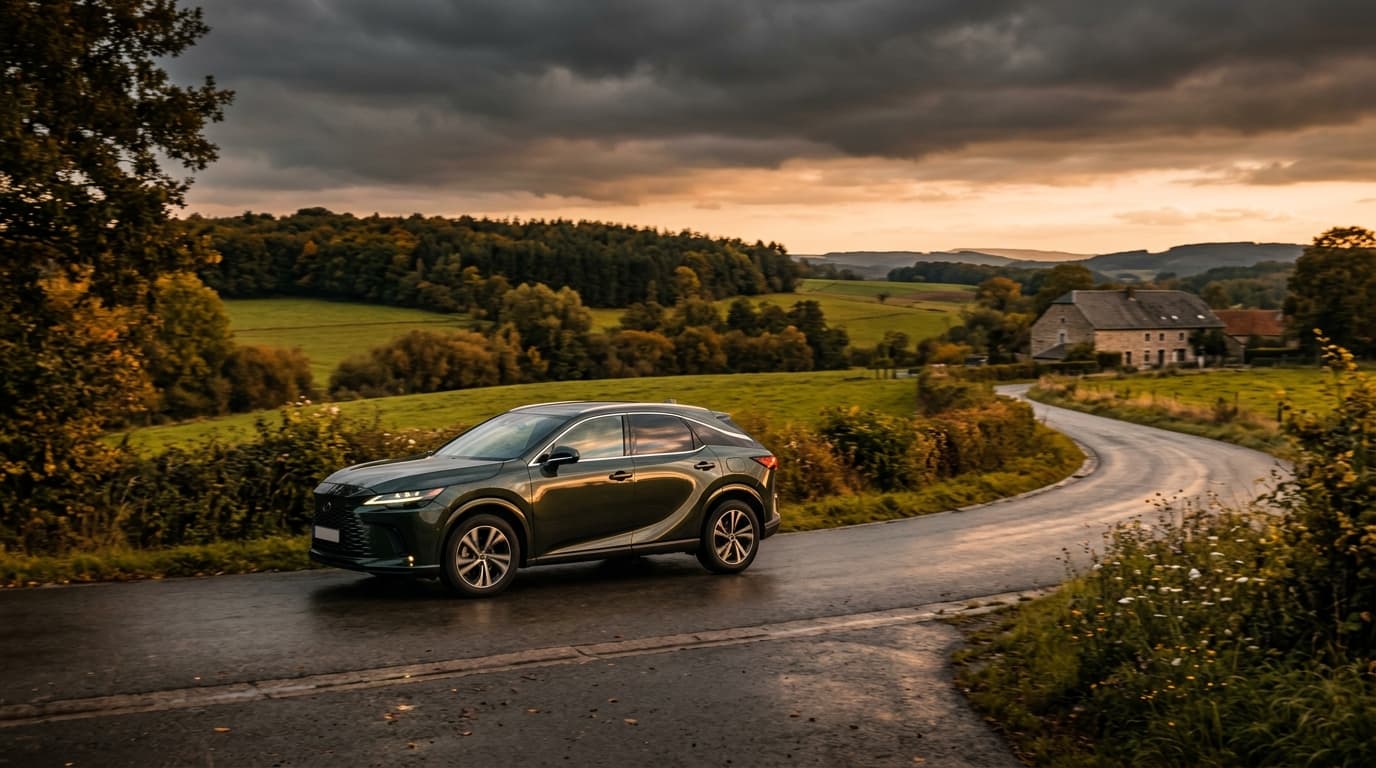
Expect 4.5 to 5.0 L/100 km in real mixed use, for a rated figure of 4.4 to 5.0 L/100 km (WLTP) depending on power and drivetrain. In pure city driving it often drops below 4 L/100 km. It is one of the most frugal urban hybrid SUVs on the market, which explains the small gap between the official figure and reality.
The efficiency comes from Toyota's hybrid system, able to run often on electric at low speed. Where a classic petrol urban SUV easily tops 7 L/100 km in town, the Yaris Cross drops below 5 thanks to braking energy recovery and electric take-off. On the motorway the advantage shrinks, as the petrol engine runs more at steady speed.
In practice, this gives a controlled fuel budget. The number that really matters: with a 36-litre tank, real range approaches 800 km, spacing out trips to the pump. What we would avoid: relying on the motorway figure alone, since at 120 km/h loaded the Yaris Cross climbs to 5.5 to 6 L/100 km, like all its hybrid rivals. To compare over time, see our comparison of the best hybrids 2026 in Belgium.
116 or 130 hp: which version to choose?
The 116 hp for urban and suburban use, the 130 hp for punch and all-wheel drive. The entry engine is front-wheel drive only and shows the lowest consumption; the 130 hp adds response and opens the AWD-i option, useful for high-mileage drivers and difficult roads.
The difference is first a question of real use, not paper power. The 116 hp is plenty in town and on Belgian roads, where you rarely drive at full load. The 130 hp shows mostly in acceleration and motorway merging, and the AWD-i version adds traction on slippery ground, at the cost of a slightly higher consumption and price.
In practice, this gives two clear profiles. Urban trips and a tight budget: the 116 hp Dynamic, cheaper and more frugal. High mixed mileage or a need for winter traction: the 130 hp, possibly in AWD-i. On the Belgian market, all-wheel drive stays a niche choice most buyers do not need to pay for.
Yaris Cross vs Renault Captur E-Tech vs Honda HR-V: which to choose?
The Yaris Cross for economy, the Captur E-Tech for space and its modular boot, the HR-V for onboard refinement. All three target the same Belgian buyer of urban hybrid SUVs, but each has a real personality, making the choice depend on your use rather than an absolute ranking.
The Renault Captur E-Tech full hybrid bets on roominess and a sliding bench that pushes the boot well beyond the Yaris Cross, but drinks more in real use, around 5.0 to 5.5 L/100 km. The Honda HR-V e:HEV works on soundproofing and perceived quality, but stays the thirstiest of the trio (~5.5 to 6 L/100 km real) and the most expensive to buy. The Yaris Cross keeps the edge on overall economy and on resale value.
In practice, this gives three profiles. Mostly urban driver who wants the lowest consumption: Yaris Cross. Family that needs boot space and versatility: Captur E-Tech. Buyer sensitive to comfort and quiet: HR-V. What we would avoid: choosing on the spec sheet alone, since the real consumption gap shows mostly in town, less on the motorway.
Is the Yaris Cross hybrid a good choice as a company car in 2026?
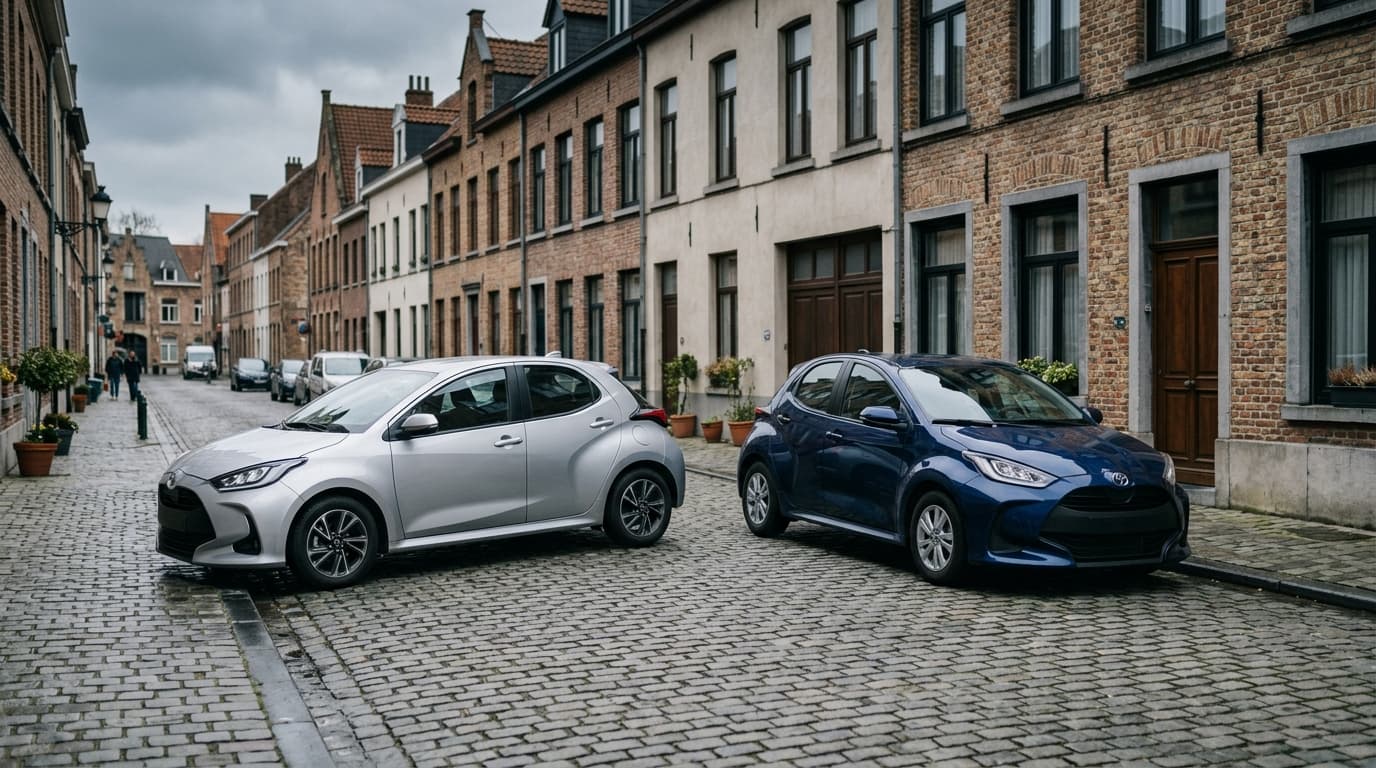
Not really any more in 2026. Since 1 January 2026, a new self-charging hybrid (HEV) ordered is no longer deductible as a company car, just like petrol. For private use the Yaris Cross stays relevant; for a company, electric takes back the tax edge.
For a Belgian self-employed person or company, the sum has changed. The tax reform now reserves deductibility for zero-emission vehicles: new self-charging hybrids lose that advantage as company cars (Securex, 2026), while electric stays 100% deductible. A Yaris Cross HEV keeps all its sense as a private purchase for its economy, but as a company car it loses ground to an electric equivalent.
In practice, this gives a trade-off to make before buying, by status. Employee or private buyer purchasing their car: the HEV keeps all its appeal, simple and frugal, with no charge point to install. Self-employed taxed personally: the deduction in principle remains possible in 2026. What we would avoid: ordering an HEV in a company's name still expecting to deduct it; for the detail, see our hybrid car buying guide for Belgium.
What are the weak points of the Yaris Cross 2026?
Three mainly: tight rear space, a hybrid drivetrain that gets noisy under hard acceleration, and high trims that quickly get expensive. The 2026 facelift improves everywhere, but these reservations remain choices not everyone accepts.
Space first: with a 397-litre boot and modest rear headroom, the Yaris Cross stays an urban SUV, not a family one. Noise next: the continuously variable transmission sends the engine up the rev range under hard acceleration, a trait common to Toyota hybrids that long loaded trips accentuate. Finally, a 130 hp AWD-i trim near €39,000 gets close to the price of larger SUVs.
In practice, this gives points to test yourself before signing. What we would avoid: choosing a high trim for its equipment without checking rear space with the family on board, or paying for AWD-i for purely urban use. For frugal city use, the 116 hp Dynamic stays the most rational choice in the range.
Comparison: Yaris Cross hybrid against its rivals in Belgium
Here are the three urban hybrid SUVs fighting for the same Belgian buyer in 2026, on the criteria that really matter: entry price, real consumption and boot.
| Criterion | Toyota Yaris Cross hybrid | Renault Captur E-Tech | Honda HR-V e:HEV |
|---|---|---|---|
| Entry price BE (2026) | €30,945 | ~€29,000 | ~€34,000 |
| Rated mixed consumption | 4.4–5.0 L/100 km | ~5.0 L/100 km | ~5.4 L/100 km |
| Real mixed consumption | ~4.5–5.0 L/100 km | ~5.0–5.5 L/100 km | ~5.5–6.0 L/100 km |
| Boot | 397 L | up to ~484 L | 335 L |
| Key strength | Economy + reliability | Space + versatility | Comfort + quiet |
Indicative catalogue prices on the Belgian market as of this article (July 2026). Yaris Cross price: Autofans.be / Moniteur Automobile (2026). Rated WLTP consumption from manufacturers; real consumption varies with route and load. Captur and HR-V prices vary by trim.
Our verdict
For a mostly urban Belgian driver, the Toyota Yaris Cross 116 hp Dynamic around €32,060 is the best choice: the lowest consumption in the class, a full finish and the proven reliability of Toyota's hybrid system. The 2026 facelift modernises the cabin and cuts the entry price, making it an urban SUV as frugal day to day as it is reassuring at resale.
As an alternative, the Renault Captur E-Tech stays the most sensible choice if you need space and versatility: a bigger boot, a sliding bench, a slightly softer entry price. And if you drive as a company, note that a new self-charging hybrid is no longer deductible since January 2026: compare seriously with an electric before deciding. To choose by budget and use, the comparator lines the three up side by side, and the quiz points you in three questions.
Comparateur Hybrides
Compare tous les hybrides côte à côte.
Comparer maintenant →
Frequently asked questions
Julien essaie des voitures depuis 2012, d’abord pour la presse spécialisée belge, aujourd’hui en indépendant depuis Liège. Il croise les données TÜV, ADAC et les prix catalogue belges plutôt que les fiches constructeur. Sa règle : pas d’essai en concession de 20 minutes, pas de verdict sans chiffre vérifiable.