Hybrides
Buy a car in Germany and import it into Belgium
Seven steps to import a German used car: VAT, plates, E705, inspection, DIV. Belgian costs worked out, and the odometer fraud risk.
Yes, you can buy in Germany and register in Belgium, in seven steps. The saving is not guaranteed: the Belgian costs that can be worked out come to nearly €400 in Wallonia on an average car, before transport, plates and insurance. As for the odometer, it has never been as poorly protected as on a vehicle from abroad.
First, a question of numbers.
Is buying in Germany really cheaper?
Only if the price gap absorbs fixed costs that adverts never show. The average Belgian used-car buyer's budget was €12,160 in 2025, according to Car-Pass's annual report. Take a car at that price, petrol, 96 kW, 140 g of CO2, 1,950 kg, five years old, and add what has an official tariff.
| Item | Wallonia | Brussels | Flanders |
|---|---|---|---|
| Registration tax, profile described | €309.47 | regional simulator | regional simulator |
| Technical inspection, sale fee used as benchmark | €89.40 | €79.60 | €79.60 |
| German plates, temporary insurance, transport | quote | quote | quote |
| Total that can be worked out | €398.87 | not calculated | not calculated |
Walloon tax calculated on the SPW Finances scale valid from 01/07/2026 to 30/06/2027, with the 55% degressivity at five years, read on 9 September 2026. Inspection fees read on 2 September 2026, petrol environmental surcharge included, to be confirmed at the station for an import. The car profile is an example, not a reading on a specific model.
That €398.87 weighs 3.3% of the price. If the same model costs 10% less in Cologne, a €1,216 gap, about €817 remains to cover the trip, the plates, temporary insurance and a surprise. That works. At 5%, it does not.
What are the seven steps to import a car from Germany?
In this order, because each depends on the previous one.
- Settle VAT before signing. A car delivered less than six months ago or showing under 6,000 km is new, and Belgian VAT is due. Beyond that, the car is used: VAT paid to a German dealer stays there and is not due here, and a private seller charges none, according to Moniteur Automobile (a 2017 article, rule confirmed by the Your Europe page).
- Demand the documents before any payment. Both parts of the German registration certificate, the European certificate of conformity, the signed sales contract, the stamped service book.
- Bring the car home. Three options: trailer, professional transporter, or a German transit plate valid for 5 to 30 days, with temporary insurance.
- Declare the vehicle to customs through the E705 application on MyMinfin, with the invoice and the vehicle documents. You receive the customs clearance certificate, the so-called 705 sticker, according to Touring (updated 25 March 2025).
- Pass the Belgian technical inspection. Book an approved centre and bring the customs certificate and the certificate of conformity.
- Apply for registration at the DIV. The pink form goes through your insurer, which sends it to the Directorate for Vehicle Registration.
- Pay the registration tax of your Region, at registration.
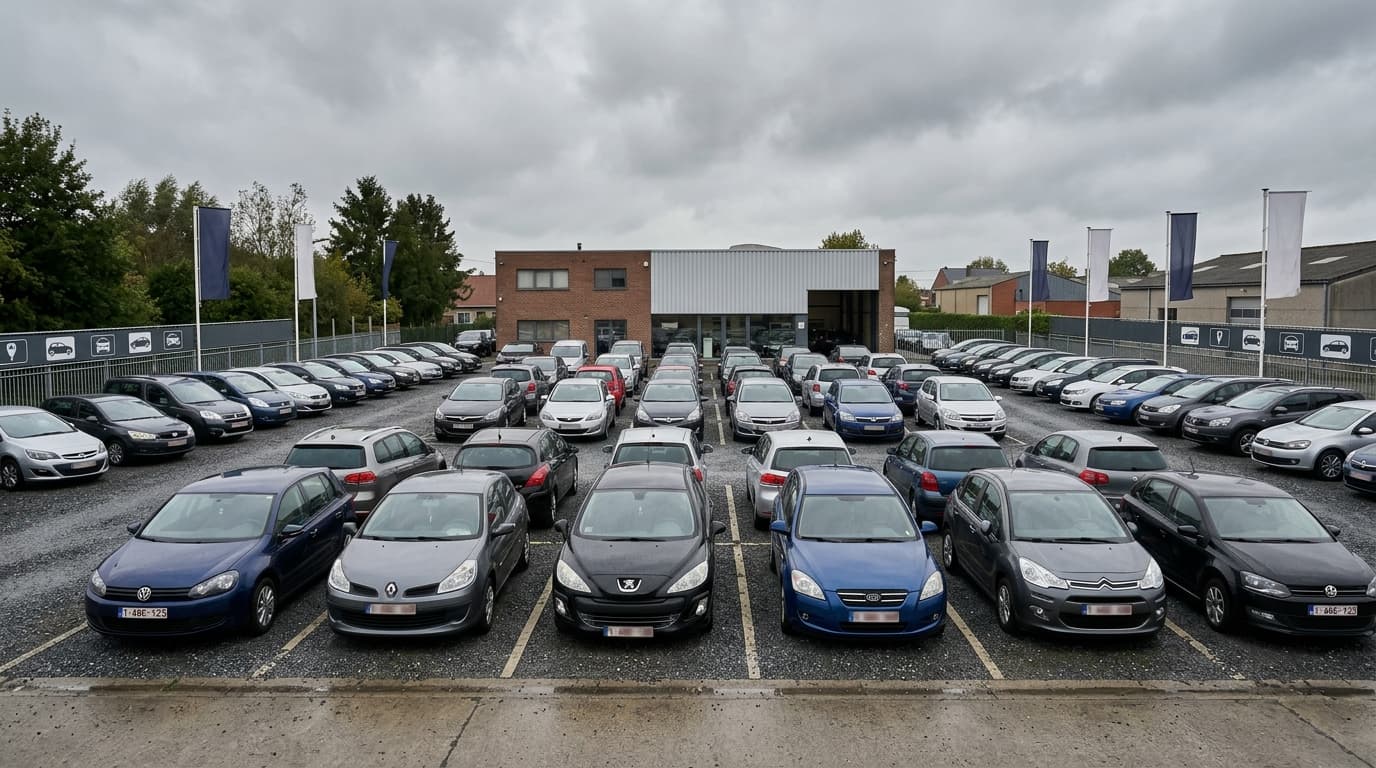
None of these steps is difficult. The trap is the order: a car without a certificate of conformity gets stuck at step 5, and by then it is too late to negotiate with the seller.
What registration tax will an imported car pay?
The same as a Belgian car. It depends on your Region of residence, not on the country of purchase, and it is paid once, at registration. The detail of the three scales is in our article on registration tax.
- Wallonia: four-factor formula since 1 July 2025, with degressivity by age. The table example falls to €309.47 at five years.
- Brussels: power, in fiscal horsepower or in kilowatts, whichever amount is higher.
- Flanders: CO2 emissions, Euro standard, fuel and age, official simulator from the Vlaams Belastingportaal.
One point German adverts will not mention: two versions of the same model, a few kilowatts apart, do not cost the same to register here. Read box P.2 of the German certificate before choosing the version.
Does an odometer wound back in Cologne leave a trace?
No, and that is the core of the risk.
The Belgian Car-Pass starts counting on the day of first registration here. Everything before it, the kilometres driven in Germany, the services, the workshop visits, is invisible to it. In 2025, the Car-Pass association issued 855,169 documents. 12.7% concerned imported vehicles, or 108,606. And on those 108,606, it detected 543 tampered odometers.
| 2025 indicator | Vehicles | Rate | One case in |
|---|---|---|---|
| Fraud, sale between two Belgian owners | 923 | 0.12% | 833 |
| Fraud, imported vehicle | 543 | 0.50% | 200 |
| Imports' share of frauds | 543 of 1,466 | 37.0% |
Car-Pass annual report 2025, published on 29 March 2026. The "one case in" ratios and the 37.0% share are calculated from these figures.
Imports account for an eighth of documents and more than a third of frauds. The average fraud took 79,379 kilometres off the odometer: that rollback was equivalent to 74% of the mileage shown by an average Belgian used car.
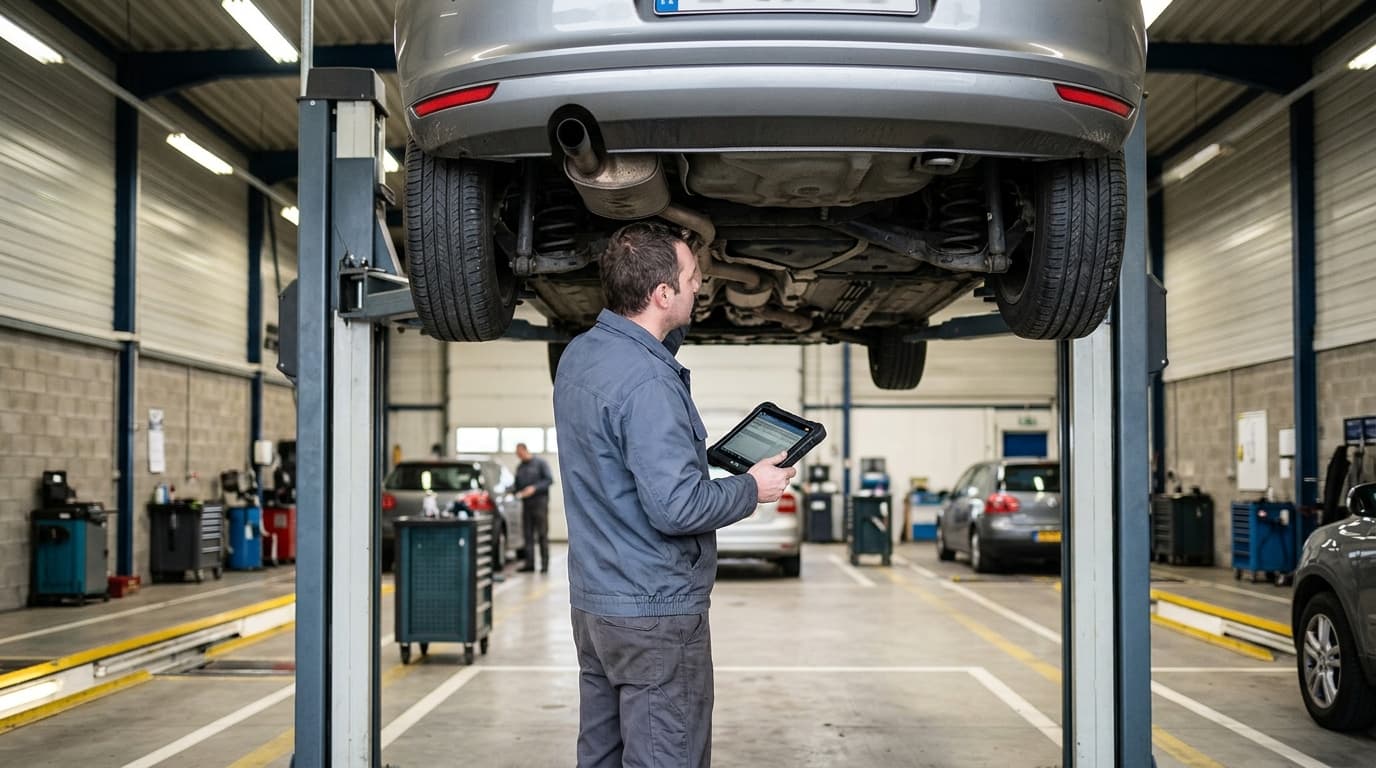
Five checks before paying:
- Compare the mileage on the registration certificate, the stamped service book and the German inspection report: the three must tell the same progression.
- Demand a recent service invoice with the mileage written on it, and call the workshop if doubt remains.
- Check that the 17-character chassis number is identical on the car, the certificate and the contract.
- Never pay a deposit before seeing the originals of both parts of the registration certificate.
- Never drive without temporary insurance: the transit plate does not replace it.
Our guide to buying a reliable used car details the mechanical checks to make on site, and the article on the Car-Pass explains what the document does not say.
What warranty do you get on a used car from Germany?
From a dealer, a one-year European warranty, with repairs at the seller's, according to Moniteur Automobile. European law provides a two-year legal guarantee, but a contract can reduce it to one year on a used car: read that line before signing. From a private seller, expect nothing beyond the seller's good faith and what the contract says.
Logistics kill the remedy. Repairing under warranty means taking the car back several hundred kilometres to the garage.
Our verdict
Before setting off, simulate the registration tax of your Region on the exact version, and compare models in our comparison tool.
Sources: Car-Pass, annual report 2025, 29 March 2026 (855,169 documents, 12.7% imports, 543 frauds on imports, 923 on domestic sales, average rollback of 79,379 km, average budget €12,160) · Your Europe, registering a vehicle bought in another EU country · SPW Finances, registration tax, scale from 01/07/2026 to 30/06/2027 · Touring, importing a used car, updated 25 March 2025 · Moniteur Automobile, buying a used car in the EU, 5 November 2017 · AutoScout24 Belgium, importing a car from Germany (transit plates of 5 to 30 days, pink form, certificate of conformity). VAT, warranty and procedure rules can change: confirm with customs, the DIV and your insurer. No vehicle was tested for this article.
Comparateur Hybrides
Compare tous les hybrides côte à côte.
Comparer maintenant →
Frequently asked questions
Julien essaie des voitures depuis 2012, d’abord pour la presse spécialisée belge, aujourd’hui en indépendant depuis Liège. Il croise les données TÜV, ADAC et les prix catalogue belges plutôt que les fiches constructeur. Sa règle : pas d’essai en concession de 20 minutes, pas de verdict sans chiffre vérifiable.