Occasions
Car-Pass: price, validity and open recalls
Car-Pass: EUR 11.10, valid two months, compulsory on pain of the sale being void. Price, how to get one, what it really shows, and the new Flemish rule.
The Car-Pass traces the mileage of a Belgian used vehicle and, since January 2024, its service history. The seller must hand it to the buyer, failing which the sale is void. It costs EUR 11.10 including VAT and stays valid for two months from the day it is issued.
Car-Pass, the non-profit that runs the scheme, issued 855,169 documents in 2025, covering cars and vans averaging 9.8 years old and showing 107,127 km on the clock. The average buyer budget was EUR 12,160. At that scale the document works out at one euro for roughly eleven hundred euros of car, which makes it the least debatable line in the whole transaction.
A Car-Pass costs EUR 11.10, and sometimes nothing at all
Eleven euros ten, VAT included. The price is set by the non-profit and it is identical in every vehicle inspection centre in the country, in all three Regions.
Free copies do exist, but the case is more theoretical than real: the document is free when it carries fewer than four odometer readings. On a nine or ten year old used car, the database has piled up dozens of them, between inspection visits, garage servicing and automatic uploads from connected cars. In 2025 Car-Pass processed 22.98 million readings for 855,169 documents issued, which is twenty-seven readings collected for every Car-Pass produced. The free bracket therefore mainly covers a nearly new vehicle, or an import whose Belgian history has barely started.
The seller pays. The legal duty sits with them, and the text provides for no sharing of the cost.
Where can you get one without putting the car through the test?
At the counter of any vehicle inspection centre, without an appointment. The point is poorly known, and it has just become a great deal more important.
The classic route is still the pre-sale inspection: you present the car, the inspector notes the chassis number and the mileage, the Car-Pass is created automatically and handed over with the green certificate. The non-profit provides a second door, and spells it out on its page for sellers: you can obtain a Car-Pass at the counter, without putting the vehicle on the ramp and without booking a slot. You do have to bring the car, since the chassis and the odometer have to be read on site.
Hence the disappointment of anyone looking for a fully paperless procedure. There is none for a private seller. The document does exist in digital form, reachable through the QR code printed on it, and professionals have a portal to look up the history of a chassis. The private seller moves the car. That physical reading is precisely what gives the document its value: a mileage figure read by an independent third party, on a certain date, is worth something a number copied into a classified ad never will be.
How long does a Car-Pass stay valid?
Two months.
The law requires a recent Car-Pass at the time of sale, and the non-profit turns that requirement into a clean limit: the document cannot be more than two months old. Beyond that you have to request a new one at full price. Below it, no need to buy again: the one you already hold still counts.
Selling without a Car-Pass makes the sale void
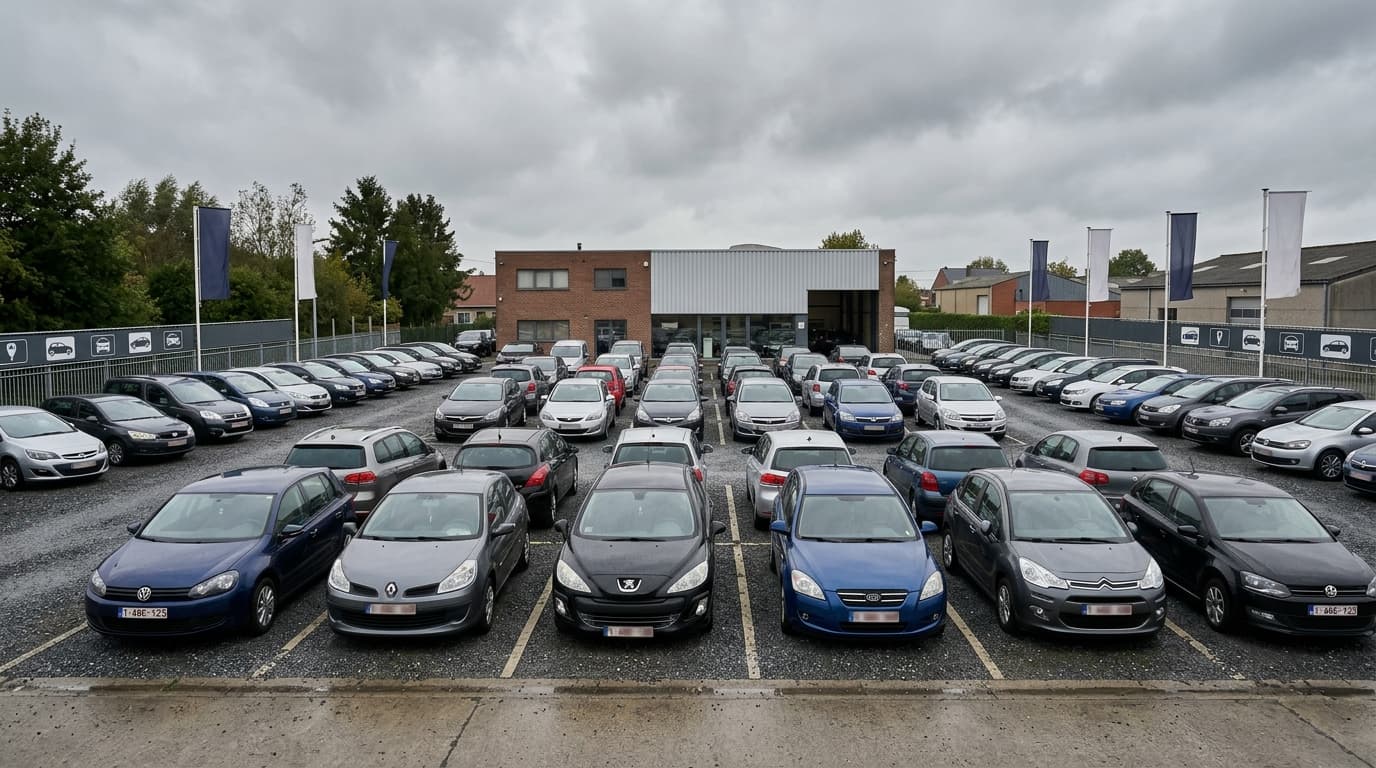
The law of 11 June 2004 is short on this point, and harsh. Whoever sells a used car or van must hand a Car-Pass to the buyer, failing which the sale is void. No distinction is made between a dealer, a trader and a private individual: the duty is identical for all three, and it cannot be contracted away.
One exception holds. If the buyer is an automotive professional, the Car-Pass is not required, which is why a trade-in at a dealership comes with no such document. Selling to a private foreign buyer, on the other hand, exempts nobody: a Belgian handing his car to a French, Dutch or German buyer owes them a Car-Pass like anyone else.
Fraud itself, meaning the act of winding a counter back, is a criminal offence. The text provides for one month to one year in prison and a fine of EUR 10 to EUR 3,000, an amount that the statutory surcharges multiply, and the judge dissolves the sale contract when the buyer asks for it. The FPS Economy publishes a question and answer sheet setting out the remedies open to a buyer who has been had.
Odometer fraud has almost vanished. Open recalls have not.
1,466 cases found in 2025, across 855,169 documents issued. One Car-Pass in 583. Before the law, an estimated 60,000 to 100,000 vehicles a year were given a cosmetic rejuvenation of the counter: fraud has become a statistical anomaly in Belgium, and that is a rare consumer protection success.
The same document carries another piece of information. That one concerns 13.2 % of vehicles.
| Indicator recorded over 2025 | Number of vehicles | Share of the 855,169 Car-Pass |
|---|---|---|
| Manufacturer recall still open | 112,882 | 13.2 % |
| Imported vehicles | 108,606 | 12.7 % |
| Odometer fraud, all sales combined | 1,466 | 0.17 % |
| Fraud on a sale between two Belgian owners | 923 | 0.12 % of domestic sales |
| Fraud on an imported vehicle | 543 | 0.50 % of imports |
Do the division. 112,882 cars and vans sold in 2025 with a manufacturer recall still open, against 1,466 tampered counters: seventy-seven times more frequent. The Belgian buyer opens the Car-Pass hunting for the mileage line that does not add up, then closes the document without having read the entry that, statistically, was seventy-seven times more likely to concern them. An open recall is not a disaster, it is fixed free of charge by the brand's dealer network, but you still have to know it is there, and the information is printed right on that same sheet.
The second imbalance is geographic. On a sale between two Belgian owners the fraud rate falls to 0.12 %. On an imported vehicle it climbs to 0.50 %, four times higher, even though imports account for only 12.7 % of documents issued. The reason is mechanical: the Belgian database knows nothing of kilometres driven abroad, it starts counting on the day of registration here. A counter wound back in Cologne or Milan before the border leaves no trace in the file. Our guide to buying a reliable used car covers the checks worth running when a history starts too late.
And when fraud does get through, it gets through big. The average rollback recorded in 2025 is 79,379 km, or 74 % of the mileage an average Belgian used car displays when its Car-Pass is issued. The year's record goes to a 2010 Mercedes E200 CDI, taken from 562,690 down to 192,030 km: 370,660 km erased, three and a half times the counter of a typical Belgian used car.
One clarification the document does not make about itself. The Car-Pass says nothing about mechanical condition. It certifies neither the clutch, nor the timing belt, nor the rust in the sills. An honest counter on a tired car is still an honest counter.
What does the document actually show?
A great deal more than kilometres, and that is recent. A Car-Pass printed today carries:
- the chassis number, the make and the model of the vehicle;
- the Euro emission standard and the CO2 emissions;
- the date of first registration in Belgium;
- recall campaigns still open at the manufacturer;
- any requirement to pass a post-accident inspection;
- the state of health of the battery on an electric or plug-in hybrid vehicle, where the manufacturer sends the data;
- a QR code and an identification number, which open the service history and let you check that the document is not a forgery.
| Date | Change to the Car-Pass |
|---|---|
| 11 June 2004 | The law penalising vehicle mileage fraud is passed |
| March 2006 | The Car-Pass non-profit is set up |
| 1 December 2006 | First Car-Pass issued |
| 1 January 2024 | Work carried out by garages enters the document |
| 14 July 2025 | Open manufacturer recalls become checkable online |
| 23 October 2025 | Battery state of health for electric vehicles is added |
| 26 November 2025 | Fifteen million Car-Pass documents issued since the start |
| 1 September 2026 | Flanders scraps the pre-sale inspection, the Car-Pass remains due |
Two dates matter more than the rest. On 1 January 2024, businesses in the sector began declaring the work they had carried out and no longer just the mileage they had read: the Car-Pass became a parallel service book, kept by third parties, which the seller can neither top up nor clean out. On 23 October 2025, the non-profit announced the addition of battery state of health on electric and plug-in hybrid cars. In a market where 26 % of prospective buyers still refuse a used electric car and 28 % hesitate, that line carries weight: 80 % of the people surveyed for Car-Pass in late 2025 were in favour of it.
One last figure, technical and underrated. Of the 22.98 million readings processed in 2025, 5.16 million came straight from connected cars, across more than forty brands, including BYD, XPENG, Leapmotor, Omoda and Jaecoo for the first time. More than one reading in five is therefore no longer keyed in by hand in a garage.
In Flanders, the way in to a Car-Pass changed on 1 September
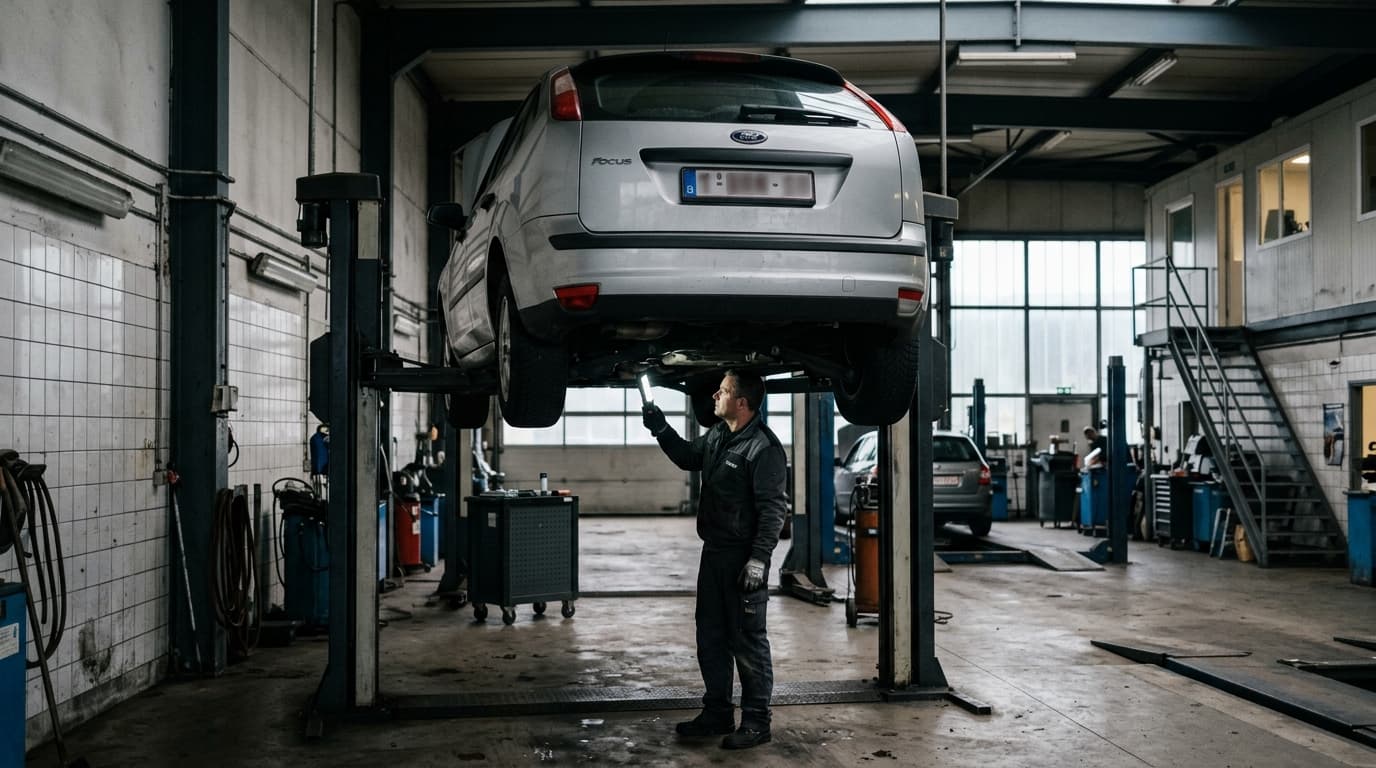
Since 1 September 2026, Flanders has scrapped the pre-sale technical inspection where the buyer lives on its territory: the periodic inspection certificate in force is now enough. The used-vehicle inspection survives only for imported vehicles, and the general interval has moved to two years for private vehicles over four years old.
None of this removes the Car-Pass. The duty comes from a federal law, not a regional decree, and it applies identically in all three Regions.
The route is what changes. In Wallonia and Brussels the pre-sale inspection remains compulsory and the Car-Pass comes out with the green certificate, with no extra step; our article on the pre-sale technical inspection sets out the procedure and the fees. In Flanders, a seller who no longer needs that visit has to go and collect the Car-Pass at the counter, deliberately, with the car. The step is simple. You just have to know it exists.
Michel Peelman, managing director of the non-profit, flagged it in March 2026 when presenting the year's figures: the Flemish reform will have significant consequences for how Car-Pass works, and the point is to stop fraudulent practices resurfacing. The first risk, though, is not fraud, it is forgetting. A Flemish seller acting in good faith who hands over the keys without a Car-Pass exposes the sale to being void, and will find out on the day the buyer notices.
Our verdict
Eleven euros ten to secure an average transaction of EUR 12,160: the price question does not arise. The reading question does. 65 % of recent buyers say they consulted the Car-Pass before signing, 88 % of prospective buyers intend to, and almost nobody looks at the recall line.
On the buyer's side, three reflexes are enough. Check the date of the document, it must be under two months old. Look at whether the mileage curve holds together over time, not just the final figure. And read the recall entry, because that is the one most likely to be filled in.
On the seller's side, the calendar matters more than the amount. In Wallonia and Brussels the Car-Pass falls out of the pre-sale inspection. In Flanders, since September, you have to go and fetch it, and that ten minute trip is what separates a valid sale from a voidable one.
On the Belgian market this document remains the cheapest and most poorly used tool in a second-hand purchase. It says nothing about the mechanics, nothing about the bodywork, nothing about a fair price: for that part of the job, our used car budget guide and our comparison tool are more useful. It does tell you everything the garages, the inspection centres and the car itself already know. That is a great deal more than the seller will volunteer.
Sources: Car-Pass, 2025 annual report published on 29 March 2026 (855,169 documents issued, averages of 9.8 years and 107,127 km, 12.7 % imports, 13.2 % open recalls, 1,466 fraud cases of which 923 domestic and 543 on imports, average rollback of 79,379 km, 22.98 million readings of which 5.16 million from connected vehicles; consumer survey by IntoTheMinds run in late 2025 among 550 recent buyers and 550 prospective buyers) · Car-Pass, I want to sell a used vehicle (price of EUR 11.10 including VAT, free below four readings, two month validity, contents of the document, issue at the counter) · Law of 11 June 2004 penalising vehicle mileage fraud · FPS Economy, Car-Pass frequently asked questions. The percentages and ratios calculated in this article are derived from the figures published above. No vehicle and no document were tested by us.
Comparateur Occasions
Compare tous les occasions côte à côte.
Comparer maintenant →
Frequently asked questions
Julien essaie des voitures depuis 2012, d’abord pour la presse spécialisée belge, aujourd’hui en indépendant depuis Liège. Il croise les données TÜV, ADAC et les prix catalogue belges plutôt que les fiches constructeur. Sa règle : pas d’essai en concession de 20 minutes, pas de verdict sans chiffre vérifiable.