Occasions
Flanders vehicle inspection: every two years
Since 1 September 2026, Flanders inspects cars every two years. Brussels and Wallonia stay annual: what the gap costs you over ten years.
Since 1 September 2026, a Flemish car more than four years old goes to technical inspection every two years. In Brussels and Wallonia, it is still once a year. Over ten years, the bill gap reaches €391.50 between a Walloon and a Fleming, and whether a Walloon can benefit from it remains an open question.
The 1st of September did not abolish any pre-sale inspection
On 2 September, we wrote here that Flanders was scrapping the pre-sale technical inspection "since 1 September 2026". The date was wrong.
The Flemish government's pages are clear: 1 September 2026 changes the inspection rhythm, the repair window and a few formalities. The end of the pre-sale inspection, for a vehicle acquired in Belgium, is dated 1 January 2027. Imported vehicles remain subject to it. One official page adds that this part of the reform still has to be definitively approved. Nothing moves before 2027.
In practice, a Ghent owner selling their car in November 2026 still goes through the station. Our 2 September article on the pre-sale inspection remains correct for Brussels and Wallonia, but its Flemish date needs correcting.
How often do you need a technical inspection in Belgium?
Once a year in Brussels and Wallonia, once every two years in Flanders. In all three Regions, the first visit falls when the car is four years old, counted from first registration.
| Region | Rhythm after the first visit | Repair window after a red card | 2026 periodic fee | Pre-sale inspection |
|---|---|---|---|---|
| Flanders | Every 2 years since 01/09/2026 | 2 months (15 days before) | €40.90 | Mandatory until 31/12/2026, then scrapped for a vehicle acquired in Belgium |
| Brussels | Every year | 15 days | €40.90 | Mandatory |
| Wallonia | Every year | 15 days | €59.60 | Mandatory |
The fees are those of the periodic inspection of a passenger car, recorded at Selectra for 2026. They include no possible supplement and no re-test. The higher pre-sale scales are detailed in the article already cited.
One point remains unclear. The official page "Wanneer naar de technische keuring?" announces the move to two years with no age condition, and the press writes that the new rhythm applies to any car over four years old. Another page from the same administration nevertheless mentions a gradual introduction since 2024, starting with the youngest vehicles. Your inspection certificate prints the date of your next visit: that date, and only that date, is authoritative.
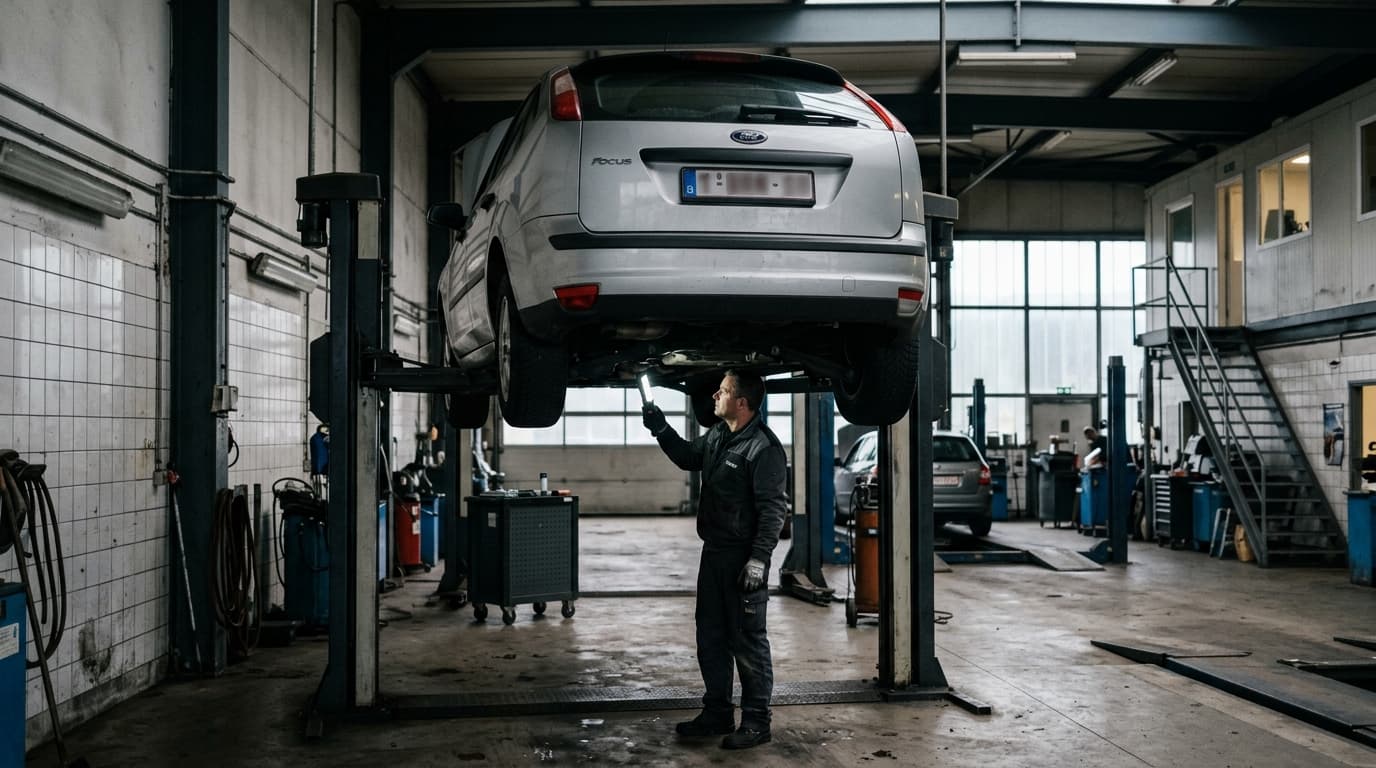
The calendar is managed to the week. Here are the rules the station applies, and that many drivers only discover on the day they are late:
- Present the car within the two months before the due date: the reference date does not move.
- Present it earlier, and the reference date becomes the date of the visit: you lose the months in hand.
- Present it late, and a surcharge applies, with possible consequences with your insurer.
- The reminder sent by the station, on paper or digitally, is a courtesy. The date is your responsibility.
- For the two-year rhythm, the official page sets a condition: a valid inspection certificate at the time of the inspection. A car already overdue is therefore not necessarily covered.
An example to fix ideas. A car first registered in March 2022 has its first visit in March 2026. If it is Flemish, the certificate from that visit shows March 2028 as the next due date. If it is Walloon or from Brussels, it shows March 2027, then March 2028: two visits where Flanders asks for one.
Two years in Flanders, one year elsewhere: the ten-year bill
The figure that really counts: €391.50.
Take a car between its fourth and fourteenth birthday. In Brussels and Wallonia, it goes to the station ten times, at ages 4 to 13. In Flanders, since September 2026, it goes five times, at 4, 6, 8, 10 and 12. The calculation uses the 2026 fee, with no supplement, no late charge and no re-test.
| Region | Visits | Fee per visit | Total over ten years | Cost per year |
|---|---|---|---|---|
| Flanders | 5 | €40.90 | €204.50 | €20.45 |
| Brussels | 10 | €40.90 | €409.00 | €40.90 |
| Wallonia | 10 | €59.60 | €596.00 | €59.60 |
A Walloon pays 2.9 times a Fleming's bill for exactly the same number of years on the road. A Brussels owner pays double, because the fee is the same but the rhythm differs.
This calculation is a ceiling on savings, not a net gain. A defect that appears six months after a visit now waits eighteen months for the next one, not six. The repair has not disappeared, it has been postponed, and sometimes made dearer. The diesel particulate filter, which concentrates failures, did not become more durable in September: our article on the particulate filter sets out the thresholds and prices.
Can a Walloon or Brussels owner have their car inspected in Flanders?
Yes, physically. Station choice is free across the country, and Walloon Mobility Minister François Desquesnes pointed it out in May 2026, speaking of "technical inspection tourism". In August, Touring said it expected many drivers to prefer Flanders, because the certificate stays valid longer there. VRT notes for its part that a certificate remains valid across the whole country.
That leaves the real question, the one nobody settles: does a Flemish certificate for a car registered in Wallonia carry two years of validity? None of the official pages we read answers it. The rhythm may depend on the Region of registration, or perhaps on the Region of the station. Before driving to Aalst hoping for two years of peace, ask the station, in writing if possible.
Even without that answer, the trip is not absurd. At €40.90 against €59.60, a visit to a Flemish station costs €18.70 less. Over ten annual visits, that is €187.00 saved, before the fuel to get to the station.
Four sources, three versions of the rhythm
We read the official pages, then the press, and the two do not tell the same story. The detail matters, because a driver reading a press article is not reading the government's page.
The Flemish Region's website writes that private cars go "om de 2 jaar" since 1 September 2026, after a first visit at four years. KBC Autolease takes up that reading and adds that the reform mostly affects leasing contracts of more than four years. An economic news site writes that the two-year rhythm applies to every car, whatever its age and mileage. A fourth reserves it for vehicles over ten years old or over 160,000 km, which contradicts the other three and appears on no official page.
The reading retained here is that of the Flemish government's pages, which agree with each other on the two-year rhythm for cars. They do not agree on the sale, which is the reason for the first section.
Four dates to note, from September 2026 to 2028
| Date | Measure | Source |
|---|---|---|
| 01/09/2026 | Flemish cars: inspection every 2 years. Repair window after a red card raised to 2 months. No more insurance certificate at the station (checked by ANPR cameras). No more 3-month provisional certificate for an administrative defect. No more compulsory inspection after fitting a tow bar | vlaanderen.be, VRT NWS |
| 2026 to 2028 | Vans and light commercial vehicles: gradual move to the 2-year rhythm, depending on age | vlaanderen.be |
| 01/01/2027 | End of the pre-sale inspection for a vehicle acquired in Belgium (imports excluded, voluntary inspection still possible) | vlaanderen.be, KBC, VRT NWS |
| End 2027 or 2028 | Approved garages could carry out inspections alongside the centres. Not yet decided | VRT NWS, KBC |
The Car-Pass remains mandatory in all three Regions for any sale, whatever the inspection date: our Car-Pass article gives its price and validity period.
Tow bar, insurance, provisional certificate: three fewer formalities
Administrative reforms often go unnoticed, and yet they change an owner's day.
At the Flemish station, the insurance certificate is no longer requested. The check now happens paperlessly, through number-plate recognition cameras, which avoids the failed visit because the paper is sitting in a drawer at home. The latest inspection certificate remains the document to bring.
Fitting a tow bar no longer triggers an inspection before the vehicle is put into service, which removes a compulsory appointment for anyone equipping a car before the holidays. The three-month provisional certificate, issued until now for a purely administrative defect, disappears: the station hands over a certificate of normal duration directly.
Three details. None is spectacular, but each removes a reason to go back to the station, and for an owner juggling work, children and a garage that will not return the car before Thursday, that kind of detail saves half a day. In Brussels and Wallonia, none of this changes.
Is the two-month repair window a good deal?
For the owner, yes. For everyone else on the road, the answer is more nuanced.
Before September 2026, a red card for a major defect gave fifteen days to repair and return. That is short when a part has to be ordered. Two months is comfortable, and a minor defect no longer triggers anything: the certificate is issued with its normal validity, without the three-month pass that used to come with it.
The unions at the Flemish inspection centres see an attack on road safety, on the objectivity of inspections and on jobs. They went on strike on 8 May at several Flemish centres. Their objection fits in one sentence: a major defect now stays on the road for sixty days instead of fifteen. The objection is serious, and the reform does not refute it.
The nuance is that a major defect remains a major defect: the red card restricts circulation, it does not free it. The window lengthens the repair, not the tolerance.
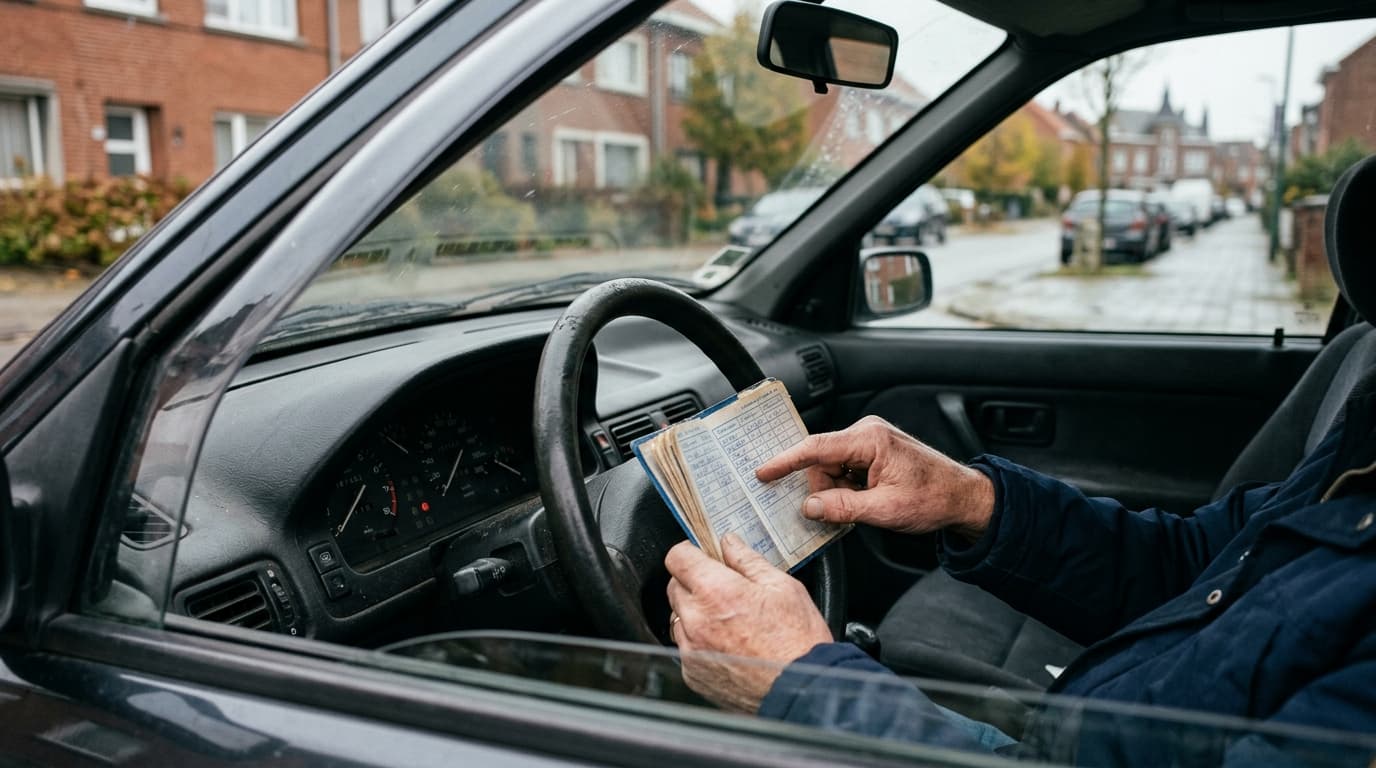
Verdict: a real saving, but only for Flemish owners
A Flemish owner halves the number of visits and saves €204.50 over ten years compared with Brussels, €391.50 compared with Wallonia. They can benefit from their very next appointment, as long as they read the date on their certificate.
A Brussels or Walloon owner changes nothing as long as their Region does not move. Their one useful action: ask a Flemish station whether the certificate for a car registered at home will carry the two-year duration, before making the trip. If the answer is yes, the saving far exceeds the cost of the journey. If it is no, the €18.70 fee gap per visit only justifies the trip for those living near the border.
If you are buying a used car rather than selling one, our guide to buying a reliable used car lists what the inspection does not check, and the comparison tool helps sort the candidates.
Sources: Vlaanderen.be, "Technische keuring wordt eenvoudiger en minder frequent vanaf september 2026" · Vlaanderen.be, "Veelgestelde vragen over de nieuwe regels voor de technische keuring" · Vlaanderen.be, "Wanneer naar de technische keuring?" · Belgium.be, technical inspection · VRT NWS, "Contrôle technique : Touring craint un tourisme vers la Flandre" (18 August 2026) · VRT NWS, "La Wallonie craint que la réforme du contrôle technique en Flandre" (8 May 2026) · VRT NWS, "Car inspection rules relaxed on 1 September" (31 August 2026) · KBC, technical inspection reform · Selectra, 2026 fees, for periodic fees and surcharges, which have not been cross-checked against a ministerial scale. Data recorded on 5 October 2026. The ten-year totals are our own calculation, at the 2026 fee and with no supplement. No vehicle was tested for this article.
Comparateur Occasions
Compare tous les occasions côte à côte.
Comparer maintenant →
Frequently asked questions
Julien essaie des voitures depuis 2012, d’abord pour la presse spécialisée belge, aujourd’hui en indépendant depuis Liège. Il croise les données TÜV, ADAC et les prix catalogue belges plutôt que les fiches constructeur. Sa règle : pas d’essai en concession de 20 minutes, pas de verdict sans chiffre vérifiable.