SUV
Check engine light: what to do, and when to stop
Steady versus flashing check engine light: the difference, when to stop driving, the effect on the Belgian vehicle inspection, and a diagnostic price (€149).
A steady orange check engine light lets you drive carefully to a garage, in most cases. A flashing one does not: switch off the engine as soon as it is safe, before real damage sets in. The difference between the two shows in three seconds, and it changes everything that follows, including your vehicle inspection.
Is a check engine light serious?
It depends.
The check engine light, also called the emissions warning light or MIL (malfunction indicator lamp), signals that an engine sensor has detected a value outside its expected range. Nothing more. It does not say what, where, or since when.
The real severity comes down to three things: the colour, whether the light is steady or flashing, and what else is happening at the same time. A loss of power, a smell of petrol, a new noise: these accompanying symptoms are what separates a minor fault from an engine that is genuinely suffering. On its own, a steady orange light often points to a minor issue, a tired oxygen sensor or a loose fuel cap. Combined with something else, it deserves a faster stop.
Steady or flashing: which one is urgent?
A steady light can wait. A flashing one cannot.
Flashing signals an active misfire: the engine is burning fuel poorly, and the unburnt fuel ends up in the catalytic converter. There, the temperature rises fast, and an overheating converter can melt, clog, or in extreme cases catch fire. That scenario, and that one alone, justifies pulling over and switching off rather than continuing to the nearest garage.
A steady light, on the other hand, points to a stored but stable fault. The value has drifted outside its expected range, without the control unit detecting any immediate danger. You can keep driving, without pushing the engine, until a diagnostic is done.
Can you drive with the check engine light on?
Yes, with a steady light and no other symptom. No, if the light flashes, if power drops, or if an unusual noise appears.
In practice, that gives a simple rule. Steady light, engine running normally, no smell or noise: get to a garage within the next few days, without driving flat out on the motorway in the meantime. Flashing light, or one paired with a clear loss of power: pull over somewhere safe, switch off, and call for a tow. The risk is not being stuck on the roadside, it is turning a €150 repair into a catalytic converter replacement costing over €1,000.
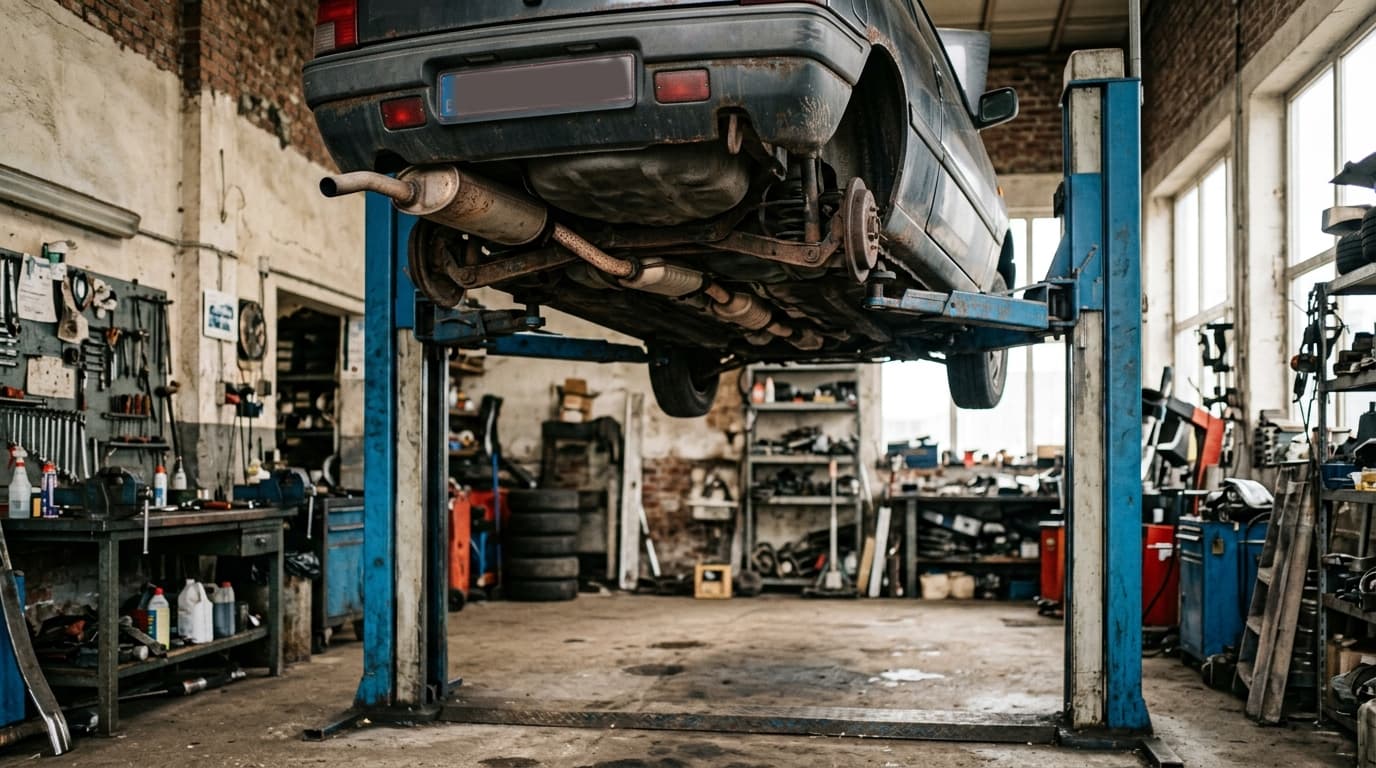
Nine common causes, and the right response for each
The check engine light never states the exact cause, it has to be read with a diagnostic tool plugged into the OBD port, mandatory on all petrol cars since 2001 and diesels since 2004. That is not a minor technical detail. Without that reading, guessing means swapping parts at random hoping to get lucky, and it usually costs more than a proper diagnostic. Here are the most frequent scenarios on the road in Belgium, and what to do in each case.
| Symptom observed | Likely cause | Can you keep driving? | Action |
|---|---|---|---|
| Steady light, engine normal | Oxygen sensor or loose fuel cap | Yes | Garage within a few days |
| Steady light + DPF warning | Clogged particulate filter (diesel) | Yes, carefully | Motorway regeneration or garage soon |
| Flashing light | Misfire, risk to the catalytic converter | No | Stop immediately, call a tow |
| Light + clear power loss | Limp mode active | No | Stop, do not push the engine |
| Light + AdBlue light together | SCR system or low AdBlue level | Yes, within 1,000 km left | Top up AdBlue, then diagnostic |
| Light after refuelling | Fuel cap not tightened | Yes | Retighten, wait one cycle before it clears |
| Light after severe cold | Temperature sensor, condensation | Yes | Monitor, garage if it persists |
On a recent diesel, a clogged particulate filter and the AdBlue system remain the two most frequent causes. Our guide to the diesel particulate filter and our AdBlue explainer cover both cases and their repair costs in detail.
Can a check engine light fail the Belgian vehicle inspection?
Indirectly, yes. The Belgian vehicle inspection measures exhaust emissions (smoke opacity on diesels, CO levels on petrol cars), visually checks the exhaust system, and a check engine light caused by an emissions-related fault, such as a dead oxygen sensor or a holed catalytic converter, very often pushes that reading past the allowed threshold, which is why so many failed re-inspections trace back to a light ignored for months.
The light itself is not a stand-alone checkpoint, it is the emissions reading that decides the outcome.
Getting the fault code read and fixed before the appointment almost always costs less than a failed re-test, whichever approved centre you use, in Wallonia, Brussels or Flanders. Our guide to the technical inspection before selling a car covers the other common failure points.
How much does an electronic diagnostic cost in Belgium?
€149 at Auto5, for the "electronic diagnostic, dashboard warning lights and fault finding" service. As of this article (September 2026), that is the price listed on the chain's website. An independent garage typically charges less for a simple code read, but this chain price gives a reference ceiling on the Belgian market.
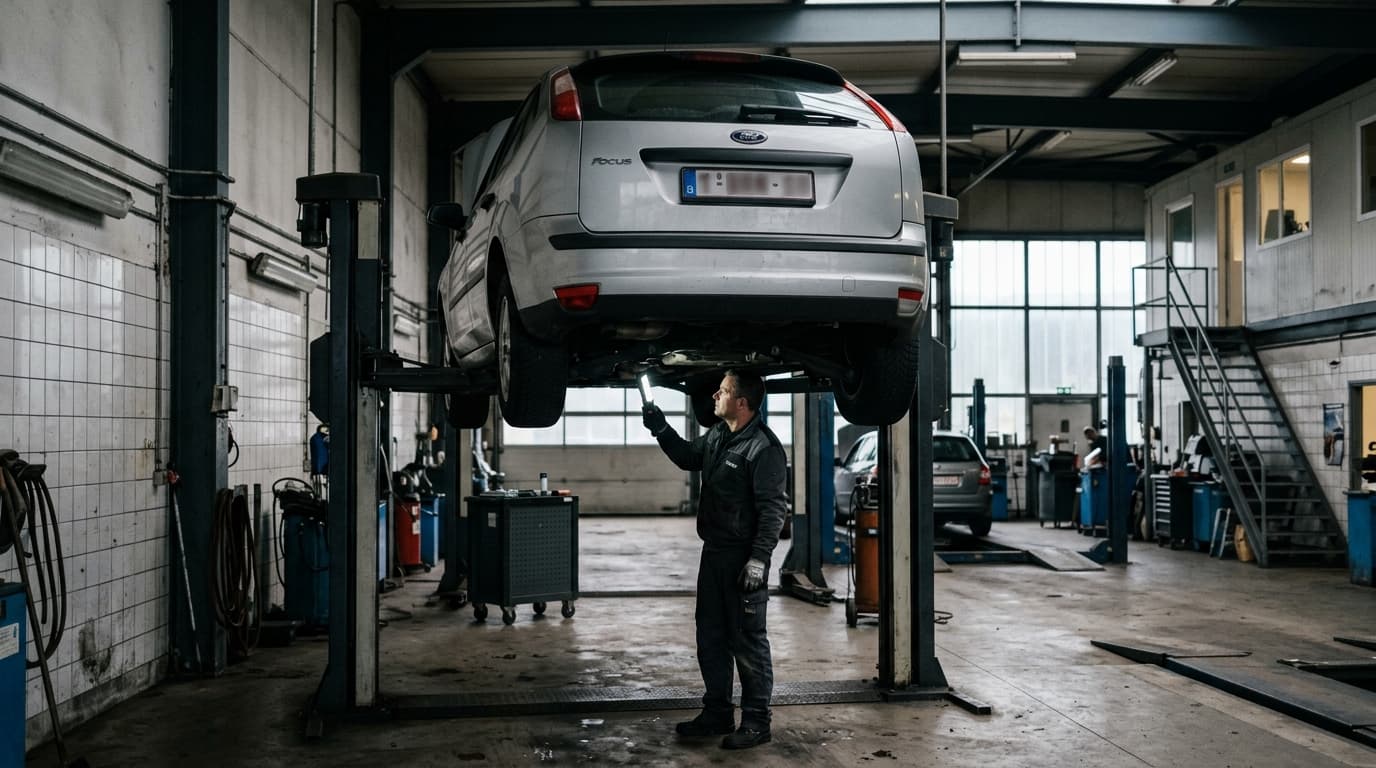
That amount is modest next to the risk. A catalytic converter replaced after an ignored flashing light often costs ten times as much. The number that actually matters: an early diagnostic prevents, in the vast majority of cases, a repair that could have stayed minor.
Which mistakes make the fault worse?
A few common habits turn a minor issue into an expensive bill.
- Driving flat out or at high speed with a flashing light, thinking "it'll hold until I get home".
- Clearing the fault code without repairing anything, using a cheap scanner: the light comes back within a few kilometres, and the real problem carries on.
- Ignoring a steady light for months, until the vehicle inspection.
- Driving with a missing fuel cap, assuming it's "just a light".
- Confusing the check engine light with the oil pressure or coolant temperature light, both of which demand an immediate stop in every case.
Our verdict
Steady light, engine running normally: head to a garage within the week, without overreacting. It is the most common scenario, and it rarely signals a mechanical emergency.
Flashing light: stop right away. That is the only situation that justifies switching off on the roadside rather than continuing on. In between, the right reflex stays the same: get the code read before guessing. An electronic diagnostic costs a fraction of a repair done too late, and above all it avoids the bad surprise on inspection day.
Sources: Auto5, electronic diagnostic, dashboard warning lights and fault finding (price checked on 27 September 2026) · Wallonie.be, submitting a vehicle for technical inspection · Belgium.be, vehicle inspection procedures. Prices and procedures should be confirmed with your nearest approved centre, as rates vary between networks.
Comparateur SUV
Compare tous les suv côte à côte.
Comparer maintenant →
Frequently asked questions
Julien essaie des voitures depuis 2012, d’abord pour la presse spécialisée belge, aujourd’hui en indépendant depuis Liège. Il croise les données TÜV, ADAC et les prix catalogue belges plutôt que les fiches constructeur. Sa règle : pas d’essai en concession de 20 minutes, pas de verdict sans chiffre vérifiable.