Citadines
Peugeot 208 2026 review: Belgian prices and verdict
Peugeot 208 2026 review: Belgian prices from €22,965, real Hybrid 145 fuel use, road tax and BIK, i-Cockpit drawbacks, versus the Renault Clio and Toyota Yaris.
The Peugeot 208 carries a reputation as a city car you buy for its styling and driving position rather than its cabin space. After three engines examined in detail and Belgian list prices checked in August 2026, the verdict holds: it is still tight in the back, but it has become a far more rational daily proposition. Here is what the PureTech 100, the Hybrid 145 and the e-208 are worth.
Short verdict: the Hybrid 145 at €29,615 for daily urban and suburban use. The PureTech 100 at €22,965 if budget rules.
Is the Peugeot 208 2026 worth its price in Belgium?
Yes at entry level, much less so in electric form.
The Belgian price list published by Moniteur Automobile in August 2026 starts at €22,965 for the 1.2 Turbo 100 in Style trim. At that level the 208 goes head to head with a Renault Clio at €22,300 and a Hyundai i10 at €22,349, with a clear edge on cabin presentation: better-designed seats, raised digital instruments, and materials that do not feel hollow.
In practice, the picture flips as soon as you climb the range. The Hybrid 110 asks €26,765 in Style, the Hybrid 145 rises to €29,615 in Allure and €31,915 in GT. The electric e-208 136 hp starts at €35,865, which is €12,900 more than the PureTech 100. The number that really matters: that €12,900 gap represents roughly 130,000 km of fuel savings before it pays for itself at Belgian August 2026 prices. Nobody covers 130,000 km in a city car before selling it.
Which engine should you choose: PureTech 100, Hybrid 145 or e-208?
The Hybrid 145 for mixed daily use, the PureTech 100 for budget, the e-208 only as a company car.
The 1.2 Turbo 100 is a three-cylinder petrol with a six-speed manual, lively and sufficient in a 4.05 m car. The Hybrid 110 and Hybrid 145 use the same block with 48V hybrid assistance and the e-DSC6 dual-clutch automatic. The Hybrid 145 produces 145 hp at 5,500 rpm and 230 Nm at 1,750 rpm, homologated between 4.05 and 4.80 l/100 km and 102 to 106 g CO2/km depending on wheels and trim.
On the electric side, the e-208 comes with 136 hp or 156 hp on a 51 kWh battery. What we would avoid: buying the e-208 privately. At €35,865 it costs €6,250 more than a better-equipped Hybrid 145, and the Walloon electric incentive does not cover that gap. For a self-employed driver registering it through a company, however, the €116.67 monthly benefit-in-kind against €143.86 for the PureTech 100, plus full deductibility, changes the maths entirely.
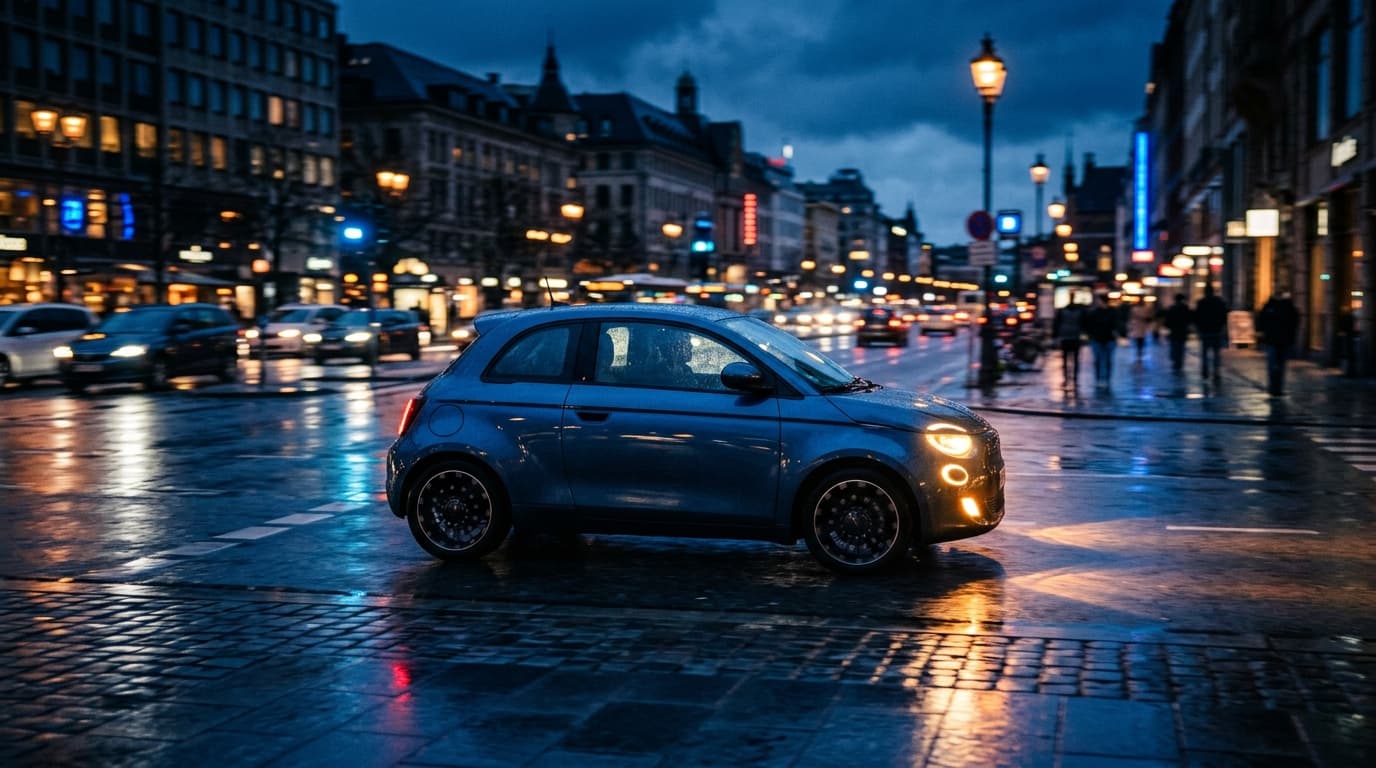
What is the real fuel consumption of the 208 Hybrid 145?
Between 4.5 and 5.5 l/100 km in mixed use, against 4.05 to 4.80 l/100 km on the WLTP cycle.
Stellantis's 48V system is not a full hybrid. The electric motor sits inside the e-DSC6 gearbox and does three things: smooth out restarts, assist low-rev pull, and drive the car for a few hundred metres below 30 km/h. Road tests published in 2026 on the Hybrid 145 GT agree on faultless road manners and genuine urban frugality.
In practice, the profile is sharply defined. In town the petrol engine shuts off at lights and during slow running, and you dip below 5 l/100 km without trying. At 120 km/h on the motorway the electric side no longer contributes and the 208 drinks like a conventional petrol, around 6 l/100 km. A Wavre-to-Brussels commuter gains; a sales rep driving Liège to Antwerp every day has no reason to pay the €2,850 that separates the Hybrid 145 from the PureTech 100.
Where does the Peugeot 208 actually fall short?
On rear space, boot volume and i-Cockpit ergonomics.
The rear seats are tight for a 1.80 m adult as soon as the driver slides their seat back, and access stays awkward despite the five doors. The boot, judged a little small against a Clio or a Volkswagen Polo, handles two cabin cases and the weekly shop but not a four-person holiday. A family of four with teenagers should look at a 2008 rather than a 208.
The second issue is the i-Cockpit. The small steering wheel with the instrument cluster above it has divided opinion since 2019: depending on your height and seating position, the display is either perfectly legible or partly hidden by the rim. You have to try it sitting in the car, not judge it from photos. One last irritant noted on the Hybrid 145 GT: the gloss black centre console throws back reflections in bright sun. As of this article (August 2026), no technical recall has been published in Belgium for this generation.
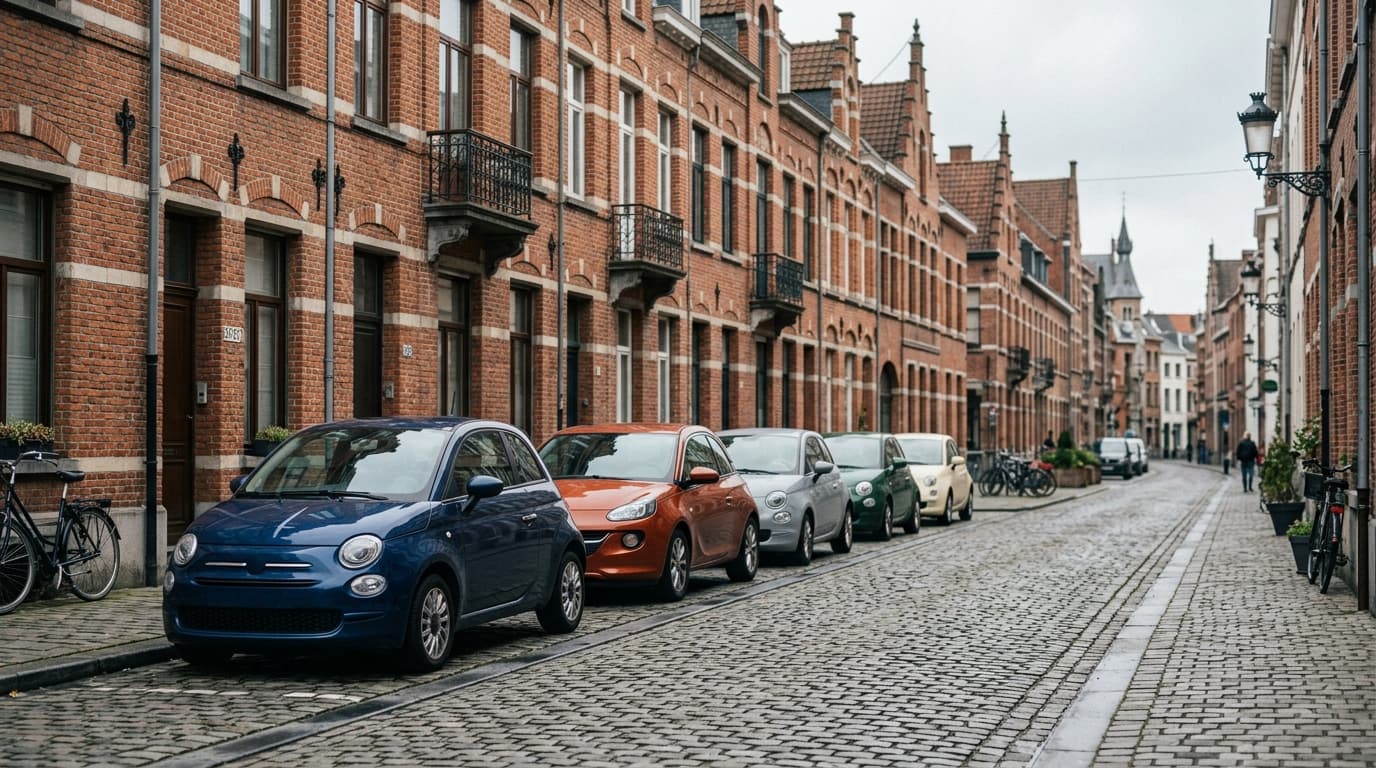
Peugeot 208 versus Renault Clio and Toyota Yaris: which one?
The 208 for the driving position and the electric option, the Clio for space, the Yaris for measured reliability.
The Renault Clio plays the usable-volume card: a bigger boot, roomier rear seats, and a full E-Tech hybrid that genuinely shuts off the petrol engine in town, where the 208 only offers 48V assistance. Its Belgian entry price is €22,300 (Moniteur Automobile, August 2026), €665 below the 208 Style. The Toyota Yaris hybrid remains the segment benchmark for measured reliability at two and three years, which matters a great deal if you keep the car for eight.
In practice, that gives three clear choices. The 208 is the only one of the three with a fully electric version in the range, the e-208 136 hp at €35,865, and the only one with an electric hot hatch, the 281 hp E-208 GTi at €47,565. The Clio is the most rational family option. The Yaris is the safest long-term bet. On styling and driving position, the 208 keeps a lead its rivals have never seriously challenged.
Comparison table: the 208 against its Belgian rivals
| Model | Powertrain | Consumption / range | Belgian price (from) | Gearbox |
|---|---|---|---|---|
| Peugeot 208 1.2 Turbo 100 | 1.2 turbo petrol — 100 hp | ~5.5 l/100 km | €22,965 | 6-speed manual |
| Peugeot 208 Hybrid 145 | 48V hybrid — 145 hp | 4.05 to 4.80 l/100 km (WLTP) | €29,615 | e-DSC6 automatic |
| Peugeot e-208 136 | Electric — 51 kWh | ~350 km WLTP | €35,865 | Automatic |
| Peugeot E-208 GTi | Electric — 281 hp | ~340 km WLTP | €47,565 | Automatic |
| Renault Clio | Petrol / full E-Tech hybrid | 3.9 l/100 km (WLTP hybrid) | €22,300 | Manual / multimode |
| Hyundai i10 | 1.0 petrol | ~5.4 l/100 km | €22,349 | 5-speed manual |
Belgian list prices and taxes checked on Moniteur Automobile in August 2026. Consumption and range figures are manufacturer WLTP homologations, not measured road tests.
How much do tax and benefit-in-kind cost on a Peugeot 208 in Belgium?
Between €165 and €220 a year in petrol form, €93 in electric form.
The scale checked in August 2026 for the 1.2 Turbo 100 gives €219.38 in annual road tax in Brussels and €164.10 to €165.41 in Flanders, with a Brussels registration tax of €123. The gap between regions comes from the calculation formulas, not the car. Wallonia was not yet listed in the table consulted for this model year.
In practice, the electric advantage under Belgian tax rules is clear. The e-208 136 falls to €92.93 in annual road tax and €61.50 in registration tax in Brussels, saving €126 a year on road tax alone. Add the €116.67 monthly benefit-in-kind against €143.86 for the PureTech 100 and, over a four-year company contract, the difference reaches roughly €1,300. What we would avoid: presenting those figures as a private-purchase argument — they do not offset the €12,900 difference in list price.
Our verdict: who is the Peugeot 208 2026 for?
Main recommendation — 208 Hybrid 145 Allure, €29,615: for the solo or two-person household driving mostly in town and its outskirts, wanting an automatic and unwilling to pay the electric premium. 145 hp, 230 Nm from 1,750 rpm, urban consumption under 5 l/100 km, and the best driving position in the class if the i-Cockpit suits you.
Alternative — 208 1.2 Turbo 100 Style, €22,965: for a tight budget and under 12,000 km a year. The three-cylinder stays lively, the manual gearbox removes the most expensive potential failure, and the €6,650 gap to the Hybrid 145 will never pay for itself at that mileage.
The deciding factor: how much you really need the rear seats. If you regularly carry two adults in the back, the Renault Clio solves a problem the 208 never will. And if the car goes through a company, the e-208 136 at €35,865 becomes rational again thanks to its €116.67 monthly benefit-in-kind — a calculation that only works in that specific setting. One dated caveat: the Polygon concept shown in early May 2026 previews the next e-208, so expect slightly faster depreciation on current model years, and negotiate accordingly.
To place the 208 in its class, see our Renault Clio 2026 review, its closest rival, and our most reliable city cars ranking, based on TÜV data. Our hybrid city car comparison pits the Clio E-Tech against the Toyota Yaris. The comparison tool filters by price, boot space and consumption.
Sources: Moniteur Automobile — Belgian list prices and taxes for the Peugeot 208 5p, model year 2026 (checked August 2026), Peugeot Polygon short test (4 May 2026), Le Nouvel Automobiliste — Peugeot 208 Hybrid 145 GT Exclusive road test (2026), L'Argus and Caradisiac — model year 2026 technical data. Belgian list prices, before dealer discount.
Comparateur Citadines
Compare tous les citadines côte à côte.
Comparer maintenant →
Frequently asked questions
Julien essaie des voitures depuis 2012, d’abord pour la presse spécialisée belge, aujourd’hui en indépendant depuis Liège. Il croise les données TÜV, ADAC et les prix catalogue belges plutôt que les fiches constructeur. Sa règle : pas d’essai en concession de 20 minutes, pas de verdict sans chiffre vérifiable.