SUV
Peugeot e-3008 2026: Our Full Review (Belgium)
Peugeot e-3008 2026 in Belgium: list price from ~€46,000 to ~€55,000, real-world range of the 73 and 98 kWh batteries, charging, and a face-off with the Model Y and Scénic.
The Peugeot e-3008 plays a simple card on the Belgian market in 2026: range. Its 98 kWh Long Range version claims up to 701 km WLTP, a segment record, in a well-finished compact fastback SUV. The question is what those figures are worth in real use, at what price, and against a Tesla Model Y or a Renault Scénic E-Tech. Here is our full review, backed by Belgian figures.
Should you buy the Peugeot e-3008 in 2026?
Yes, if you want a comfortable electric SUV with a large claimed range and charging speed is not your priority. The e-3008 appeals through its cabin and its maximum range. For heavy motorway driving with short stops, other EVs stay more efficient.
The e-3008's strength lies in its package: a 21-inch Panoramic i-Cockpit, a refined finish and, on the 98 kWh, a range that reassures. The STLA Medium platform, built for electric, offers a real boot and family-SUV space. It is a car designed for comfort before raw performance.
In practice, this makes for a coherent choice for a specific profile. A Belgian family driving 15,000 km a year, mostly suburban, with home charging, finds a reassuring SUV here. Conversely, a high-mileage driver stringing together long trips will feel the 160 kW charging as slower than rivals. To place your case, our ranking of the best electric cars 2026 compares it against the whole segment.
How much does the Peugeot e-3008 cost in Belgium in 2026?
From about €46,000 to about €55,000 on the Belgian catalogue. The 73 kWh (213 hp) starts around €46,000, the Allure trim lists near €49,050, the 98 kWh Long Range sits around €52,000 and the Dual Motor 325 hp tops out near €55,000 (Moniteur Automobile, 2026).
This grid puts the e-3008 at the heart of the segment, just above the cheapest references. It targets the same buyer as a Renault Scénic E-Tech, while climbing higher in range with its 98 kWh battery. The roughly €6,000 gap between the 73 and 98 kWh mostly buys range, not equipment.
The number that really matters: the 73 kWh Allure at around €46,000–49,000 is the best compromise for most buyers. On the Belgian market, promotions exist, with an e-3008 Allure seen around €44,810 in June 2026. What we would avoid is paying €55,000 for the Dual Motor 325 hp for family use: its all-wheel drive eats into range without real benefit on our roads.
What is the real range of the Peugeot e-3008?
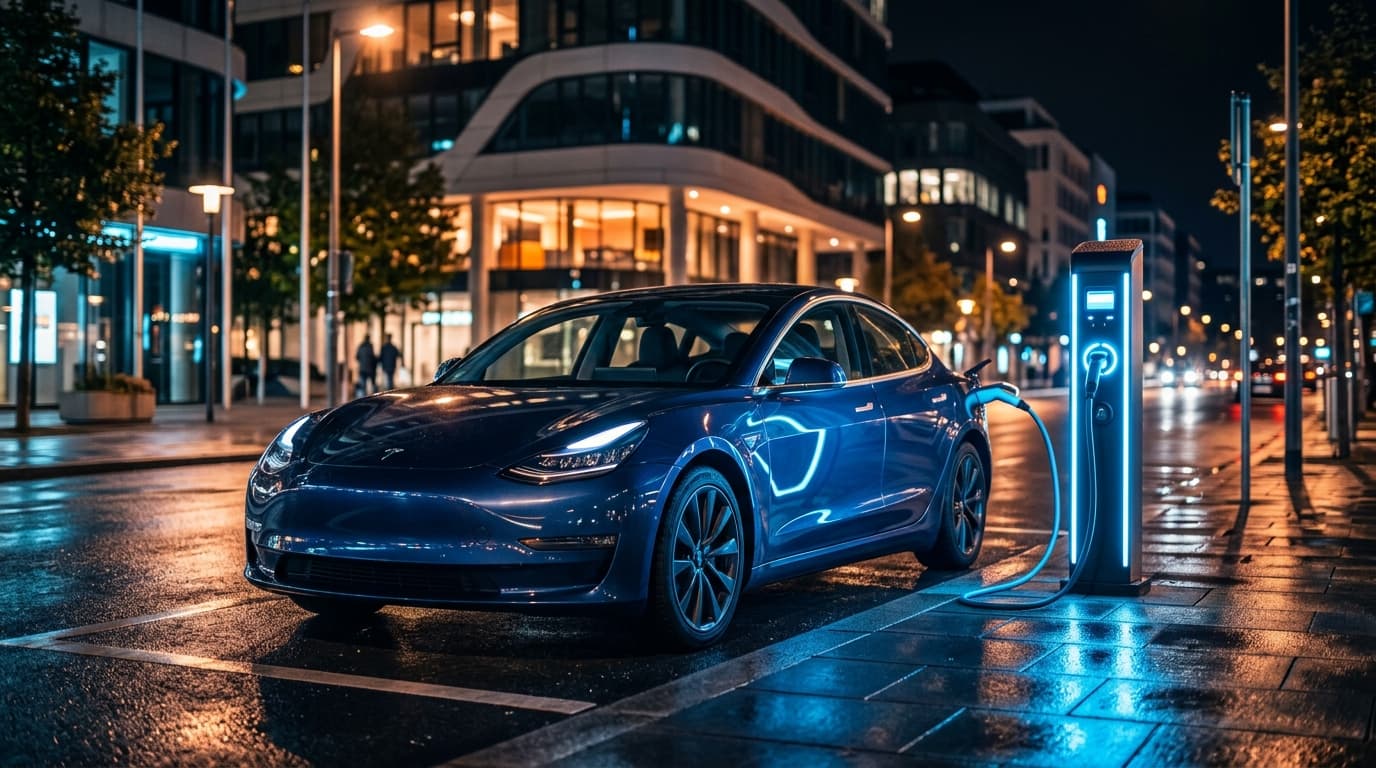
The 98 kWh Long Range claims up to 701 km WLTP, but expect 470–490 km in real use. The 73 kWh, rated at 526 km WLTP, sits around 380 km in mixed driving and drops close to 310 km on the motorway (L'Argus, 2026). The gap between the official figure and reality stays within the segment average.
Consumption explains everything. L'Argus figures show the 98 kWh uses about 19.7 kWh/100 km in mixed driving and 20.3 kWh/100 km at 130 km/h, preserving much of its range on long trips. The 73 kWh climbs to 23.5 kWh/100 km on the motorway, hence its sharper drop.
In practice, this makes two very different cars depending on the battery. A Brussels–Luxembourg round trip passes without stress on the 98 kWh. With the 73 kWh, better plan a charging stop. What we would avoid: trusting the 701 km WLTP in cold weather, since real long-trip winter range falls clearly lower. Our complete guide to electric cars in Belgium details the impact of cold and speed.
73 or 98 kWh: which battery to choose?
The 73 kWh for mostly urban and suburban use, the 98 kWh Long Range for high-mileage motorway drivers. The first offers about 380 real km, the second nearly 470, for about €6,000 more. The right choice depends mainly on your annual mileage and your long trips.
The logic is financial as much as practical. Paying €6,000 for 90 km of extra real range only makes sense if you regularly drive more than 300 km in one go. For a home-to-work commute with home charging, the 73 kWh easily covers the week without plugging in daily.
In practice, this makes for a simple rule. On the Belgian market, below 15,000 km a year and mostly in town, the 73 kWh stays the rational choice. Beyond that, or if you often travel far without planning, the 98 kWh Long Range avoids range anxiety. To refine by use, our guide which electric SUV to buy in 2026 compares the segment's real ranges.
Peugeot e-3008 vs Tesla Model Y vs Renault Scénic: which to choose?
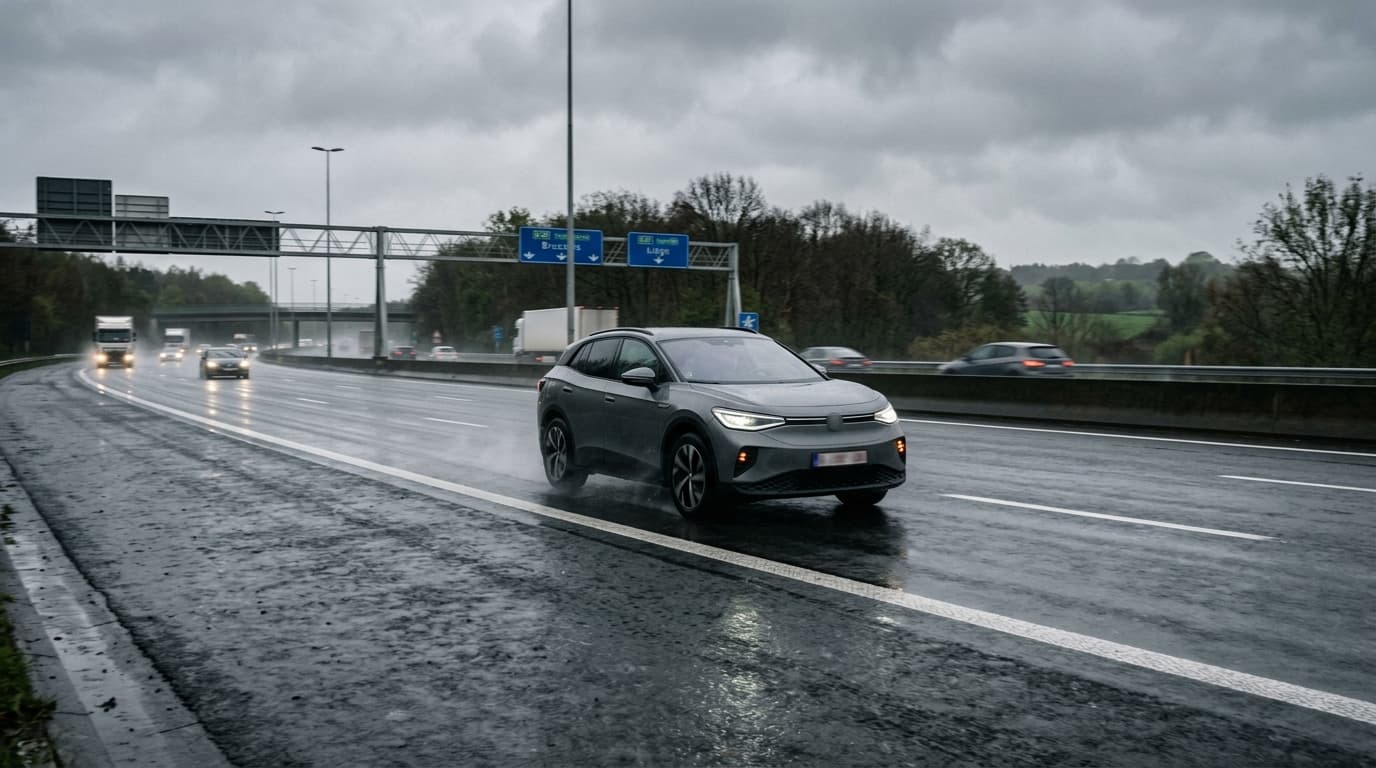
The e-3008 for maximum range and comfort, the Model Y for efficiency and the charging network, the Scénic for price. All three target the same Belgian family in 2026, but each has a real personality, which makes the choice depend on your use rather than an absolute ranking.
The Model Y starts at €39,990, uses less (about 13 kWh/100 km) and relies on the Supercharger network, the densest. The Renault Scénic E-Tech, around €41,000, plays affordability with a range near 625 km WLTP on its large battery. The e-3008, pricier, answers with its 98 kWh at 701 km WLTP and a more upmarket cabin.
In practice, this makes three profiles. High-mileage driver who wants the simplest charging: Model Y. Tight budget and good range-to-price ratio: Scénic E-Tech. Fan of finish, space and paper range: e-3008. What we would avoid is choosing on the WLTP figure alone: the Model Y consumes less and charges faster, offsetting its lower claimed range. Our full review of the Tesla Model Y 2026 details the most serious rival.
Is the Peugeot e-3008 a good company-car choice?
Yes, and it is one of its strong arguments in 2026. Being 100% electric, the e-3008 keeps a high tax deductibility, while hybrids and combustion cars see theirs fade. Regional taxes also drop to their floor for an electric vehicle.
For a Belgian freelancer or company, the maths tips quickly. The low benefit-in-kind and maintained deductibility offset a list price higher than an equivalent combustion car. This tax mechanism explains why the top of Belgian company registrations is now electric.
In practice, this makes a rational company SUV for those who want space. On the Belgian market, the registration tax drops to €61.50 and the annual road tax to €92.93 in Wallonia, floor amounts reserved for EVs. For the detail of regional incentives and taxation, see our page on electric-car incentives in Belgium.
What are the weak points of the Peugeot e-3008?
Three above all: 160 kW charging that lags, high motorway consumption on the 73 kWh, and an i-Cockpit that does not win everyone over. The finish and the 98 kWh range are strong, but these three points remain reservations to weigh before buying.
Charging is the real brake. At 160 kW peak, the e-3008 takes 27–30 minutes from 20 to 80%, where a Kia EV6 on 800-volt architecture recovers nearly 300 km in 18 minutes. On a long trip stringing charges together, the gap shows. The 73 kWh, thirsty on the motorway, forces more frequent stops.
In practice, these are limits to test yourself. The small steering wheel and the high-set instrument display of the i-Cockpit take getting used to, and some drivers never adapt. What we would avoid: ordering without a test drive if you drive a lot on the motorway or are sensitive to the Peugeot driving position.
Comparison: the e-3008 against its rivals in Belgium
Here are the four family electric SUVs fighting over the same Belgian buyer in 2026, on the criteria that really matter: entry price, range and charging.
| Criterion | Peugeot e-3008 98 kWh | Tesla Model Y | Renault Scénic E-Tech | Škoda Enyaq |
|---|---|---|---|---|
| Entry price BE (2026) | ~€52,000 | €39,990 | ~€41,000 | ~€45,000 |
| Max WLTP range | up to 701 km | up to 629 km | up to 625 km | up to 579 km |
| Consumption | ~17 kWh/100 km | ~13 kWh/100 km | ~16 kWh/100 km | ~16 kWh/100 km |
| Fast charging (DC) | 160 kW | Supercharger (~250 kW) | ~150 kW | ~175 kW |
| Strong point | Range + cabin | Network + efficiency | Price + range | Comfort + finish |
Indicative list prices on the Belgian market as of this article (July 2026). e-3008 prices: Moniteur Automobile (2026). WLTP ranges are manufacturer figures; real motorway range is 25–35% lower depending on speed and temperature. Model Y, Scénic and Enyaq prices vary with trim and battery size.
Our verdict
For a Belgian family wanting a comfortable electric SUV with a real range margin, the Peugeot e-3008 98 kWh Long Range at around €52,000 is the coherent choice: 701 km WLTP, a refined cabin and favourable company-car tax. If your mileage is more modest and mostly urban, the 73 kWh at around €46,000 is enough and stays the best price-to-use ratio.
As an alternative, the Tesla Model Y keeps the advantage as soon as you drive a lot: cheaper to enter, more efficient and backed by the Supercharger network, it simplifies long trips where the e-3008 is held back by its 160 kW charging. And for a tighter budget, the Renault Scénic E-Tech offers a very close range-to-price ratio. To decide based on your budget and use, the comparator lines up the models side by side, and the quiz points you in three questions.
Comparateur SUV
Compare tous les suv côte à côte.
Comparer maintenant →
Frequently asked questions
Julien essaie des voitures depuis 2012, d’abord pour la presse spécialisée belge, aujourd’hui en indépendant depuis Liège. Il croise les données TÜV, ADAC et les prix catalogue belges plutôt que les fiches constructeur. Sa règle : pas d’essai en concession de 20 minutes, pas de verdict sans chiffre vérifiable.